


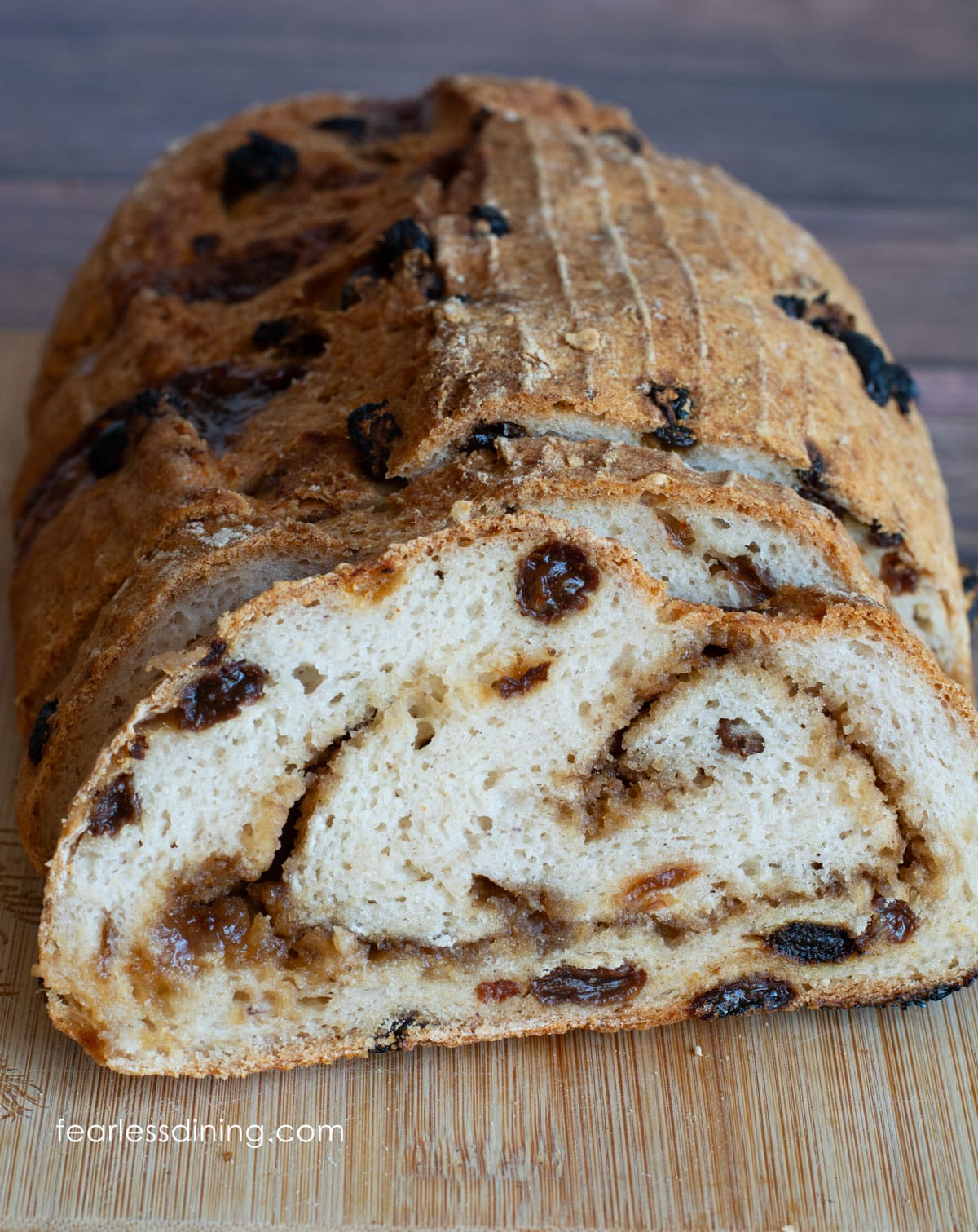
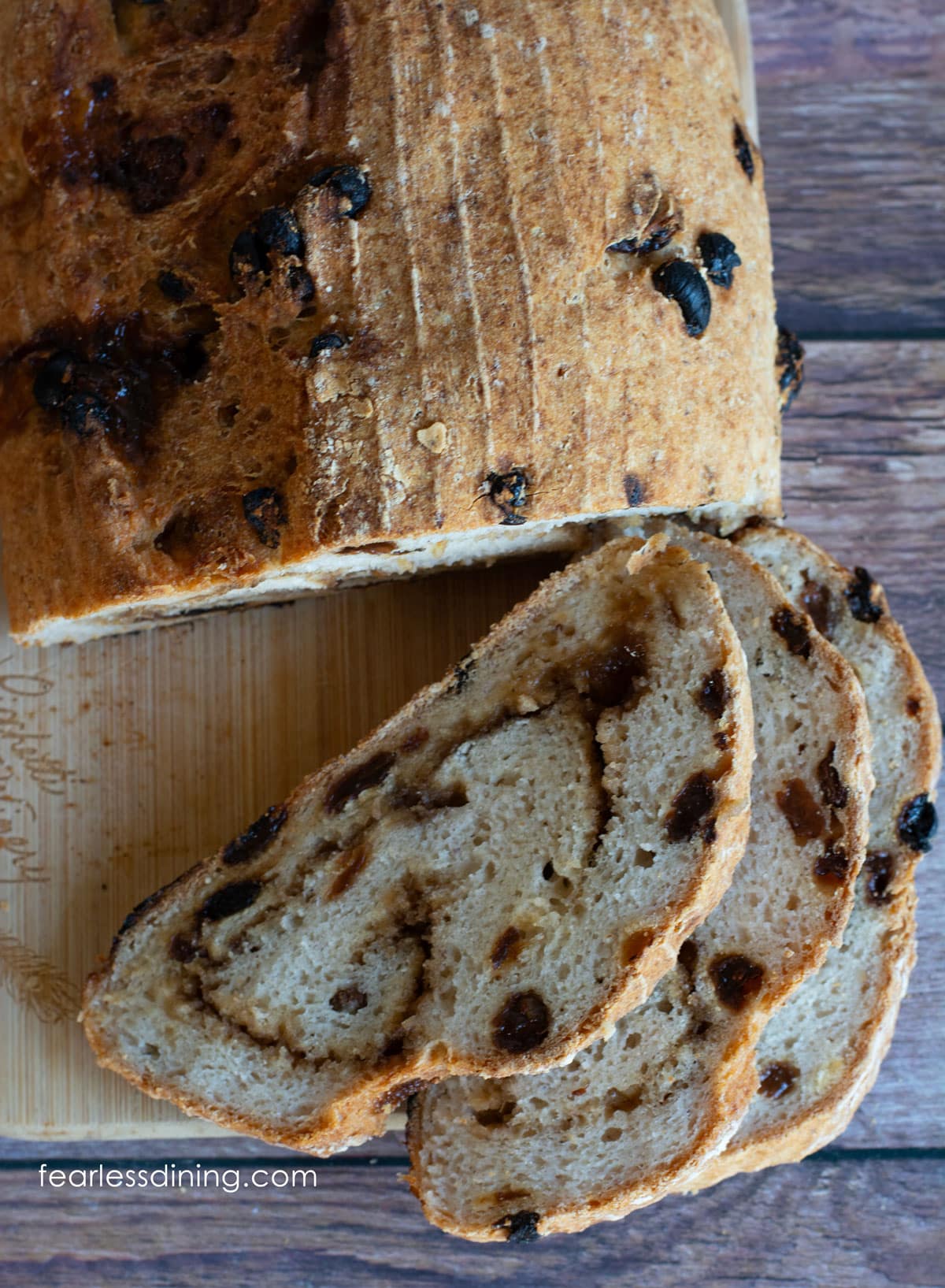
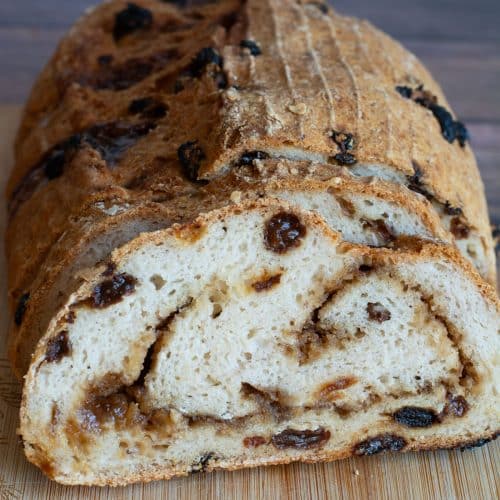
This gluten free artisan-style cinnamon raisin bread is perfectly crusty on the outside, has sweet, plump raisins throughout the dough, and a swirl of brown sugar and cinnamon. It is a delicious loaf of bread you can make in about 2 hours. Serve it with breakfast, brunch, or any time you need a treat.
This post may contain affiliate links. Please read our Disclosure Policy.
❤️ Sandi’s Recipe Summary
The Quick Bite: This recipe makes an artisan loaf of gluten-free cinnamon raisin bread. It uses rapid yeast and is baked in the oven, with ice cubes to create steam that helps the crust get that crusty texture. This recipe is an intermediate-level recipe for those who want to learn how to make gluten-free crusty artisan breads.
This gluten-free artisan cinnamon raisin bread is a recipe I have wanted to try for a long time. I have a lot of gluten-free bread recipes on the blog, and gluten-free sourdough bread recipes, but I don’t have any artisan-style loaves made with yeast.
This recipe is a great bridge recipe for those who feel baking with sourdough feels intimidating. Yeast rises quicker and is easier to work with.
I plan to make several flavors of this artisan-style bread, including plain, over the next few weeks, because I know many of you will enjoy making them. Once you see my method, I hope it will give you confidence to bake a loaf for yourself. You don’t need any fancy tools to make this recipe. Just a cast-iron skillet or Dutch oven.
Ingredient Notes and Easy Swaps:
For the full list of ingredients and amounts, please go to the recipe card below.
- Gluten-Free Flour Blend – I tested this recipe using my Homemade Gluten-Free Flour Blend (omit the psyllium powder when mixing my blend). It is superior when it comes to making yeasted bread. My Gluten-Free Whole Grain Flour Blend also works in this recipe, but you will need to add 1-2 TBSP of additional water when using it. Read Why Gluten-Free Flour Blends Vary to learn more about this. Note: Many gluten-free flour blends do not work in yeast recipes.
- Binder – For this recipe, I used psyllium husks to make a gel. This helps you get a real bread texture. Learn Why Binders are Important in Gluten-Free Baking.
- Yeast – I used rapid yeast. You can use active dry yeast and bloom it in some of the water if you prefer. Note: Red Star Platinum is not gluten-free.
- Sugar – This recipe uses brown sugar in the swirl and just one tablespoon of regular sugar in the dough to help the yeast rise.
- Psyllium Husks – It is important to use whole psyllium husks and not the powder. Make sure you do not add the powder when making my gluten-free flour blend. Some brands of psyllium can turn your baked goods purple. I use and trust Anthony’s Brand Psyllium Husks, which will not do this.
- Water – Use purified water. Tap water contains chlorine and other things that can prevent your yeast from rising the dough.
- Raisins – Use brown or golden raisins.
If you decide to make this bread using a different flour blend, please leave a comment and let us know what you used and how it turned out.

Testing Notes From My Kitchen
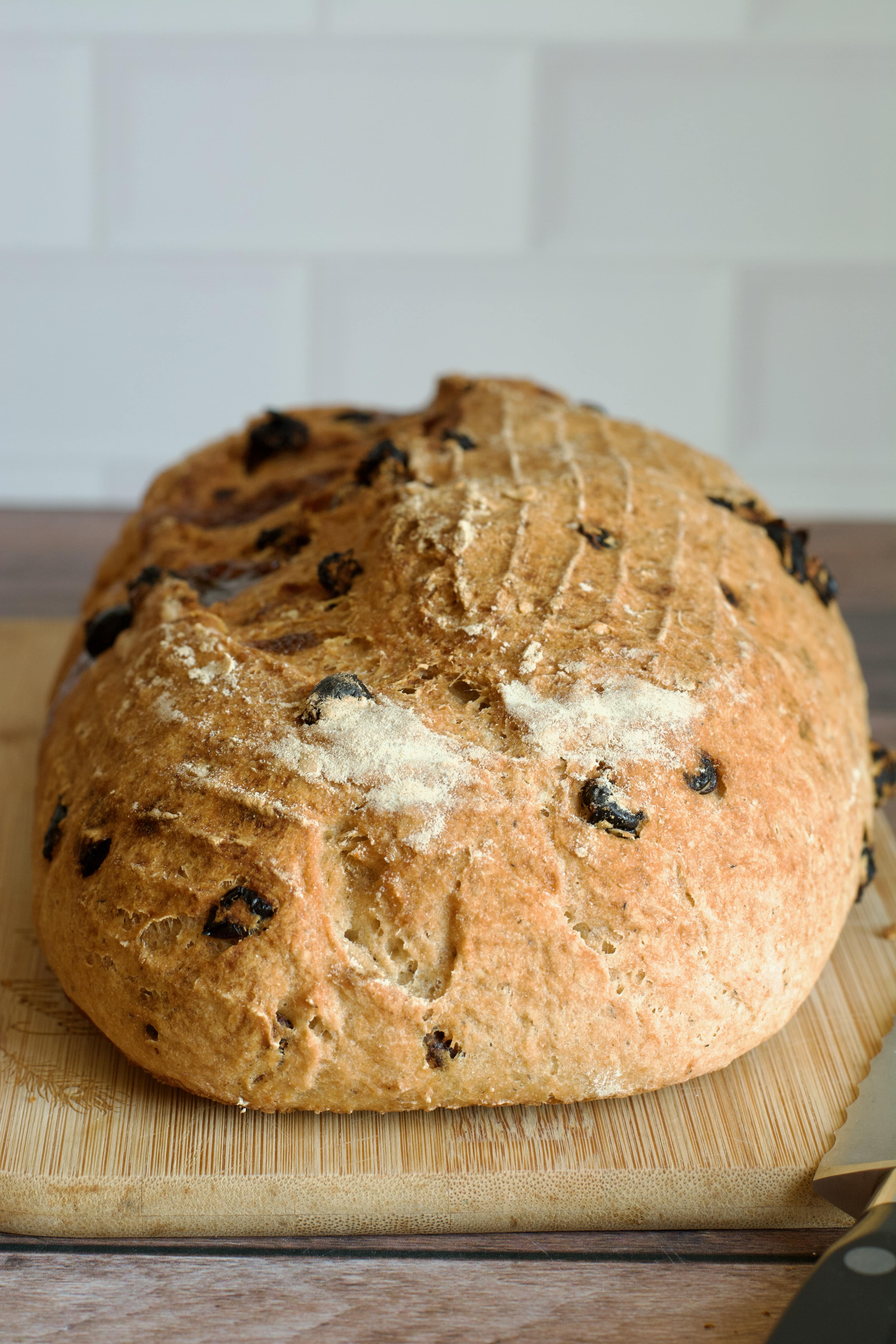
I know many of you will want to know if a store-bought flour blend will work in this recipe, and I hope to test it at some point. The truth is, my custom blends work so well in yeast recipes that it is hard to want to test other blends. My flour blends were designed to work with yeast, and as you can see in the photos, this loaf rose beautifully and has the perfect fluffy texture.
The biggest surprise I had testing this recipe was that some of the brown sugar cinnamon oozed out of the loaf. It was not a huge amount, but you want to use a cast iron skillet that has sides so none spills onto the bottom of the oven.
How to Make Artisan Style Gluten-Free Cinnamon Raisin Bread (Step-By-Step)
Before getting started, add the raisins to a small bowl and pour boiling water over them. Soak the raisins for 5 minutes, then drain the water.
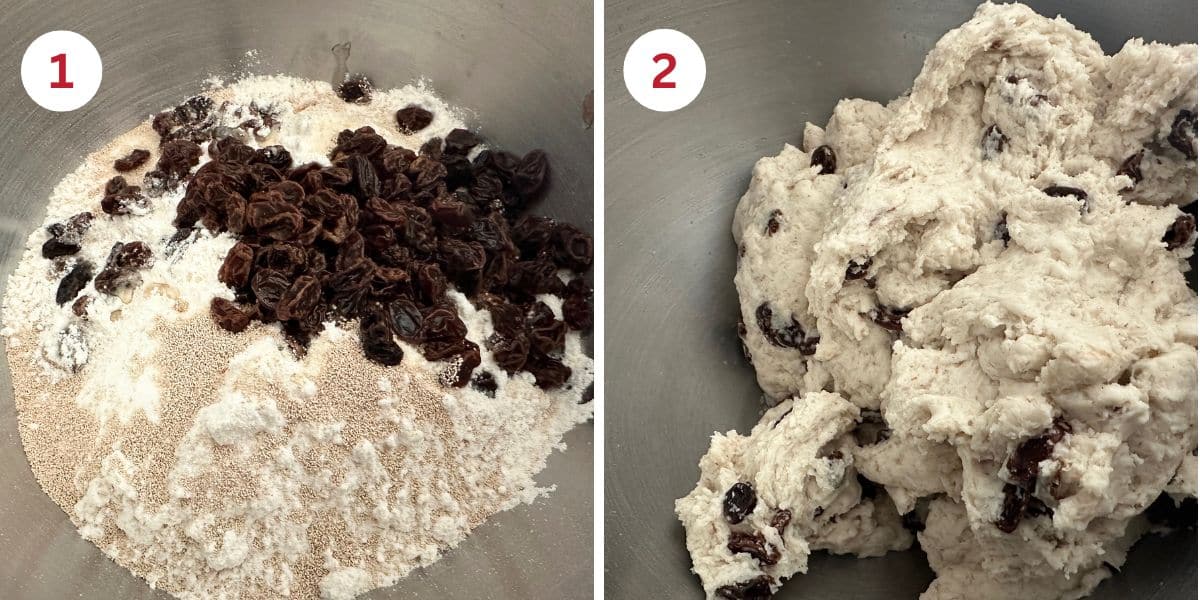
Step 1: Add the liquid ingredients to the stand mixer. Mix them until combined, and then add the dry ingredients on top. Sprinkle the rapid yeast on and add the soaked raisins.
Step 2: Mix on low speed, gradually increasing the speed. Use a spatula to scrape down the sides and mix on medium speed for 30 seconds. The dough should pull away from the sides of the bowl. The dough should feel a little sticky, but when you put it on the silicone mat, it should not stick.
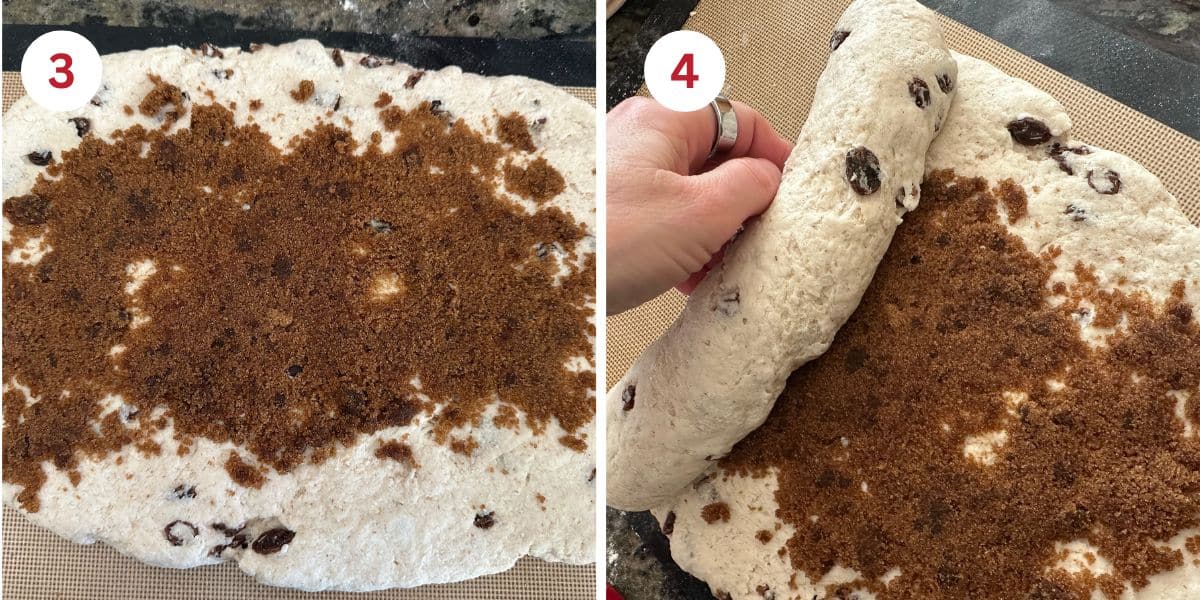
Step 3: Place the dough on the silicone mat and press it to a rectangular shape 1 1/2 inch thickness with your hand. You only get one good rise in gluten-free so we want to add the brown sugar and cinnamon now.
Mix the partially melted butter, brown sugar, and ground cinnamon in a small bowl. Mix well and spread it out on the dough.
Step 4: Roll the dough as you would cinnamon roll dough. If you are making a rectangular artisan loaf, tuck the edges under and place it into the oval-shaped banneton basket. If you do not have a banneton basket, place it in a cast-iron skillet and cover loosely with plastic wrap.
Add 1-2 tablespoons of flour to the banneton and rotate it around so the flour coats the inside. This will prevent your dough from sticking to the banneton. Dump out any excess flour.
If you are baking it as a circle-shaped boule, roll it the same way, then press it into a round ball. Place it into a round banneton basket or skillet.
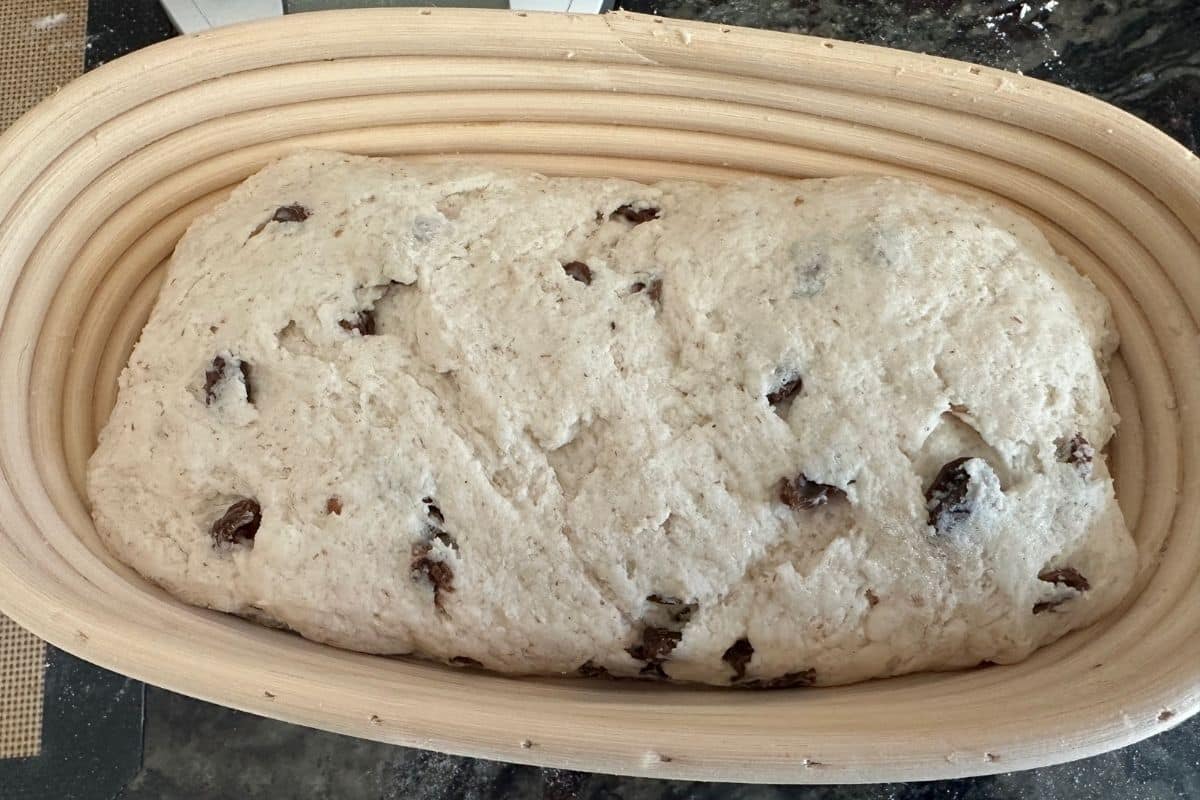
Step 5: I like to use these disposable shower caps around the bowl or banneton to keep moisture in so the dough doesn’t dry out. Wrap one around the banneton.
Step 6: Rise your dough in a warm place. I warm my oven to the lowest setting, 175ºF. I put the dough in the oven and let it rise with the door partially open. Since we are using yeast to make this artisan gluten-free raisin bread, it should double in size within 45 minutes.
Email This Recipe To Me!
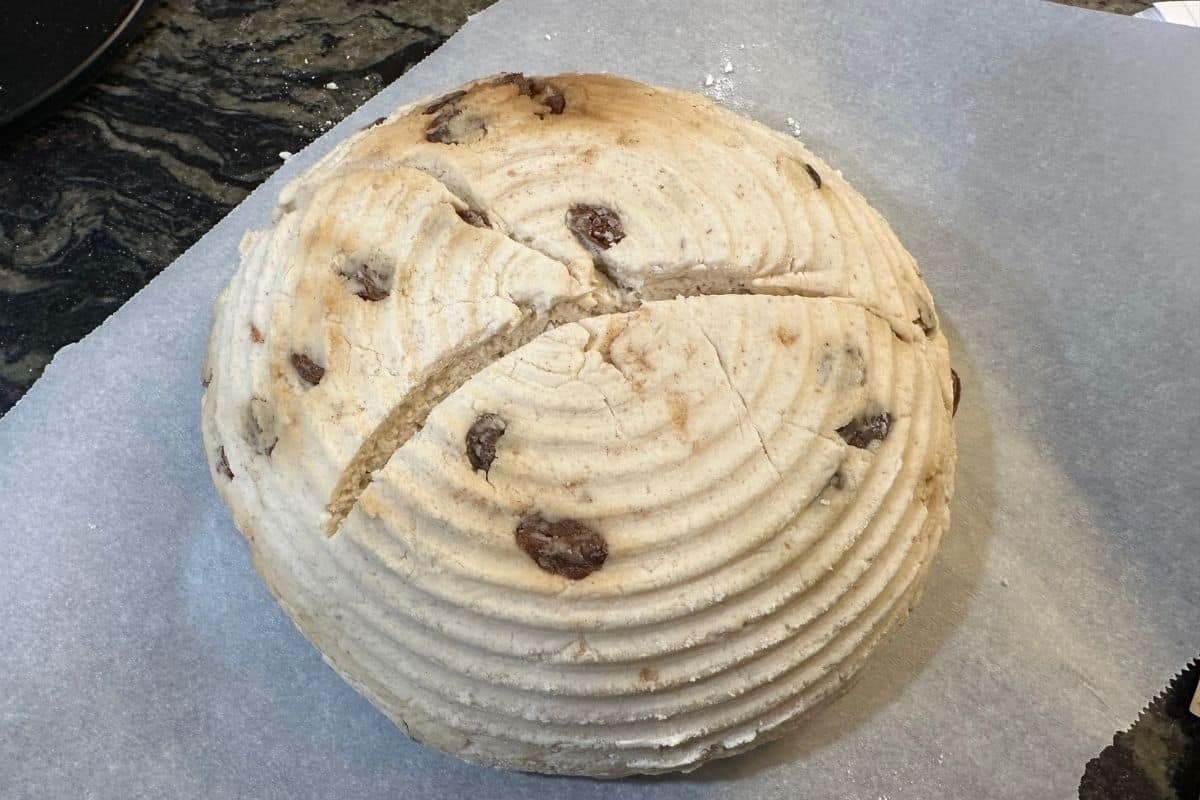
Step 7: Remove the bread from the warm rising spot you used. Place a smaller cast-iron skillet on the bottom rack or the bottom of the oven. Place a 10 or 12-inch cast-iron skillet (empty) in the oven as well. Preheat the oven to 450ºF with both skillets in the oven.
The skillet on the bottom is for ice cubes to create the steam. Place a piece of parchment paper on the counter and gently tip the banneton over so the dough falls out onto the paper.
Step 8: Use a bread lame to make a cut along the top of the dough. This helps control the shape of the bread as it bakes. If this is your first artisan loaf, keep it simple. As you get more experience, you can learn how to make intricate designs.
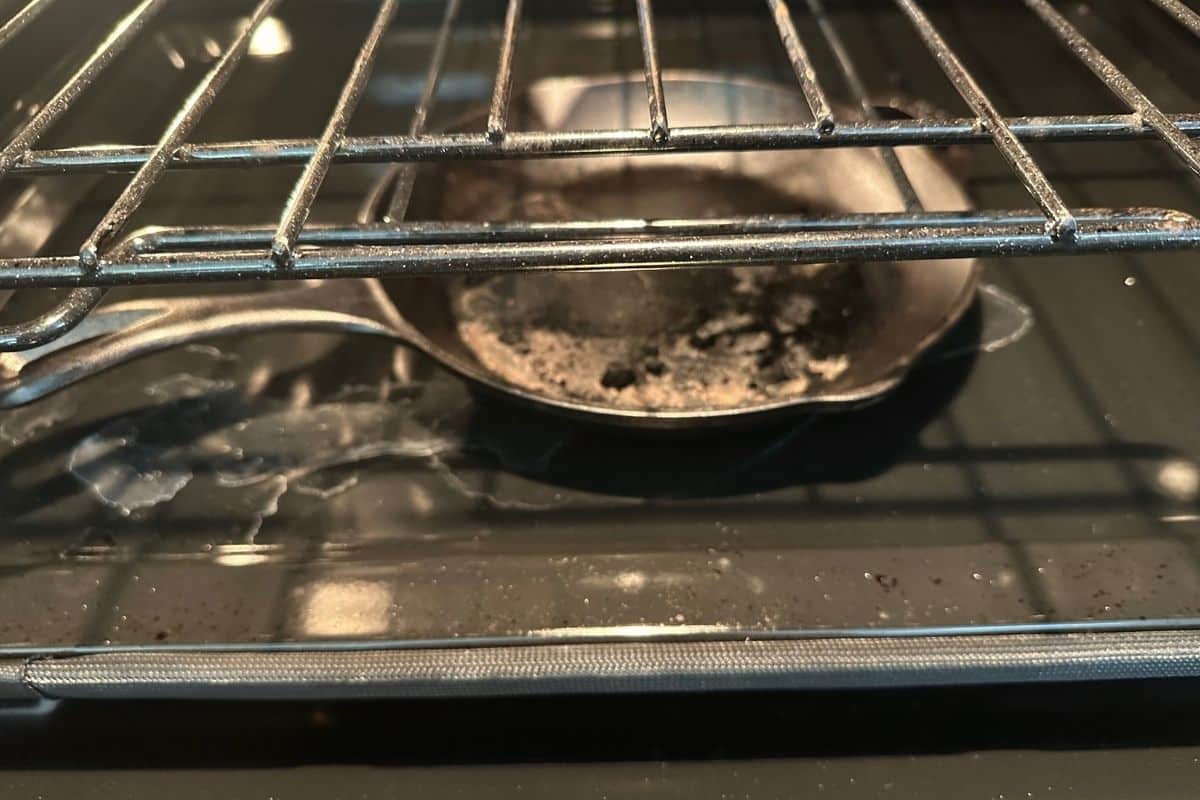
Step 9: Quickly open the oven door. Use oven mitts to slide the middle rack with the empty 10-inch cast iron pan out. Grab the parchment paper and gently place the dough on the paper into the pan, and slide the rack back into the oven.
Step 10: Next, drop 4-5 ice cubes into the bottom cast-iron skillet. Close the oven door quickly to capture the steam. The steam helps to form the crust of the bread, so you want to do this quickly.
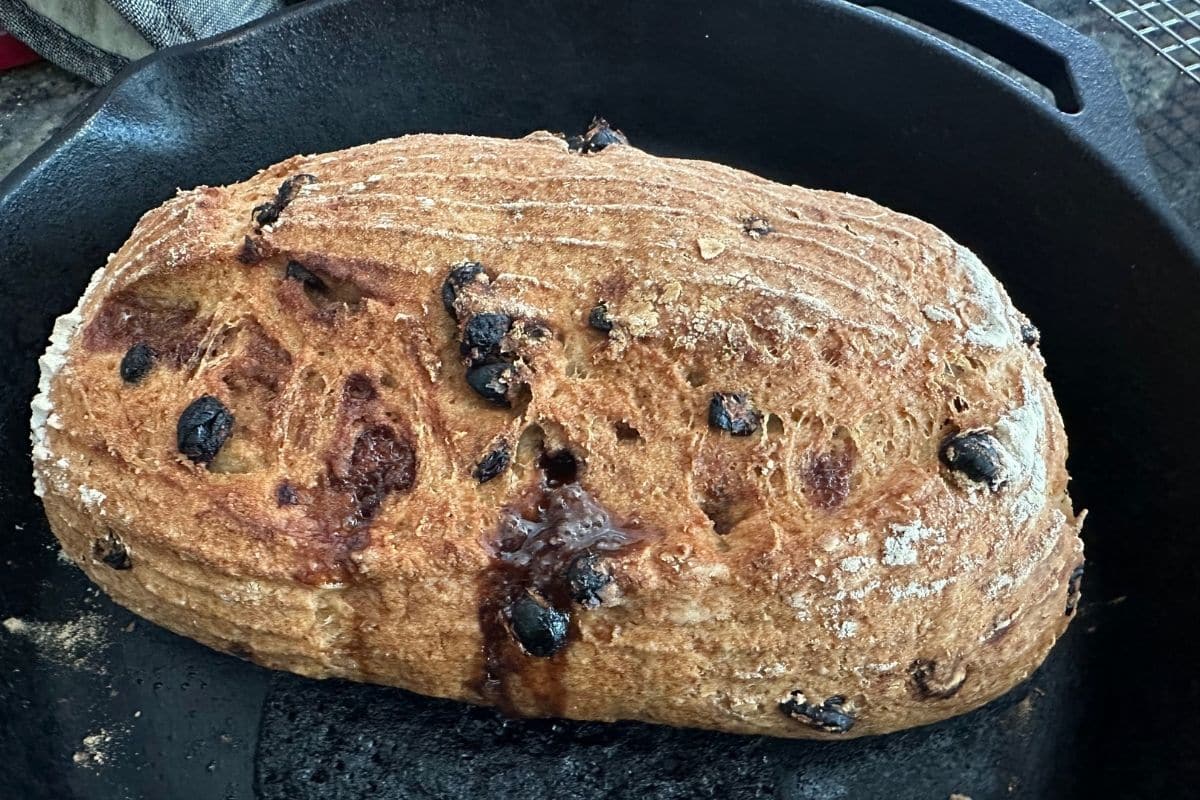
Step 11: Bake the bread for 45 minutes. Do not be surprised if some of the cinnamon sugar oozes out. The bread should look golden brown on the outside, and have an internal temperature of 210ºF.
Put on oven mitts and take the cast-iron skillet with the bread out of the oven. Carefully take the bread out of the pan and place it onto a cooling rack.
👀 Sandi Says: Now is the time to use a metal spatula to scrape up any cinnamon sugar that is on the bottom of the cast iron pan. It slides off easily when it is hot.
Step 12: The most important step. Do not slice the bread until it is fully cool. Artisan bread continues to set as it cools. If you slice it too soon, the inside can be gummy.
Store the bread in a container on the counter. If you do not plan to finish the loaf in a couple of days, I recommend slicing the bread and freezing it in a freezer-safe zipper bag. Do not freeze or put the bread in a container unless it is room temperature.
Have any questions? You can leave a comment, and I will respond quickly. You can also check out this Gluten-Free Bread Troubleshooting Guide for more bread-baking tips.
Tips For Success:
I have talked about all of these important tips in the directions, but I want to highlight them again because they are all important and can make or ruin the bread:
- Make sure to check the expiration date of your yeast.
- Do not use tap water.
- Rise the dough in a warm place.
- Do not cut the bread until it is fully cool.
More Gluten Free Bread Recipes:
I have a lot of great gluten free bread recipes on the blog. See all of my gluten-free bread recipes for more bread baking ideas. Here are a few of my favorites:
- Fluffy Gluten Free Brioche
- Gluten Free Hawaiian Bread
- Gluten Free Apple Fritter Bread
- Artisan Gluten Free Sourdough Boule
Love This Recipe?
💬 Did you make this gluten-free bread recipe? I would love to hear how it turned out. Your feedback helps others (and helps me keep improving these recipes for you). ⭐⭐⭐⭐⭐
Gluten-Free Artisan Cinnamon Raisin Bread (Crusty Yeasted Loaf)



Equipment
- 2 Cast iron pan or a Dutch oven
Ingredients
See Notes for My Gluten-Free Flour Blend Recipe.
- 488.5 grams gluten free flour blend *SEE NOTES
- 2 ½ teaspoons rapid yeast 1 packet
- 16 grams psyllium husks * see notes
- 2 ½ cups purified water divided
- ½ cup raisins
Brown Sugar Cinnamon Swirl
- 28 grams unsalted butter
- 50 grams brown sugar
- 6 grams ground cinnamon
Instructions
- Before getting started, add the raisins to a small bowl and pour boiling water over them. Soak the raisins for 5-10 minutes, then drain the water.
- Add 1 1/2 cups of water to a small bowl and add the psyllium husks. Stir and let it sit for 2-3 minutes until it forms a gel.
- Add the psyllium husk gel and remaining 1 cup of water to the stand mixer. Mix them until combined, and then add the flour, yeast, and raisins on top. Sprinkle the rapid yeast on and add the soaked raisins.
- Mix on low speed, gradually increasing the speed. Use a spatula to scrape down the sides and mix on medium speed for 30 seconds. The dough should pull away from the sides of the bowl.
- The dough should feel a little sticky, but when you put it on the silicone mat, it should not stick.
- Place the dough on the silicone mat and press it into a rectangular shape 1 1/2 inch thickness with your hand. You only get one good rise in gluten-free, so we want to add the brown sugar and cinnamon now.
- Mix the partially melted butter, brown sugar, and ground cinnamon in a small bowl. Mix well and spread it out on the dough.
- Roll the dough as you would cinnamon roll dough. If you are making a rectangular artisan loaf, tuck the edges under and place it into the oval-shaped banneton basket. If you do not have a banneton basket, place it in a cast-iron skillet and cover loosely with plastic wrap.
- Add 1-2 tablespoons of flour to the banneton and rotate it around so the flour coats the inside. This will prevent your dough from sticking to the banneton. Dump out any excess flour.
- If you are baking it as a circle-shaped boule, roll it the same way, then press it into a round ball. Place it into a round banneton basket or skillet.
- I like to use these disposable shower caps around the bowl or banneton to keep moisture in so the dough doesn't dry out. Wrap one around the banneton.
- Rise your dough in a warm place. I warm my oven to the lowest setting, 175ºF. I put the dough in the oven and let it rise with the door partially open. Since we are using yeast to make this artisan gluten-free raisin bread, it should double in size within 45 minutes.
- Remove the bread from the warm rising spot you used. Place a smaller cast-iron skillet on the bottom rack or the bottom of the oven. Place a 10 or 12-inch cast-iron skillet (empty) in the oven as well. Preheat the oven to 450ºF with both skillets in the oven.
- The skillet on the bottom is for ice cubes to create the steam. Place a piece of parchment paper on the counter and gently tip the banneton over so the dough falls out onto the paper.
- Use a bread lame to make a cut along the top of the dough. This helps control the shape of the bread as it bakes. If this is your first artisan loaf, keep it simple. As you get more experience, you can learn how to make intricate designs.
- Quickly open the oven door. Use oven mitts to slide out the middle rack with the empty 10-inch cast iron pan. Grab the parchment paper and gently place the dough on the paper into the pan, and slide the rack back into the oven.
- Next, drop 4-5 ice cubes into the bottom cast-iron skillet. Close the oven door quickly to capture the steam. The steam helps to form the crust of the bread, so you want to do this quickly.
- Bake the bread for 45-50 minutes. Do not be surprised if some of the cinnamon sugar oozes out. The bread should look golden brown on the outside, and have an internal temperature of 210ºF. (Check with a digital thermometer.)
- Put on oven mitts and take the cast-iron skillet with the bread out of the oven. Carefully remove the bread from the pan and place it on a cooling rack.
- TIP: Now is the time to use a metal spatula to scrape up any cinnamon sugar that is on the bottom of the cast iron pan. It slides off easily when it is hot.
- Do not slice the bread until it is fully cool. Artisan bread continues to set as it cools. If you slice it too soon, the inside can be gummy.
Notes
- I only tested this recipe using my DIY gluten-free flour blend. It is superior in yeasted bread recipes. Many 1:1 flour blends do not work in yeast recipes. (Bob’s 1:1, King Arthur Measure for Measure, etc. You need to go to the brand website to see if your brand works with yeast.)
- Here is the recipe to make my homemade gluten-free flour blend. OMIT the powdered psyllium husk when making this flour blend.
- Some brands of Psyllium husk can turn your bread purple. I use and trust Anthony’s Psyllium Husk brand. Use husks and not the powder.
- Some brown sugar will ooze out as the bread bakes. This is normal for this recipe. It will be hot, so use care when transferring the bread from the skillet to the cooling rack.
- Store leftovers in a container. They will keep fresh for up to 3 days. You can also slice and freeze the bread, putting it into a freezer-safe zipper bag.
Email This Recipe To Me!
SPECIAL NOTE
Please know that every gluten free flour blend has a different starch to grain ratio. If you use a blend I didn’t test, my rule of thumb is to add more flour if your dough or batter is wet and add more liquid if the dough or batter is too dry!
Nutrition
Nutrition Disclaimer
Nutritional information is an estimate provided to you as a courtesy. You should calculate the actual nutritional information with the products and brands you are using with your preferred nutritional calculator.
I truly hope you enjoy this recipe. I have been testing and creating gluten-free recipes for over 15 years. Creating gluten-free recipes that do not taste gluten-free is my goal for every recipe. Sometimes I only have to test a new recipe a couple of times, and others it takes multiple times. I do this so you get reliable, delicious results every time!

I made this artisan bread last week and it came out perfectly. the swirl of cinnamon and brown sugar and random bites with raisins added a tasty pop to this loaf.
I even got to try out my new cast iron bread pan. Can’t wait to see your other variations of this loaf. Thank you!
I am so glad you loved this recipe and that you got an excuse to try your new cast iron pan. Thank you so much for coming back to leave a review.
Have you ever used King Arthur’s Gluten Free Bread Flour?
Hi Sandi, I talk a lot about why I tested the recipe with my flour blend in the post. I get very ill from wheat starch, so I am not able to test that brand of bread flour.
Hi Sandi,
I see you’ve linked King Arthur Gluten Free Blend in the recipe card, but in the noted and the blog post you state you have only tested this recipe with your own blend. I assumed this was in error as you have previously stated King Arthur’s isn’t good for yeast recipes. I was wondering if Steve’s Gluten Free Bread Flour would work with this recipe? Thank you! Nancy
Thank you for noticing that. I forgot it plugs in that blend automatically via the code. I just took it out. I haven’t tested Steve’s yet, but I do plan to. The short answser is yes it will work, but you will need to add more liquid most likely as that blend has pectin, which absorbs more water. Do not add psylliumm if you use Steve’s blend.