

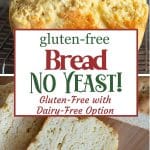
One bite of this fluffy gluten free bread without yeast, and you will want more. This homemade yeast-free bread is so easy to make and makes the best sandwich bread. All you need are a few simple ingredients! There is also a tested vegan version!
This post may contain affiliate links. Please read our Disclosure Policy.
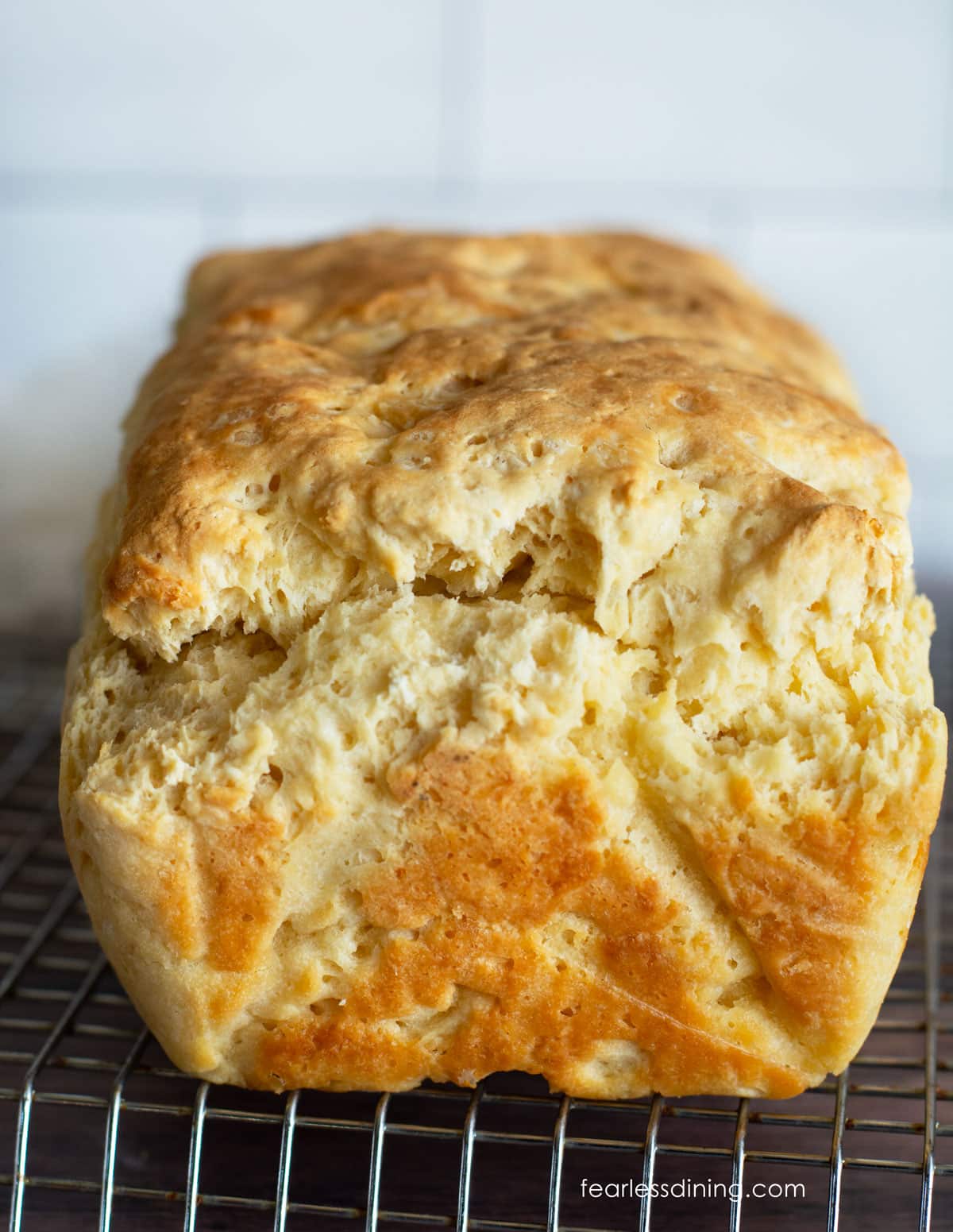
Many of my readers have asked if I could create a yeast-free, gluten-free bread recipe. Many with Celiac and gluten intolerance can also not eat recipes baked with yeast. I hate for people to go without foods they love, so I created this recipe.
This new bread recipe is based on my Gluten-Free Biscuit recipe. The biscuits are so big and fluffy that I knew if I could tweak this recipe, it would make excellent baked gluten free bread.
This bread turned out so fluffy that you would never know it was made without yeast. This gluten-free yeast-free bread recipe is the ultimate sandwich bread! My family devoured this new gluten-free, yeast-free bread in record time!
If you love to bake bread, I have some incredible gluten-free bread recipes for you to make. Gluten free baking has never been easier! Try my Gluten-Free Irish Soda Bread recipe if you want another no-yeast bread recipe.
UPDATE 7/30/25 – This recipe has over 180 comments. I went through each and every one and listed successful reader ingredient substitutions and flour blends below the Ingredient Notes section to help you know what swaps work in this bread recipe.
Ingredient Notes:
For the full list of ingredients and amounts, please go to the recipe card below.
- Gluten-Free Flour Blend – I tested this recipe with King Arthur Measure for Measure, Bob’s Red Mill 1:1, and Cup4Cup. All three blends worked well. You may need to adjust the moisture level by adding more flour or milk, depending on the blend you use. See the Reader-Tested Swaps below for more flour blends that work in this recipe.
- Baking Powder – It is important to use aluminum-free baking powder. Regular baking powder will leave a metallic taste.
- Butter – Use salted or unsalted butter. The butter must be cold. See the Reader-Tested Substitutions below for easy butter swaps.
- Eggs – Use large eggs. See the below Reader Tested Swaps for tested egg-free options.
- Milk – I used Oatly Simple Basic gluten-free oat milk. You can also use another plant-based milk or regular milk. See Reader-Tested Substitutions below for more tested swaps.
You can find the ingredients for this quick bread at any grocery store.
Reader-Tested Substitutions:
Quite a few readers have written to me via the comment section, email, and social media to tell me how this recipe has allowed them to eat bread again and which swaps they used that work. I am adding these to the post because I know these swaps will help so many more of my readers.
Flour Blends:
Namaste, Walmart Great Value, Freee Gluten-Free Bread Flour (Ireland), Pillsbury GF, and Cloud9 GF.
Egg Swaps:
Duck eggs, Flax Eggs (ratio is 1 T flax meal and 3 T water), and Applesauce.
Butter Swaps:
Avocado Oil, Sunflower Oil, Goat Butter, Earth Balance, and Miyoko’s.
NOTE: If you make this bread dairy-free, this bread does not get as golden on top. You can add an egg wash over the top to get a more golden color.
The easiest, efforless (can’t stress that enough), delicious GF bread. I just made it for the first time and felt like making it focaccia style (drowned it in olive oil and rosemary) and it worked!Thank you for the recipe, Fearless Dining!🙂”
Aleksandra B., Pinterest comment.
Step-By-Step Photos and Directions:
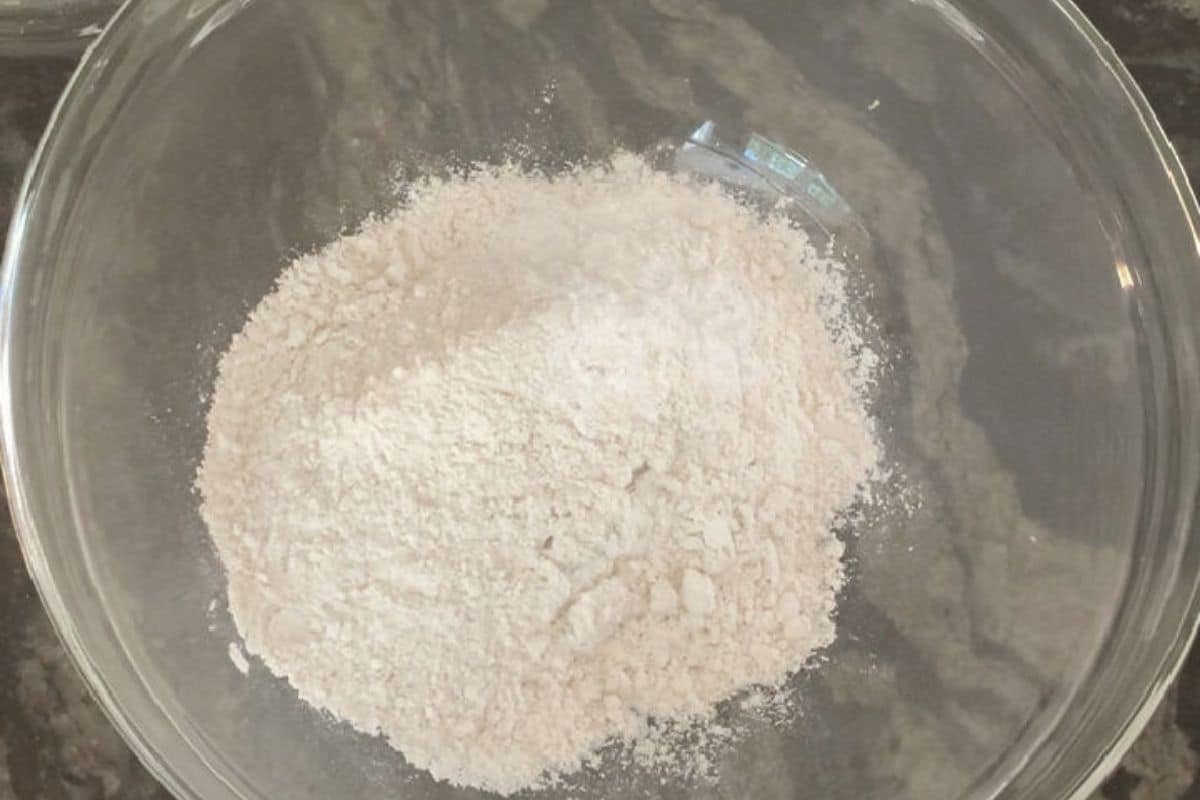
Step 1: Add the gluten free flour, baking powder, and salt into a large
Email This Recipe To Me!
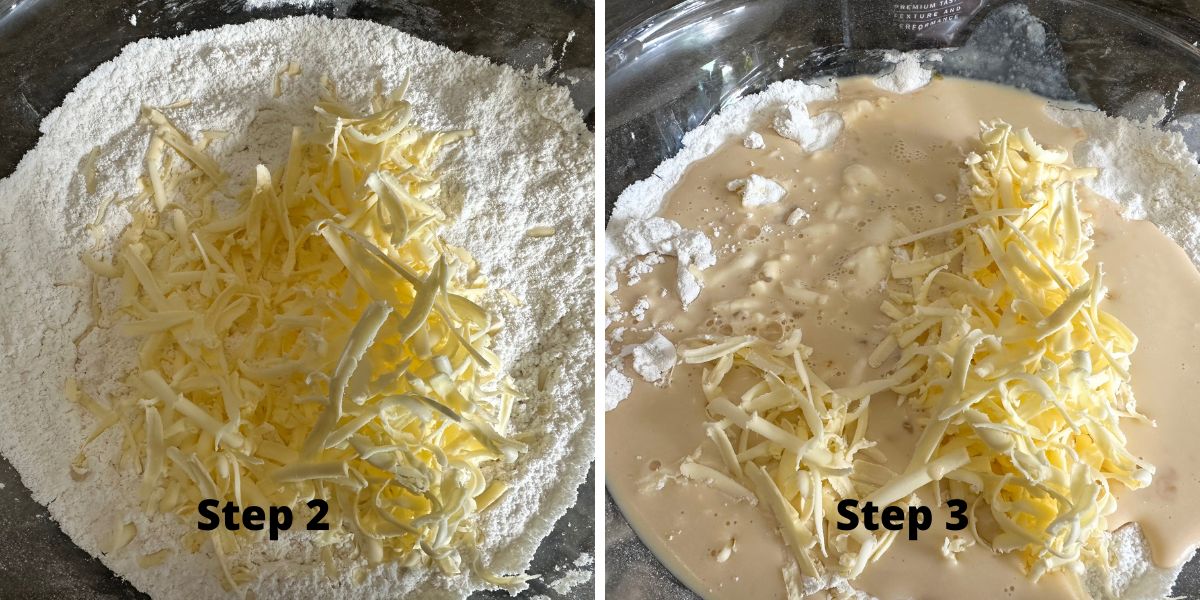
Step 2: Use a cheese grater to shred the cold butter into the dry ingredients.
Step 3: Add the cold milk or non-dairy milk to the bowl.
If you use a stand mixer, you will want to add the eggs and milk to the mixer bowl, then add the flour and cold butter shreds. Use a paddle attachment. Since this dough is wetter than other bread dough recipes, a dough hook doesn’t mix it as well.
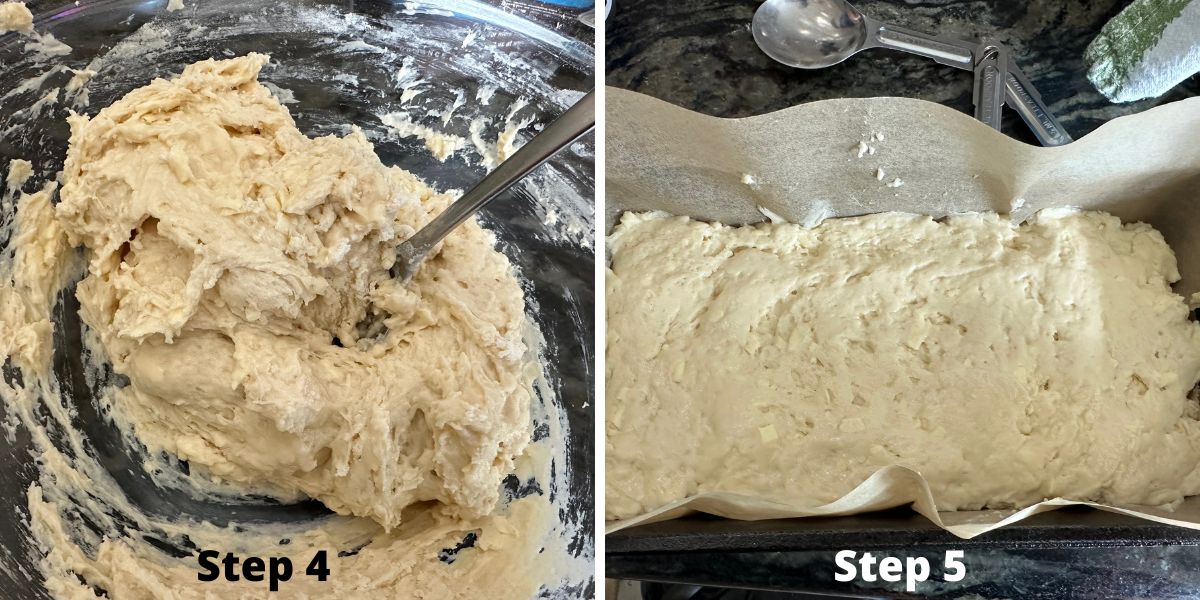
Step 4: Mix the wet and dry ingredients into a dough with a large spoon.
Step 5: If you are lining the loaf pan with parchment paper, do this now. If you are not using parchment paper, spray the loaf pan with a gluten free baking spray. Add the dough and spread it out in the pan. The dough should be soft but thick, but not pourable.
👀 Sandi Says: If your bread dough is wetter, add more flour one tablespoon at a time until it looks like my dough photo above.
I like to wet my fingers to smooth the top of the bread out so it isn’t lumpy. Optional: Sprinkle the top of the bread with sesame seeds.
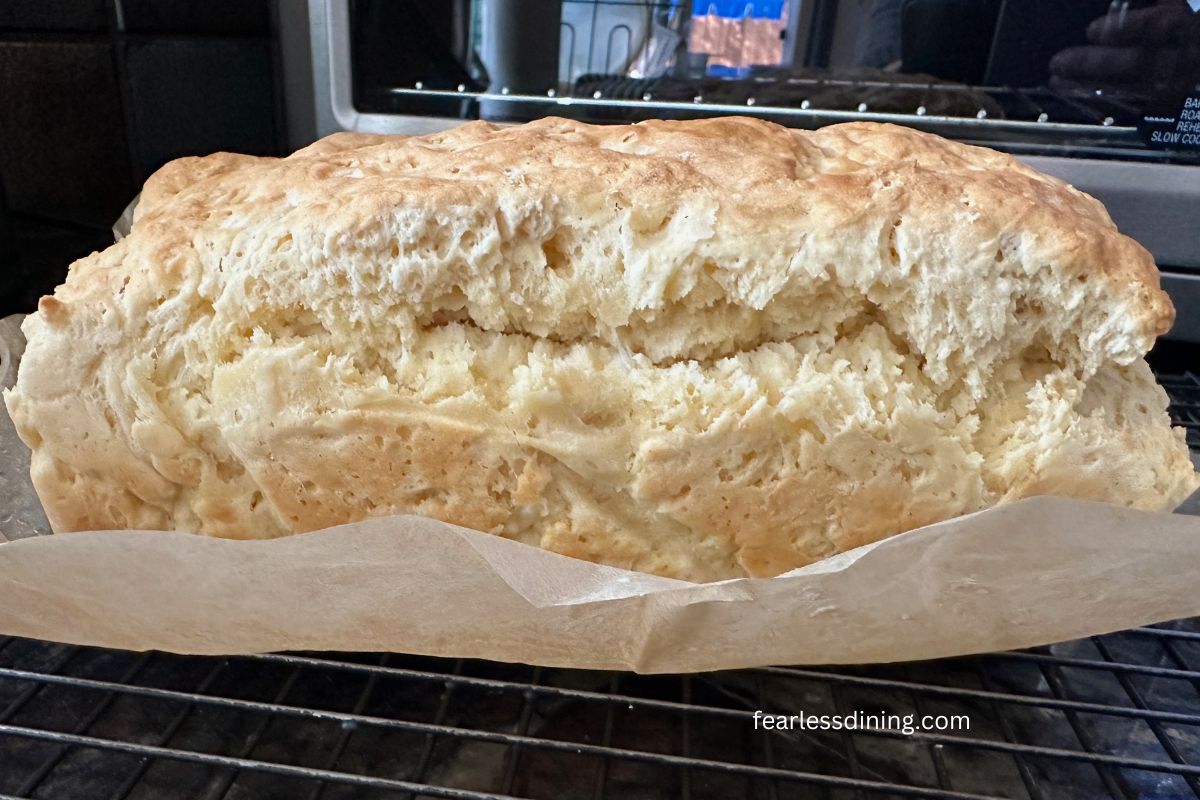
Step 6: Bake the bread at 350º F for 40 to 50 minutes. The actual baking time can vary depending on the size and depth of your loaf pan. The top of the bread will be golden brown. If the bread becomes too dark, cover the loaf with aluminum foil toward the end of baking.
Step 7: Remove the loaf from the oven. Insert a toothpick in the loaf. If the toothpick comes out clean, your bread is finished baking. If you see batter or crumbs, the bread will need to bake a little longer. Carefully remove the bread loaf from the loaf pan and place it on a cooling rack to cool.
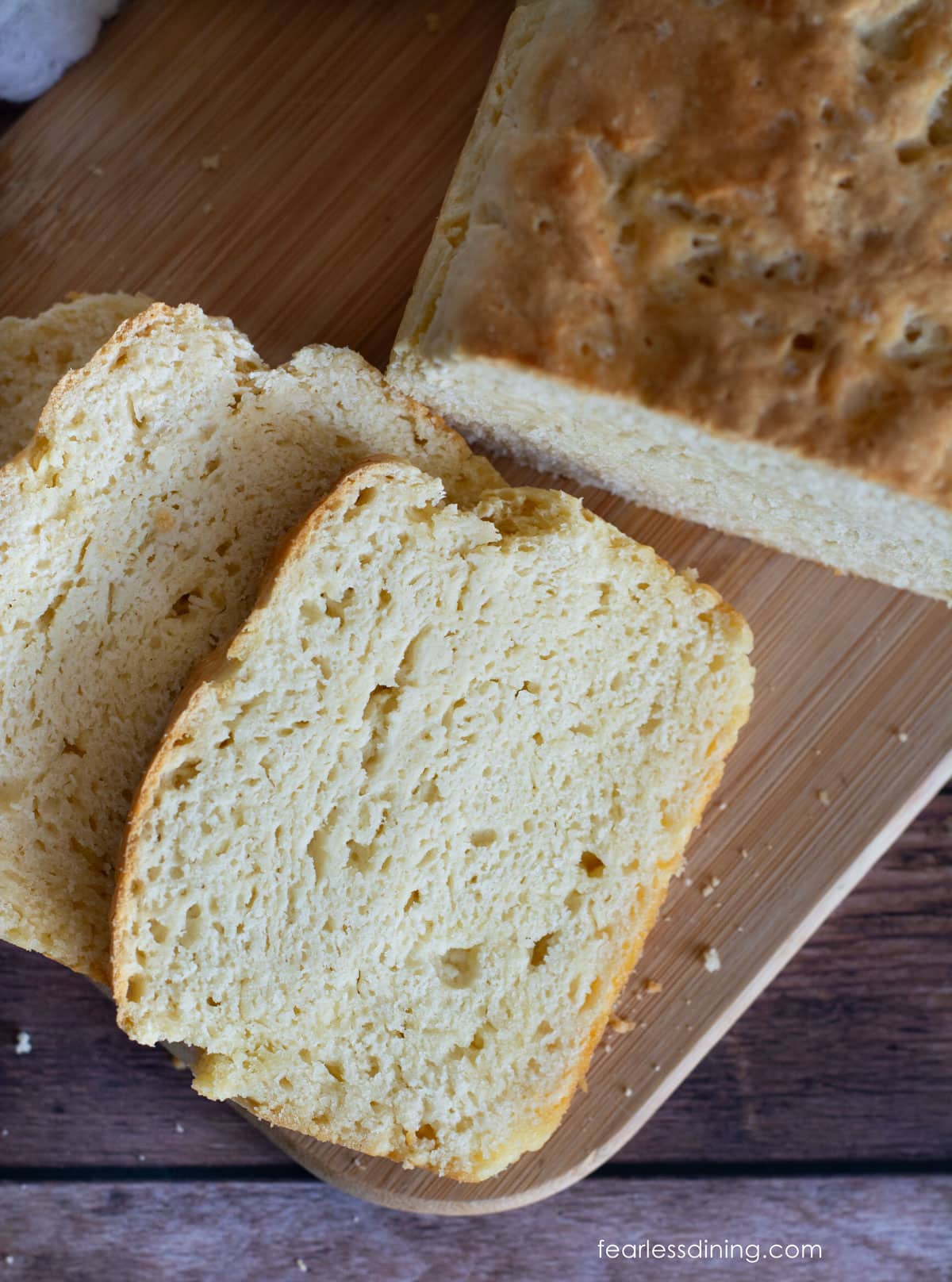
Wait until the loaf is thoroughly cooled before you slice the bread. Use a serrated bread knife. This is a great recipe for gluten free sandwich bread.
Tips For Success
1. Use VERY cold butter. Trust me, it is worth it, and this bread recipe is even more amazing.
2. I lined my bread tin with parchment paper, but this is optional. For some reason, my cast-iron loaf pan leaves a little black on my bread. I didn’t want that on this loaf, so I lined the pan to prevent this. 3. I will say it makes lifting the bread out of the pan nice and easy!
Store it the right way! Learn How to Store Gluten Free Bread so you can keep it fresh.
Frequently Asked Questions:
This recipe relies on aluminum-free baking powder to get its rise.
Yes, you read the quantity correctly. This is what gives the bread its rise without yeast.
If you notice an off flavor of metal, this means you did not use aluminum-free baking powder.
Store the bread in an airtight container. I recommend slicing and freezing the bread if you don’t use it all within two days. Gluten free baked goods tend to spoil quickly. I freeze my bread in a freezer bag with wax paper between each slice.
Thank you so much for this recipe! I used King Arthur Measure for Measure because it was what I had. It turned out great! I did have to cook 10 minutes longer that what you recommended. For those who can’t have yeast or added sugar, this is a great bread!”
Cheryl D., Blog comment
More Gluten-Free Bread Recipes
- This easy Gluten Free Naan is a great beginner-level yeast recipe to try.
- My Gluten Free Seedy Nut Bread is based on a European seed bread recipe my mother-in-law loved.
- If you prefer to use a bread machine, this Gluten Free Bread Machine Bread Recipe is well-loved by readers.
- Use fresh or dried herbs in this Gluten Free Focaccia Bread recipe.
- We love how fluffy these Gluten Free Honey Dinner Rolls turn out. They also make great slider buns.
- This Gluten Free Hawaiian Bread can be made in your bread machine, or baked in the oven.
Love This Recipe?
If you made and enjoyed this recipe, I would be incredibly grateful if you could leave a comment below. Please include which flour blend you used. This will help others know this recipe is delicious. Thank you!
The Fluffiest Gluten Free Bread Recipe (No Yeast!)



Ingredients
- 2 ½ cups gluten free flour blend * See notes
- 2 tablespoons baking powder Aluminum-free!!
- 1 teaspoon salt
- 2 large eggs
- 5 tablespoons butter Salted or unsalted depending on your preference
- 1 ½ cup milk or non-dairy milk * See notes.
Instructions
- Preheat the oven to 350º F. Set the oven rack to the middle setting.
- Add 2 ½ cups gluten free flour blend, 2 tablespoons baking powder, and 1 teaspoon salt to a large mixing bowl. Whisk to blend the dry ingredients.
- Use a cheese grater to shred the cold 5 tablespoons butter into the dry ingredients and then add 2 large eggs into the dry ingredients. You can also cut the cold butter into the flour mixture with a pastry blender.
- Add the 1 ½ cup milk or non-dairy milk to the bowl.
- Note: If you use a stand mixer, you will want to add the eggs and milk to the mixer bowl, then add the flour and cold butter shreds. Use a paddle attachment. Since this dough is wetter than other bread dough recipes, a dough hook doesn't mix it as well.
- Mix the wet and dry ingredients into a dough with a large spoon.
- If you are lining the loaf pan with parchment paper, do this now. If you are not using parchment paper, spray the loaf pan with a gluten free baking spray. Add the dough and spread it out in the pan. (I used an 8.5 inch cast iron loaf pan.)
- I like to wet my fingers to smooth the top of the bread out so it isn't lumpy. Optional: sprinkle the top of the bread with sesame seeds.
- Bake the bread at 350º F for 30-35 minutes. The actual baking time can vary depending on the size and depth of your loaf pan. The top of the bread will be golden brown. If the bread gets too dark, you can put a piece of aluminum foil over the loaf towards the end of baking.
- Remove the loaf from the oven. Insert a toothpick in the loaf. If the toothpick comes out clean, your bread is finished baking. If you see batter or crumbs, the bread will need to bake a little longer. Carefully remove the bread loaf from the loaf pan and place it on a cooling rack to cool.
- Wait until the loaf is thoroughly cooled before you slice the bread. Use a serrated bread knife to cut the bread.
Notes
- I tested this recipe with Cup4Cup. Note: Cup4Cup recently changed its flour blend formulation, and it doesn’t behave as the old formulation. I haven’t had a chance to retest this recipe with the new flour blend formulation.
This bread recipe is based on my gluten-free biscuit recipe, and this flour worked the best in that recipe. You can also use other blends; I tested ten different flour blends in my biscuit recipe. - It is critical to use aluminum-free baking powder, or your bread will taste metallic.
- I used Oatly gluten free oat milk to make this recipe. Any milk or non-dairy milk will work.
- To make this bread dairy-free, use plant-based butter like Smart Balance.
- Store in an airtight container. If you don’t eat it in two days, slice and freeze the remaining bread. I store mine in a freezer-safe zipper bag.
Email This Recipe To Me!
SPECIAL NOTE
Please know that every gluten free flour blend has a different starch to grain ratio. If you use a blend I didn’t test, my rule of thumb is to add more flour if your dough or batter is wet and add more liquid if the dough or batter is too dry!
Nutrition
Nutrition Disclaimer
Nutritional information is an estimate provided to you as a courtesy. You should calculate the actual nutritional information with the products and brands you are using with your preferred nutritional calculator.
I truly hope you enjoy this recipe. I have been testing and creating gluten-free recipes for over 15 years. Creating gluten-free recipes that do not taste gluten-free is my goal for every recipe. Sometimes I only have to test a new recipe a couple of times, and others it takes multiple times. I do this so you get reliable, delicious results every time!

Hello Sandi, i live in NM at high altitude 5000 ft.. do you know what i can do to adjust recipe that will work for high altitude?
Thank you
Leona
Hi Leona, I don’t have experience baking at a high altitude, but I did ask in my Facebook group. Here is a compilation of the tips they shared. I hope this helps you. My cakes and cookies need to be baked at 375 not 350. What works best where I am is the 25/25 method. Bake at 25 degrees higher than the recipe – this helps the outside cook faster as it rises and the middle won’t sink in later. Also, bake for 20-25minutes less. Depending on what you’re making you can also add a little extra flour or baking soda. But for baked goods like cakes, muffins etc I add a little extra liquid and usually an extra egg and I cut back a little on baking powder or soda (so if it says 1 1/2 tsp baking soda I’ll do 1 tsp). I also bake at a slightly higher temperature so instead of 350F I’ll do 370F for the first part then drop it back down to 350F.
Made this today for the first time. I made one large loaf plain but took out a tiny bit of the dough and added cheedar cheese, garlic powder and onion powder. Soooo good!
I was wondering if anyone has tried using this dough as a base for a sweet bread, such as banana bread or pumpkin bread or even just add some cinnamon and sugar for a cinnamon bread? I’d love to hear about your experiences with this. Thanks so much for the recipe!!
Hi Carla, I haven’t heard of anyone trying something sweet. If you try it, please do come back and let us all know how it turned out.
Thank you for this awesome recipe! I am trying this today with King Arthur brand flour. I am curious, has anyone tried water and applsauce in place of milk and eggs?
Hi Loleeta, I personally haven’t tested these egg swaps, but Penelope commented she used flax eggs successfully and Christina used applesauce and dairy-free milk. There are a lot of comments, but these were on the first page of comments. I didn’t see anyone mention using water.
In my experience of baking with gluten-free flour, I’ve found it best to heat all liquids before adding to the dry ingredients. Otherwise, the dough gets very stiff and difficult to stir.
Hi Kurt, thanks for the tip. I haven’t found this to be the case. I think it really depends on the flour blend used. Every blend has a different grain to starch ratio, which greatly affects the moisture levels.
Great recipe! I love that it is easy to put together and just toss in the oven. My family had a guest over for dinner last night and he really liked it too!
I appreciate you sharing this. I’m going to try making it again with a bit of seasoning and possibly try some cheese shreds too, like another reviewer mentioned.
I am so glad you and your non-gluten-free guest enjoyed this recipe! Several folks have mentioned adding cheese and dried herbs to the bread, I would love to hear what you try.
I suggest rewriting the third bullet under the instructions to only talk about the butter. The sentence seems to imply that you are to shred the eggs, which is not possible unless you boil them. Then rewrite the fourth instruction to talk about adding the eggs and the milk to the dry ingredients.
The note about using a stand mixer would probably be better under the instruction about mixing the wet and dry ingredients.
Hi Kurt, thank you for the tip. I edited so that the egg addition is more clear. Thank you so much.
Loved it. Used sunflower oil & coconut milk. Stored in fridge & it sliced perfectly next day & toasted beautifully. Many thanks for creating & sharing this recipe 🙂
Hi Suzanne, I am so glad to hear that sunflower oil and coconut milk worked well. You are very welcome, and I hope you get a chance to try more of my recipes.
My first attempt at this recipe found it bland & quite dense. Also, even after extending the cooking time, it did not get golden brown or “done” looking. Willing to try again though & may try soured milk as well as some Italian seasonings. I used Bob’s Red Mill flour.
Hi Linda, I am sorry to hear you had some difficulty. First, did you use the 1:1 or the Bob’s Red Mill in the red bag? Did you use regular milk or dairy-free? I am happy to troubleshoot. I also want to confirm you used aluminum-free baking powder, didn’t twist the biscuit cutter when cutting out the biscuits (this seals the edges so they can’t rise), and that you made sure the baking powder wasn’t expired.
I’d love to try this recipe and fully intend to since it tocks all the boxes for my allergies (which has been a struggle). I was wondering if you had any butter replacer suggestions.
Hi Katie, I went through the reader comments for this recipe and added a huge Reader Tested Substitutions and Flour Blends section right under the Ingredient Notes. You will find lots of butter swaps that work.
Pretty good first attempt. I used an egg replacer and King Arthur gf flour that was recommended in the recipe. It is a little dense and crumbly like a cake, and has a biscuit taste, but I put some butter and jelly on it and it tasted like a biscuit with jam. Yummy! I think I’ll just need to play with it a bit more to get a bread consistency. But I was really happy to have something allergy free ☺️ I wonder if adding a little apple cider vinegar to help the baking soda ‘pop’ would give it a fluffier texture.
Thanks for the recipe!
Hi Jenine, I am glad you enjoyed the bread. It is a cross between a biscuit and bread for those who are unable to eat yeast products due to allergy. I like your idea to try the apple cider vinegar. Thanks.
I tried this recipe today and it’s wonderful! Easy to follow the instructions and a great taste. I used Bob’s Red Mill Gluten free, 2 to 1 baking flour.
I am so glad you loved this recipe, Sandra. It definitely is way easier than making a yeast bread!! Thank you.