



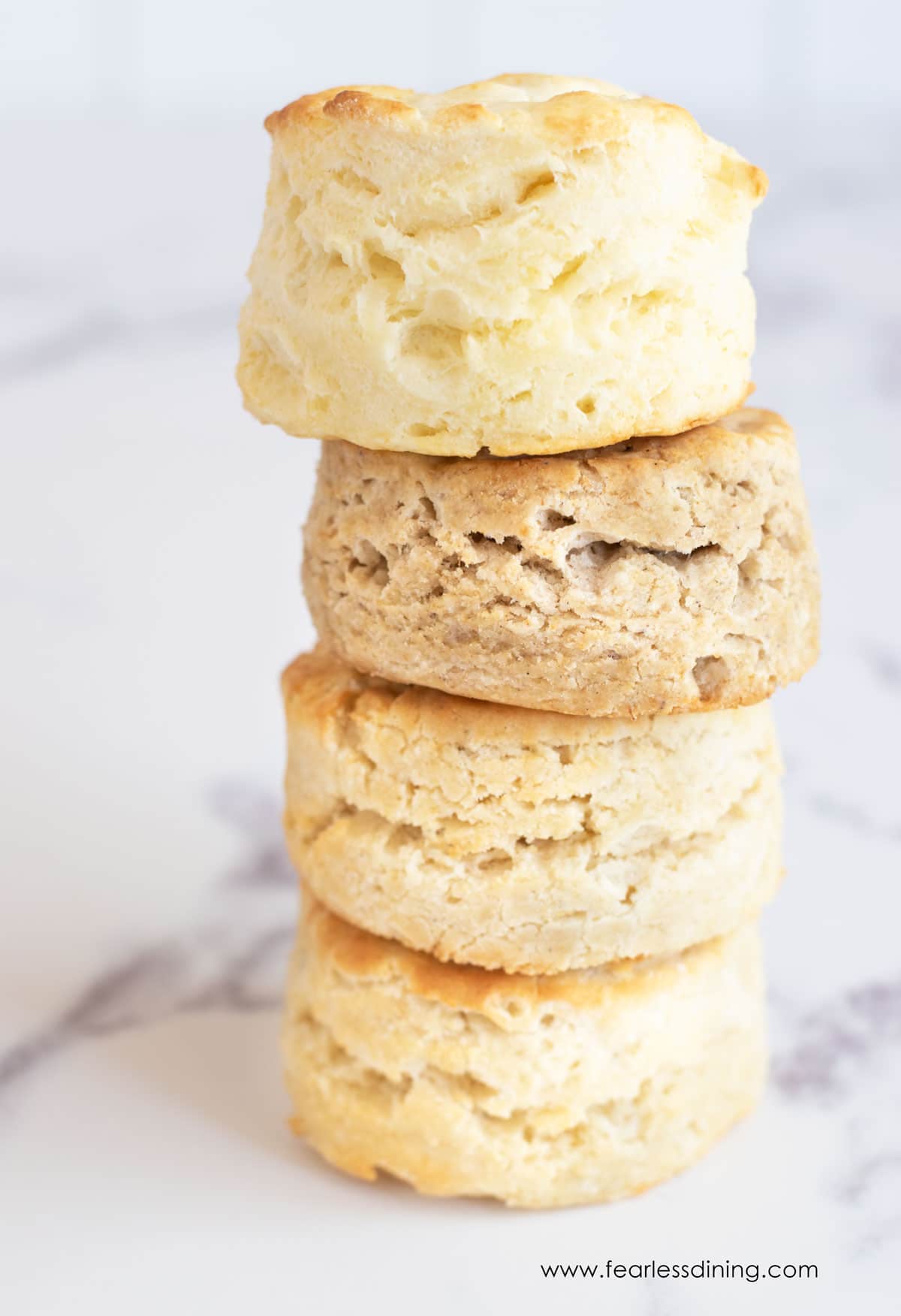
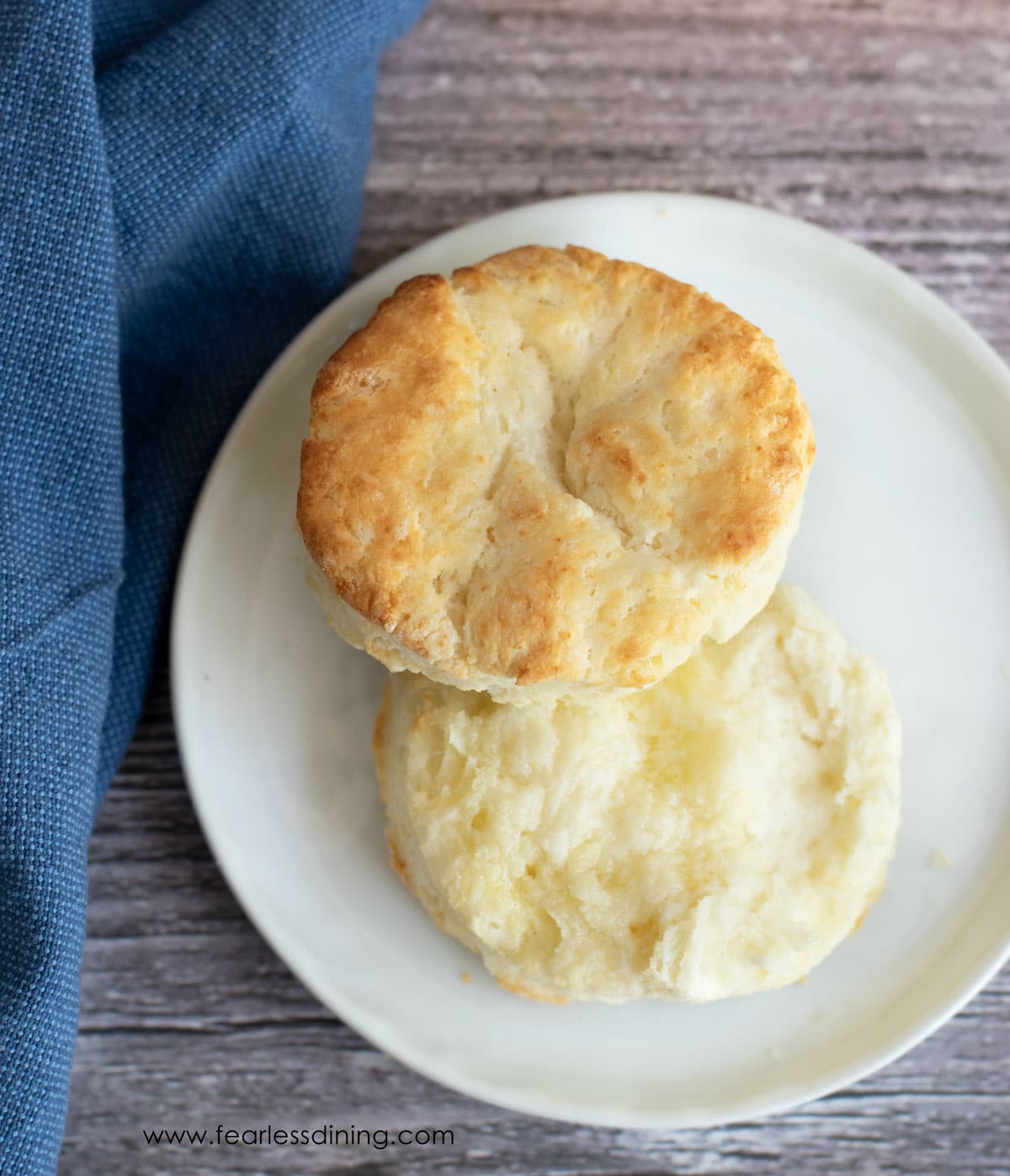
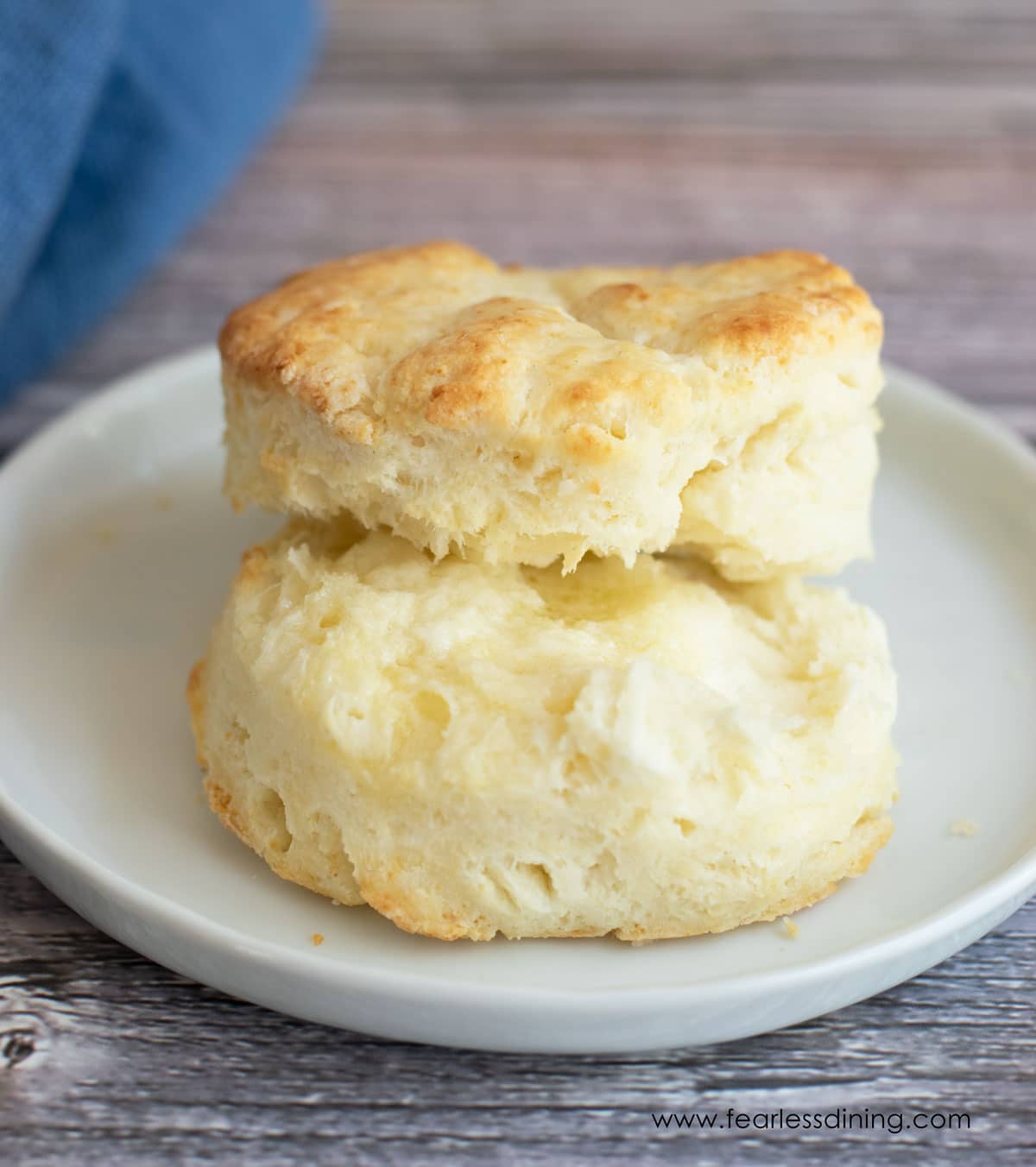
These soft and flaky gluten-free biscuits are easy to make with just 5 ingredients. I made sure this recipe is fail-proof by testing 12 different gluten-free flour blends, and I share how each blend performed and what tweaks you need to make based on the gluten free flour blend you use. There are dairy-free and vegan options as well. Whether you are new to gluten-free baking or you just want the tallest biscuit recipe, this is the recipe to make.
This post may contain affiliate links. Please read our Disclosure Policy.
❤️ Sandi’s Recipe Summary
The Quick Bite: These big, flaky biscuits are made with just 5 simple ingredients, including flour, baking powder, butter, and milk. They bake up tall with big flaky layers. This gluten free biscuit recipe is one of the most popular recipes on the blog, and turns out perfectly every time. There is also a vegan option.
I created this homemade biscuit recipe several years ago. I noticed a lot of variance between how each gluten free flour blend worked in my recipe. I decided to test this recipe using different flour blends side by side to see how they compare. I looked at the rise, texture, and taste, and then adjusted the moisture as needed for each blend so you can get consistent results.
If you are tired of making biscuit recipes that don’t turn out, are heavy like hockey pucks, or just don’t taste good, this is the recipe you need. Find the gluten free flour blend you plan to use below so you know if you need to add more milk or flour to adjust for that blend.
When I first started to create this recipe, my inspiration was this New York Times Biscuits recipe. I converted it to gluten-free. For more biscuit recipe inspiration, see all of my gluten-free biscuit recipes, which include both sweet and savory options.
Video: Watch Me Make These Gluten-Free Biscuits
Gluten Free Flour Blends I Tested and My Testing Notes
Most gluten-free flours rose similarly in my test, but many needed adjustments to the moisture level. Every blend has a different starch-to-grain ratio. Read Why Gluten Free Flour Blends Vary to learn why this happens.
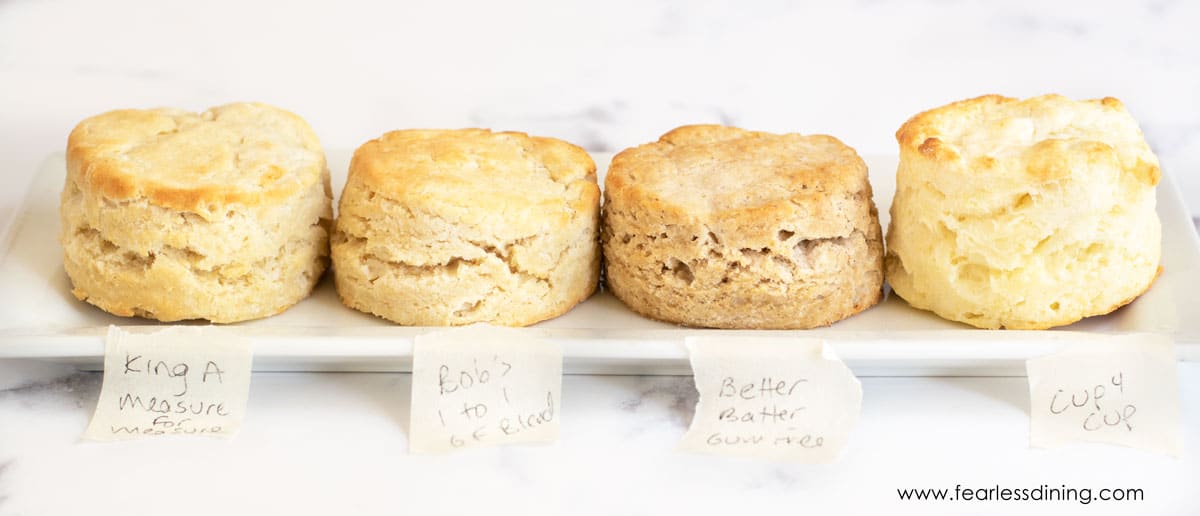
Cup4Cup had the best rise. Here are a few things that stood out, including any adjustments you need to make:
- Arrowhead Mills 1:1 – This blend needed 1 1/2 TBSP of additional milk.
- King Arthur Measure for Measure – The gluten-free biscuit dough was wetter than the other flour blends. It didn’t affect the amount of rise, but the dough spread a little more than others when baking. I didn’t add more flour, but used about two teaspoons of flour sprinkled on the top to press the dough down enough to use the biscuit cutter.
- Better Batter Artisanal Gum-Free – I had to add two tablespoons of additional milk so the biscuit dough wasn’t too stiff.
- Bob’s Red Mill 1 to 1 Gluten-Free Blend – I felt the dough was workable without additional flour or milk. I recommend letting the dough sit in the refrigerator for 15-20 minutes. This will allow the rice flour to soften.
- Cup4Cup – Cup4Cup changed/reformulated the recipe of their gluten-free flour blend. The version I loved most had dried milk powder. The new formulation is the version that says “free of the top 9 allergens” on the front of the bag. Both versions were my favorite to make this biscuit recipe with.
- Pillsbury Gluten-Free Flour Blend – This flour performed well without any additional modifications.
- Target Good & Gather Gluten-Free Blend – The biscuits tasted great, but are a little more crumbly than other gluten-free blends. I would recommend adding 2 TBSP of additional milk.
- Just About Food Whole Grain Gluten-Free Blend – I had to add almost 1/2 cup of additional flour because the biscuit dough was so wet with just 1 cup of milk. Again, this flour was terrible, and I don’t recommend using it.
- Pamela’s GF All Purpose Flour – Another winner! NOTE: You need an additional 1/4 cup of milk using this brand.
- Gluten-Free Bisquick – Check out this Gluten Free Bisquick Biscuit recipe. This blend is very rice-heavy, which means baked goods can turn out very gritty. To prevent this, chill the dough in the refrigerator for 20 minutes so that the rice flour can soften.
- I tested this recipe with my DIY Gluten-Free All Purpose Flour Blend. These gluten-free biscuits without xanthan gum turned out great. This blend was great in this gluten free biscuit recipe without xanthan gum for those who are gum-free. You need 1 TBSP of additional milk if you use my flour blend.
- Namaste Organic Flour Blend– This blend surprised me. It rose very well. I added 1 TBSP of additional milk.
Reader Tested Flour Blends:
Many of my readers also participated in this gluten-free biscuit baking test and sent me the blends they had used successfully. I love it when my readers write to me with the blends they try because we all benefit!
- Pinterest reader Jess W. said, “I use the GF Americas Test Kitchen flour blend that I make up in large quantities and add a teaspoon of xanthan gum. “Works awesome; my family loves them!”
- Sunset Divided Flour
- Jules Gluten-Free Flour
- Mannis Gluten-Free Flour
- Life Smart All-Purpose Flour Blend
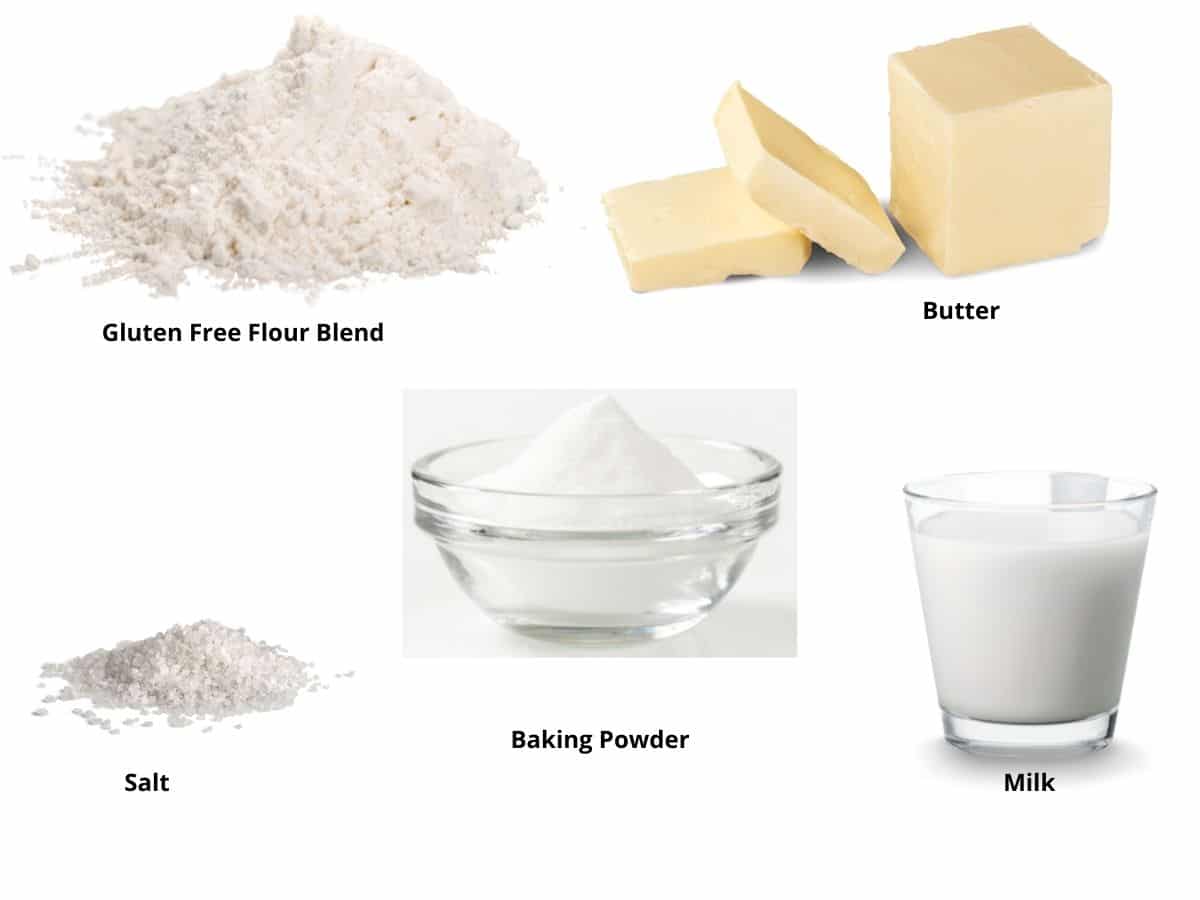
Ingredient Notes:
For the full list of ingredients and amounts, please go to the recipe card below.
- Gluten-Free Flour – See above for the best flour blend to use, and all of my testing notes on other gluten free flour blends.
- Binder – Make sure your blend contains xanthan gum or another binder. If not, add a teaspoon of xanthan gum to your flour mix.
- Baking Powder – This recipe calls for two tablespoons of baking powder. You must use aluminum-free baking powder. Regular aluminum baking powder will leave a strong metallic aftertaste. I tested Rumford, Bob’s Red Mill Baking Powder (labeled GF), and Thrive Market Aluminum-Free Baking Powder with good results. Other brands of gluten-free baking powder without aluminum include Argo and Bakewell Cream.
- Butter – I used unsalted butter. It is a personal preference. If you use salted butter, you may consider reducing the amount of added salt. Use regular butter or vegan butter. Just make sure the vegan butter is very cold if you use it.
- Milk – I prefer using whole milk. You can use non-dairy milk, but be sure to use one that is not sweetened or flavored. You can also use buttermilk if you prefer gluten free buttermilk biscuits.
I also have several flavored biscuit recipes, such as these Gluten-Free Pumpkin Biscuits and Gluten Free Cornmeal Biscuits. I also love adding fruit, like in these Gluten-Free Apple Biscuits.
How to Make Gluten-Free Biscuits (Step-By-Step):
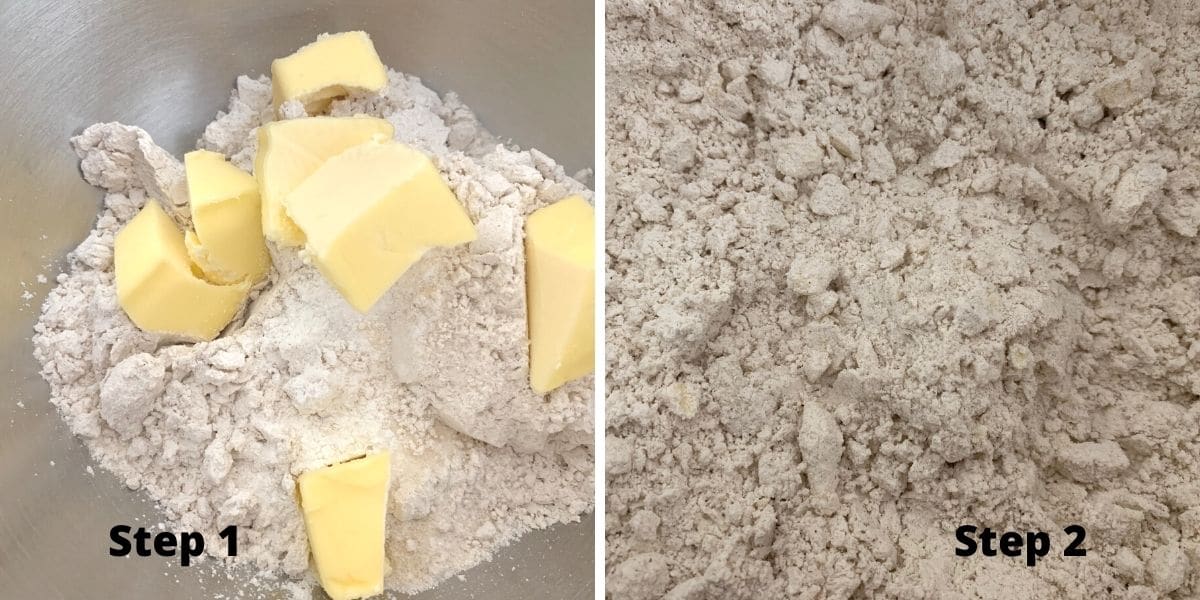
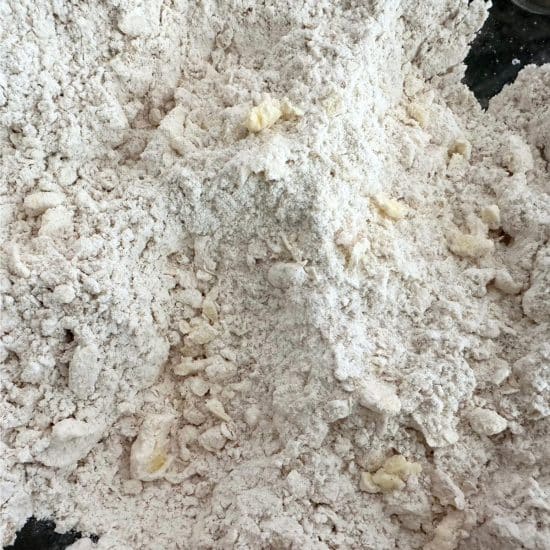
Step 1: Add your dry ingredients to a bowl and whisk them to blend. Add the 5 TBSP of cold butter. Use a pastry blender to cut the butter into the flour.
EASY TIP: If you do not have a pastry blender, freeze the butter, then grate it into the dry ingredients with a large cheese grater.
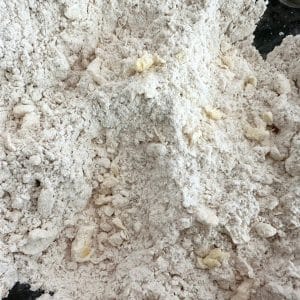
Step 2: Your flour mix will resemble crumbs, as shown in this photo.
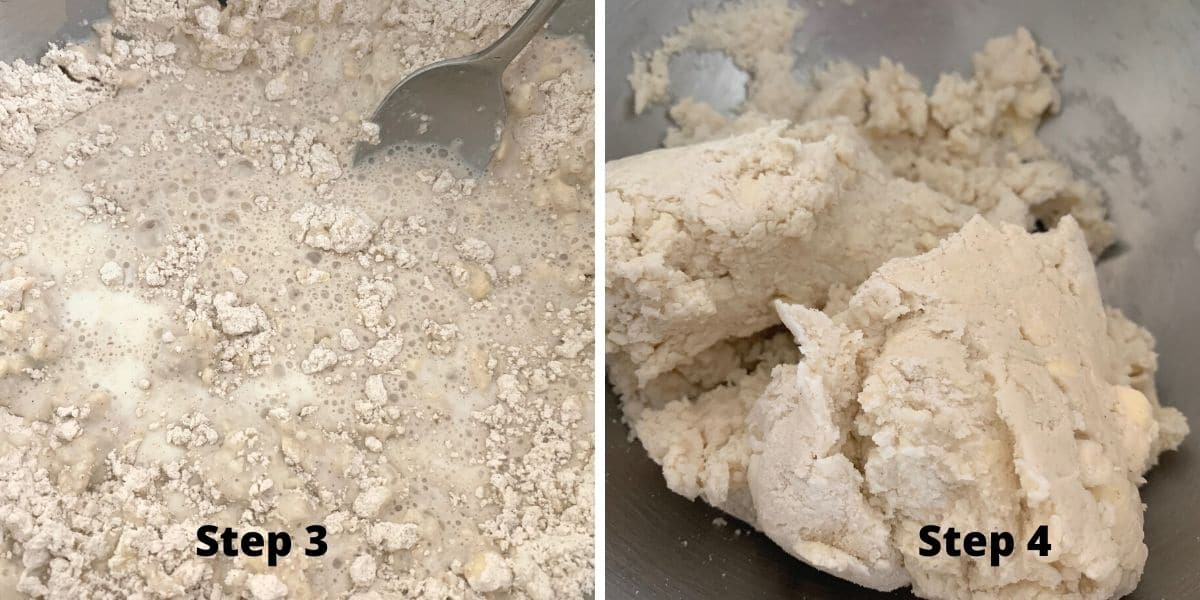
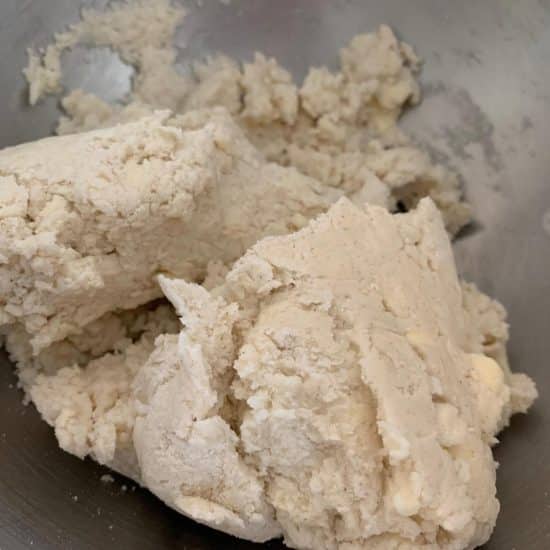
Step 3: Add the milk and mix it into the dough.
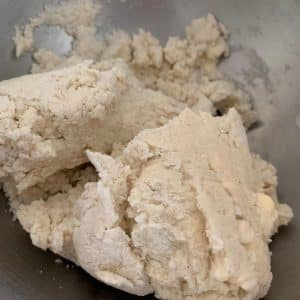
Step 4: Your dough should have a consistency similar to the one shown in the photo above. If your dough is too wet, add more flour; if it’s too dry, add more milk. If you work the dough a lot, trying to get the consistency right, put the dough into the refrigerator for 15-20 minutes to re-chill the butter.
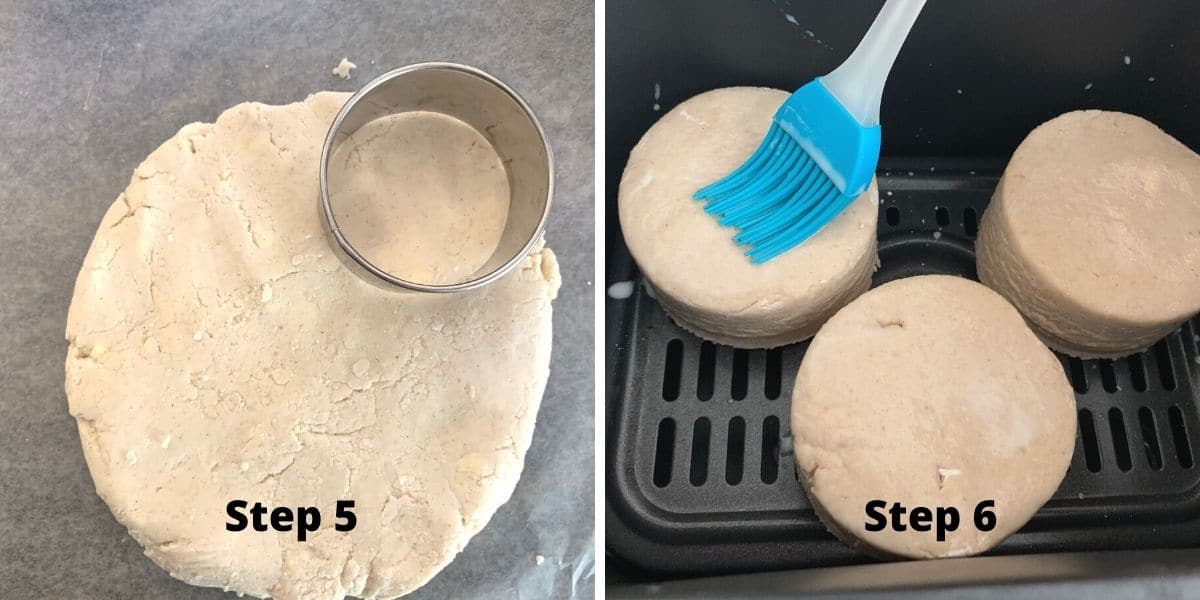
Step 5: Put the dough on a silicone mat. You may want to dust it with a tiny bit of gluten-free flour. It depends on which gluten-free flour blend you use. Press the dough to a thickness of 1 1/2 inches. Use a biscuit tool to cut out biscuit shapes from the dough. You can use a large ice cream or
Step 6: Place your biscuits on a parchment paper-lined cookie sheet to bake in the oven. Brush the top of each biscuit with milk. This will help your biscuits get that nice golden color.
Email This Recipe To Me!
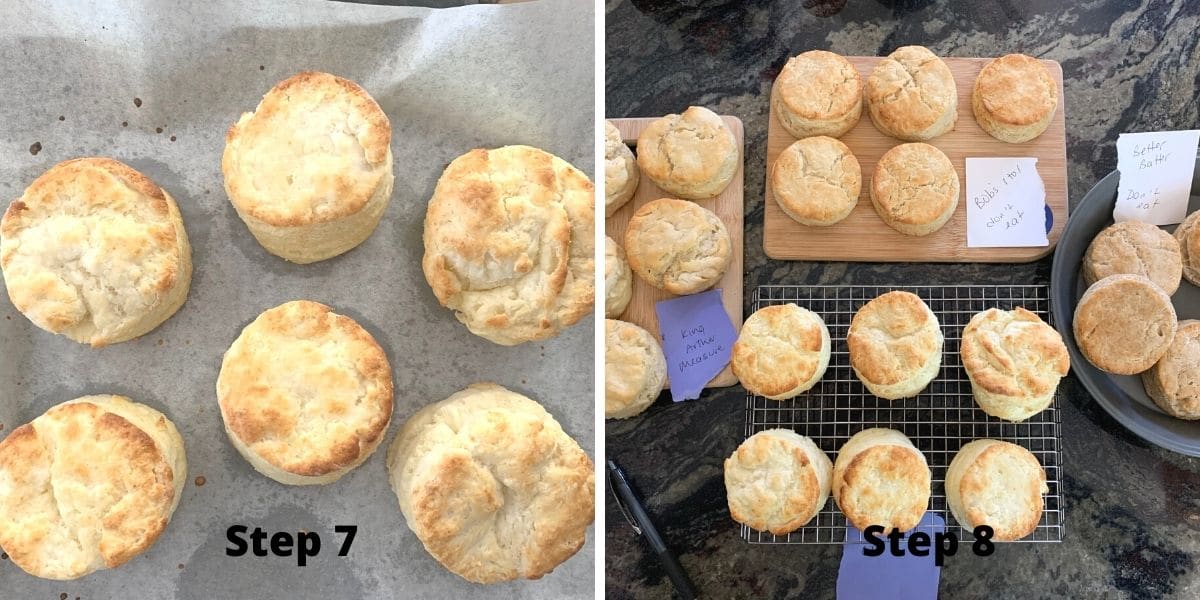
Step 7: Bake the biscuits at 425º F for 15 minutes. You will know the biscuits are done baking when they have a light golden color on top.
Step 8: Here are some test batches. I baked one at a time, so each cooled on a wire rack before transferring to another tray while the next set cooled. Note that I had to put a “Do Not Eat” sign on the biscuits so my family would not take any!
Store in an airtight container. They will stay fresh for up to 3 days, but they may not retain their fluffiness as they did on the first day. I recommend freezing the extras and reheating them in a microwave.
Spread this Kumquat Honey Butter over warm biscuits for a citrusy flavor. These biscuits are the perfect topper for my Gluten-Free Chicken Pot Pie recipe!
Biscuit Troubleshooting:
- If your biscuits turned out flat, either the dough was too warm and should be chilled for 15 to 20 minutes, the baking powder had expired, or you twisted the biscuit cutter.
- If your biscuits are crumbly, either you did not use a flour blend with a binder, or the dough was too dry. Add 1 Tbsp milk at a time to hydrate the dough.
- If your biscuits taste gritty, you may have used a rice-heavy blend, and the biscuit dough needs to rest 15 to 20 minutes before baking.
High Altitude Tips:
My reader, Lauren M., lives at a high altitude and sent these tips for those who live at a high altitude. Thanks again, Lauren!
These are absolutely amazing gf biscuits! I used Bob’s Red Mill 1 to 1 flour. As I live in high altitude, I found that increasing the temperature to 450ºF and reducing the baking time to 10 minutes really helps them to rise better. Also, I reduced the baking powder by 1/4 teaspoon and increased the milk to 1 1/4 cups of milk. Again with high altitude, you have to know the little details to make sure it comes out right.
Frequently Asked Questions:
Yes! Make these vegan by using vegan butter and dairy-free milk. Several readers made these biscuits vegan using Country Crock, Violife, and Earth Balance. They have also used almond milk and rice milk. I have had success with Oatly Basic.
Yes, you can use buttermilk to make the biscuits. It is very easy to make buttermilk from scratch. Reduce the baking powder to 2 teaspoons and add 1/2 teaspoon of baking soda.
Yes, that is not a typo.
I made these biscuits tonight for a de-constructed chicken pot pie. Because it was the first time I tried the recipe, I didn’t know if they would get soggy cooking them on top of the the chicken and vegetables. I used King Arthur Measure for Measure flour. I made them dairy free with almond milk and Country Crock Plant Butter. I used 2 extra tablespoons of almond milk. I made 8 drop biscuits that baked in about 16 minutes. They were the best biscuits I have had since becoming gluten free about 12 years ago.”
Bethany, Blog comment
My Favorite Biscuit Tools:
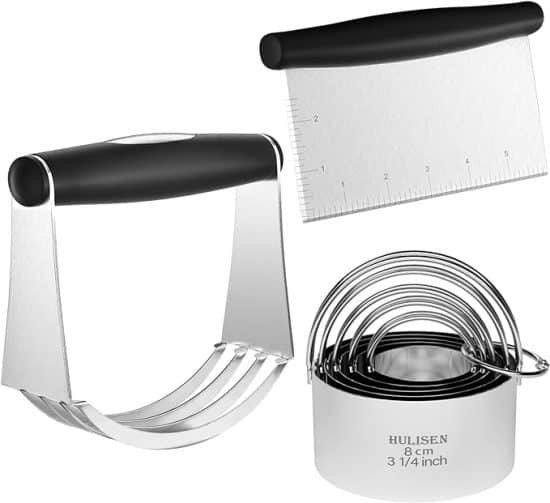
I absolutely love this biscuit set I bought on Amazon. It has everything you need to make biscuits (or scones). It includes a pastry blender, biscuit tool in multiple sizes, and a cutting tool for making square-shaped biscuits. It is all dishwasher safe and easy to clean.
You can also make these biscuits in your air fryer. Just follow these directions for my Gluten-Free Air Fryer Biscuits.
More Gluten-Free Biscuit Recipes to Try:
If you liked this biscuit recipe, try one of my other biscuit flavors! Here are some favorites:
- These Gluten-Free Cheese Biscuits are easy to make. Use any cheese flavor you enjoy!
- Sweeten things up with these Gluten-Free Cinnamon Sugar Biscuits.
- We love serving these Gluten-Free Oat Biscuits with breakfast!
- Vary the sweetness level to make these Gluten-Free Chocolate Biscuits sweet or savory!
- Need grain-free? These Paleo Biscuits get rave reviews!
- Use sourdough discard to make these Gluten-Free Sourdough Biscuits.
- These Gluten-Free Bacon Cheddar Biscuits are also tasty!
Love This Recipe?
💬 Did you make this gluten-free biscuit recipe? I would love to hear how it turned out, and which pan or flour blend you used! Your feedback helps others (and helps me keep improving these recipes for you). ⭐⭐⭐⭐⭐
Gluten-Free Biscuits (Big, Flaky, and Easy!)
Ingredients
- 2 cups gluten free flour blend See note section below for gram measurements
- 2 tablespoons aluminum-free baking powder 26 grams; see note
- 1 teaspoon salt 6 grams
- 5 tablespoons unsalted butter 71.5 grams; COLD
- 1 cup milk 227 grams; see note
Equipment
Method
- Combine 2 cups gluten free flour blend, 2 tablespoons aluminum-free baking powder, and 1 teaspoon salt in a large mixing bowl and whisk the ingredients to blend them. If your flour blend doesn't have a binder, see the NOTES section below.
- Add the cold 5 tablespoons unsalted butter to the mixing bowl.5 tablespoons unsalted butterUse a pastry blender to chop in the butter into the flour. These cold butter shreds are what helps make the flaky layers! You want the final mixture to look like flour with a lot of butter crumbs.

- Add the 1 cup milk to the bowl and mix to form a nice dough ball. It should be soft, firm, and workable. Do not overwork the dough or the butter bits will melt.
- Preheat your oven to 425º F. This hot temperature helps the biscuits rise quickly.
- Put the dough on wax paper or a silicone mat. Depending on the gluten-free flour blend you used, you may want to dust the wax paper or silicone mat with a tiny bit of gluten-free flour. It depends on which gluten free flour blend you use. Press to 1 1/2 inch thickness.
- Use a biscuit cutter to cut out biscuit shapes from the dough. If you prefer, you can use a large ice cream scoop or cookie scoop to make drop style biscuits.
- Place each biscuit on a parchment paper lined cookie sheet.
- Brush the top of each biscuit with milk. This will help your biscuits get that nice golden color on top. (Note, if you are using dairy-free milk, the biscuits will not get as golden in color.)
- Bake at 425º F for 15 minutes until the biscuits are golden on top. (If you use plant-based milk and butter, the biscuits will not get as golden. You can tell they are finished baking when they have risen and have visible risen layers.)
Nutrition
Notes
- Gram Measurements: King Arthur Measure for Measure is 291.4 g, Bob’s 1:1 is 304.4g, Namaste is 267.2g, and Cup4Cup 297.8g (old version). I haven’t had a chance to measure other blends. Other gluten-free blends will weigh differently, so if you bake by weight, please check your brand’s nutrition label or weigh 1 cup yourself before starting.
- Please read my full post for the list of tested gluten-free flour blends and the adjustments needed. It is too long to post here in the notes.
- If your blend does not contain a binder such as xanthan gum or psyllium husk as a binder, add 1 tsp of xanthan gum.
- You need to use VERY cold butter. If you use a grater, use frozen butter.
- This recipe calls for 2 TBSP of aluminum-free baking powder. Be sure to use aluminum-free baking powder. Regular aluminum baking powder will leave a metallic aftertaste. I used Thrive Market Aluminum-Free Baking Powder. Other brands of gluten free baking powder without aluminum include Rumford, Argo, and Bakewell Cream.
- To make this biscuit recipe dairy-free, use non-flavored/sweetened dairy-free milk and vegan butter. Several readers have successfully tested multiple dairy-free brands.
- Each brand of flour blend performed a little differently. This is because every blend has a different starch-to-grain ratio. Please read the post for some tips for each blend. Some needed additional liquid.
- If you prefer to use buttermilk, you can add 1 TBSP of lemon juice to one cup of milk. Use 2 teaspoons of baking powder and 1/2 teaspoon of baking soda if you use buttermilk.
- These biscuits will keep fresh for up to 3 days in an airtight container or up to 4 months in the freezer. Freeze the cooled biscuits in a freezer-safe container or zipper bag.
Private Notes
Tried this recipe?
Let us know how it was!
I truly hope you enjoy this recipe. I have been testing and creating gluten-free recipes for over 15 years. Creating gluten-free recipes that do not taste gluten-free is my goal for every recipe. Sometimes I only have to test a new recipe a couple of times, and others it takes multiple times. I do this so you get reliable, delicious results every time!

So easy and so good!! Thank you!!
Thank you so much, Debbie. I am so glad you enjoyed the biscuits!
I use King Arthur, frozen butter, aluminum free BP, I did use buttermilk.
They were not worked a lot .. everything as it should be.. they were like hockey pucks. Why???
Hi Stacey, thank you so much for writing. I am sorry this didn’t work out for you as you had hoped. I put notes in both the FAQ and the recipe card notes that state that if you use buttermilk. It sounds like you may have missed my notes. Buttermilk adds acid, so you need to reduce the baking powder and add a little baking soda. You must use some baking soda because of the buttermilk. I do hope you try again.