


This gluten-free sourdough starter recipe begins with just two ingredients: rice flour and water. As the wild yeast multiplies, you learn how to feed it on a regular schedule and then watch it come to life over seven days. This day-by-day schedule below tells you exactly what to expect, when to feed and discard, and how to tell the difference between a healthy starter and one that needs your attention.
This post may contain affiliate links. Please read our Disclosure Policy.
❤️ Sandi’s Recipe Summary
The Quick Bite: This is the starter I have made many times over the years. I use brown rice flour, purified water, and patience. This day-by-day schedule tells you exactly what to feed it, how often, when to discard, and what healthy fermentation actually looks like, so you are not guessing.
I have been making gluten-free sourdough starters for about 8 years, and I have killed more than a few along the way. A starter that looks perfect on day three can go completely flat by day five, and if you do not know why, it is easy to give up and assume gluten-free sourdough is just too hard. It is not. It just behaves differently from a wheat starter, and once you understand what to watch for, this process is actually straightforward.
My guide walks you through every day of the process, from the first mix of flour and water through the moment your starter is ready to bake with. I cover which flours work well, which ones to avoid, how to keep your starter warm enough to ferment, and how to read the signs that tell you whether things are on track or need adjusting. If you want to give your starter a jump-start, I also include the option to use a Cultures for Health Gluten-Free culture, which I have found improves success rates, especially in cooler kitchens.
Once your starter is established, you can use the discard in gluten-free sourdough and discard recipes long before you are ready to bake a full loaf.
Planning to Make the Starter:
It is important to plan before you begin to make your starter. Decide whether to make your starter with just flour and water, or give it a jump-start using Cultures for Health Gluten-Free Culture. I have made starters using both methods, and I find my readers have a higher success rate with the flour-and-water plus culture.
- Always use purified water when making sourdough or baking with yeast. Chlorine and chemicals in our tap water can kill your yeast and inhibit the rise. To get the best rise, you must use purified water that doesn’t contain these chemicals.
- Plan how you want to keep your starter warm, between 72 and 79ºF. Your starter will not ferment or establish if it is too cold.
- Choose what flour you will use to grow your starter. Years ago, I used a gluten-free flour blend, but over the years of making starters, I have found that a single-grain flour is best and less expensive. I have seen folks grow successful starters with brown rice flour, millet flour, sorghum flour, buckwheat flour, and other types. My favorite is brown rice flour.
Why I don’t recommend using starches:
I do not advise using pure starch sources such as tapioca and potato. When you use pure tapioca or potato starch as your base flour, the starter may show some early bubbling due to bacterial activity, but it will not develop a stable yeast colony. Starches ferment differently from whole-grain flours and do not provide the nutrients wild yeast needs to establish long-term.
Keeping Your Starter Warm:
When getting your starter going, keep it warm enough for the bacteria to grow. I have found several ways to keep the sourdough starter warm.
Many of my readers keep their sourdough starter in their oven with the light turned on and the door closed. The light generates enough heat to keep the starter warm. The two cons of this method are that you can burn out the light, and if someone forgets your starter is in the oven, someone may preheat the oven and ruin your starter.
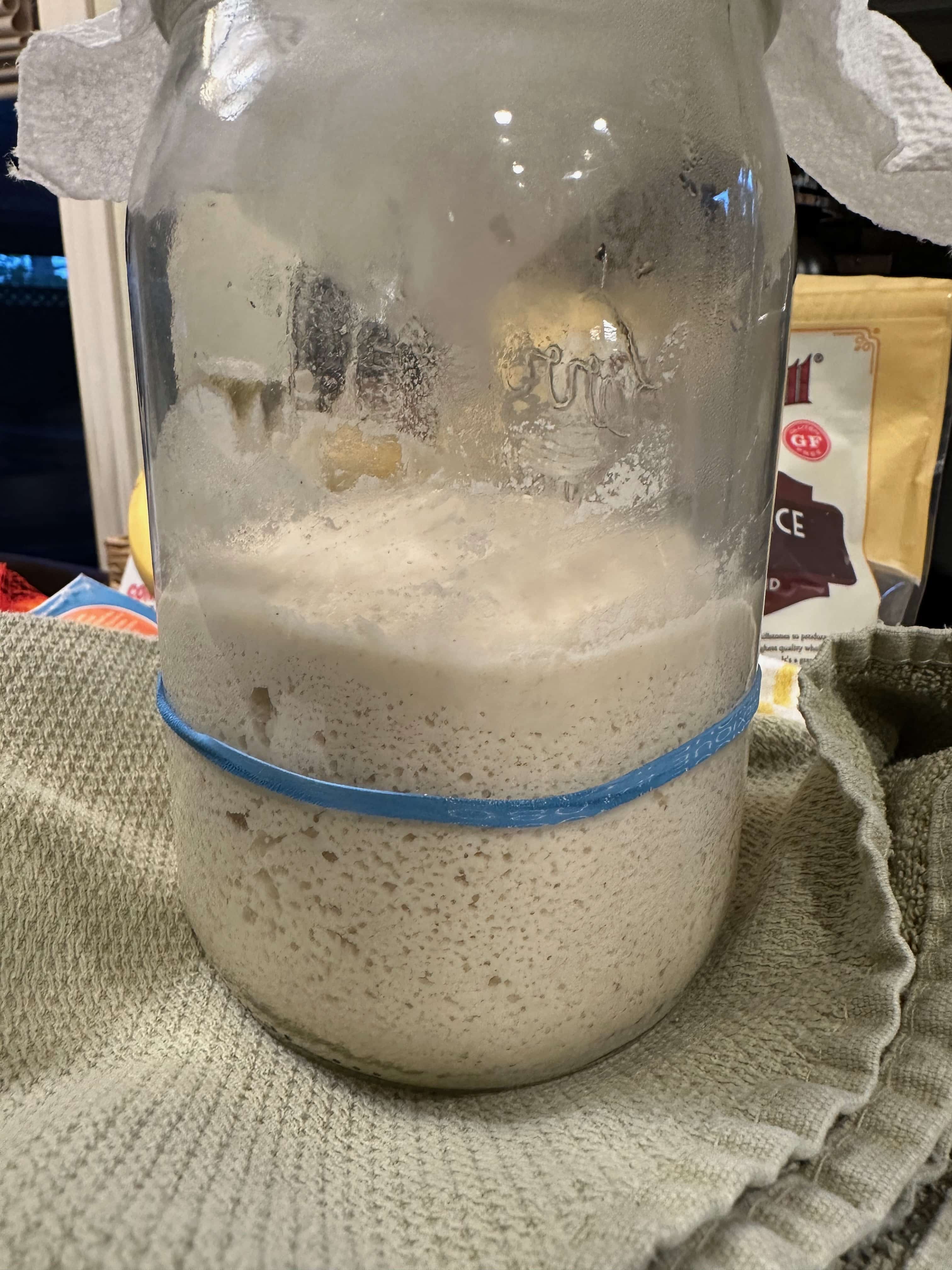
I use an old Euro Cuisine Yogurt Maker base that my mother-in-law gave me. I plug in the base and place two folded dish towels on top to help prevent it from getting too hot at the bottom of the jar. I place the jar on top of the towels.
They also make sourdough warming mats that easily fit a quart-sized mason jar. This is better than the option I used above because you can set the temperature.
Sourdough Starter Instructions:
I share a lot of important tips and recommendations on making your gf sourdough starter. Everything from the best water to use and how to keep your starter warm.
Start with the right tools; read My Favorite Sourdough Tools for a full list of equipment.
Day 1:
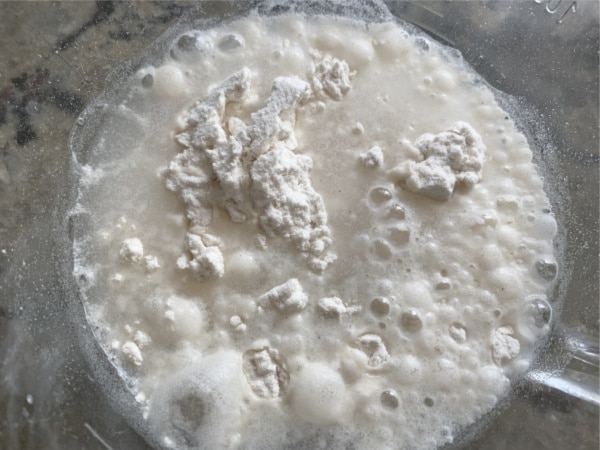
- Mix equal parts of gluten-free flour and water (1:1 feed ratio) in a clean bowl or quart-sized mason jar. I start with 1/4 cup of flour to 1/4 cup of water. You want the starter to have the consistency of thick pancake batter.
- If you are using the Cultures for Health Gluten-Free Culture, add it to the jar. Mix well.
- Cover loosely with a clean, breathable dishcloth and keep at 72 to 79°F for optimal growth.
- Plan to feed the starter 2 times a day.
- Choose a name for your starter! We named this starter “Freddie,” and it became a running family joke about who remembered to feed her. You do not need to name your starter, but if it helps you feel connected to the process, go for it.
Email This Recipe To Me!
Sandi says: Equal parts flour and water by volume give the yeast enough food without diluting the colony you are building. Going heavier on water produces a thinner starter that ferments unevenly; going heavier on flour starves the yeast before the next feeding.
Day 2:
- On day two, feed the starter 1/4 cup of purified water and mix it well.
- Add 1/4 cup of the rice flour and mix it in. Adding and mixing the water into the starter first helps to aerate the flour and water mixture, so when you add the flour, it will mix in easily to feed the yeast.
- Note: Keep the 1:1 flour-water ratio. Again, be sure to use filtered water and stir the starter well.
- Feed 2 times a day.
Days 3-4:
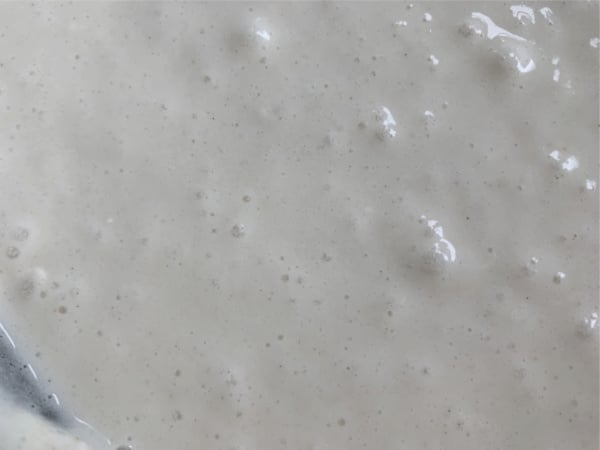
- After 3-4 days, your mixture should begin to smell sour and have some bubbles.
- On day 3, it is time to discard! By discarding some of your starter, the remaining starter can continue to strengthen and establish itself with the feeds.
- Mix the starter well and then remove 1/4 cup of the mixture to discard.
- Next, add the 1/4 cup of water, mix it well, then add the 1/4 cup of brown rice flour. Mix again and then cover it with a clean dishcloth or paper towel.
- Feed the starter 2x per day as instructed. Note: You only discard once a day.
👀 Sandi Says: Your starter is too young to use in discard recipes at this point, so place the discard in the trash or in your compost bin. Do not dump the discard down the drain. It is sticky and can cause many plumbing issues.
Day 5 and Beyond:
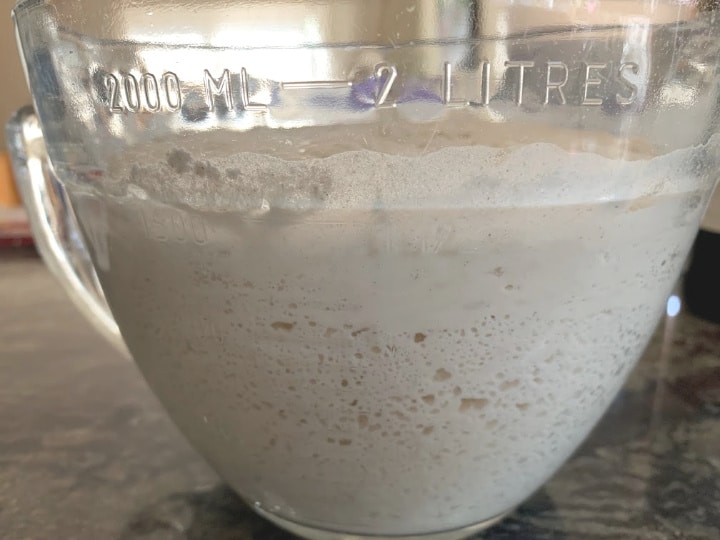
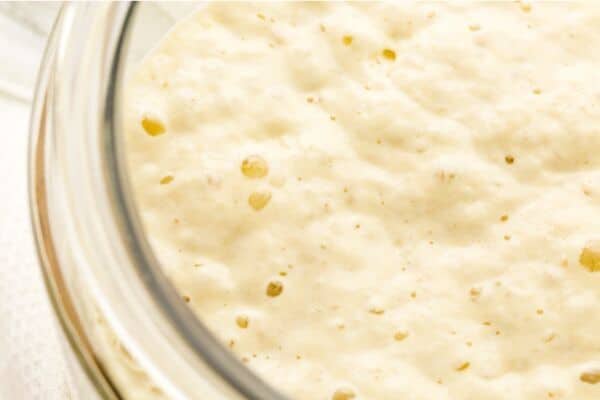
This is what the starter should look like now! Look for lots of bubbles. It should still have the consistency of thick pancake batter because you are following the 1:1 flour and water ratio. Sometimes it takes a few extra days, so keep repeating the feeding and discarding steps.
Keep feeding on the 1/4 cup flour to water ratio, discarding daily.
On day 7, if your starter is really bubbling well, you can begin to store and use the discard in recipes like these Gluten Free Sourdough Discard Biscuits and these Gluten Free Sourdough Discard Muffins.
What a healthy starter looks like:
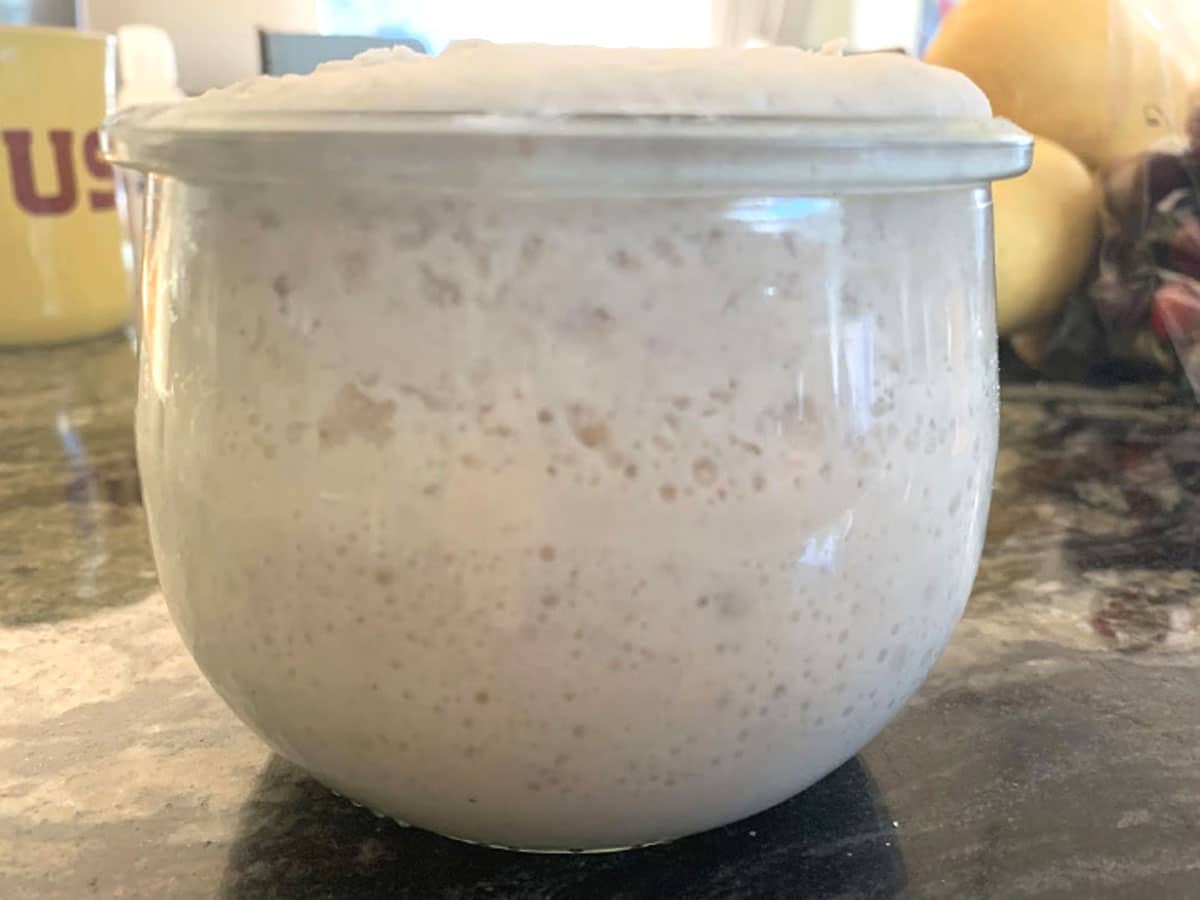
A gluten-free starter should rise 50-75% around 3 to 6 hours after a feed. You should see are visible air bubbles and pockets with a slightly domed surface. It should have a mildly tangy, slightly yeasty, sour or yogurt-like smell.
If your starter is not bubbling, here are some things to check:
- Are you keeping the discard warm? Check the temperature of the discard. Yeast needs warm temperatures to activate and grow.
- Are you using filtered water? Chemicals will inhibit yeast growth.
- Are you feeding it often enough? Twice-a-day feeding will help keep the yeast fed.
- Are you using a gluten-free flour blend? Sometimes the starch and binder in the blend can slow things a little because of the starches and xanthan gum.
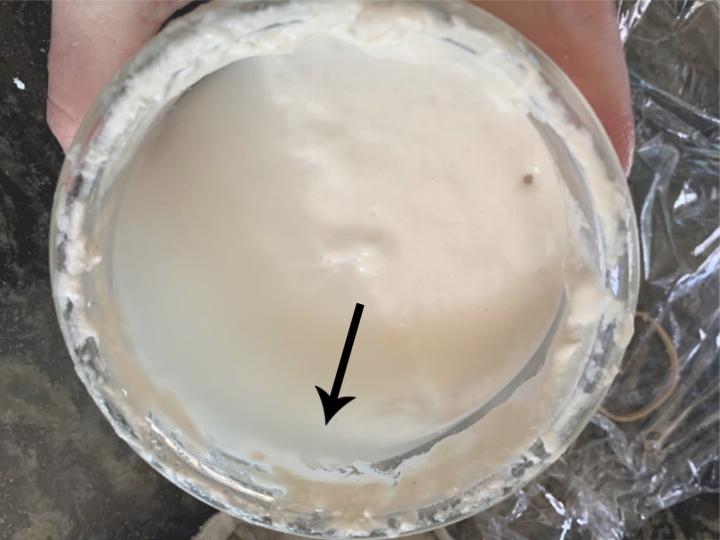
🔑 Sandi says: If you see clear liquid on top of your starter, this is called hooch. This means your starter is hungry and you need to feed it. You will want to drain off that liquid before feeding the starter.
How do I know if the starter has gone bad?
If you don’t see many bubbles or if something seems off, smell your starter and take a close look at it. Discard it immediately if you notice:
- rotten/chemical odor
- pink or orange streaks
- fuzzy growth
How To Store Your Gluten-Free Sourdough Starter:
The starter should be kept on the counter, warm, for another week or two, feeding and discarding as needed until it is well established. I do not recommend storing your starter in the fridge until it is at least 2-3 weeks old and established.
If you don’t bake often, store it in the refrigerator. The refrigerator slows the fermentation process, and it puts your starter to sleep so you don’t have to feed it as often.
A good way to tell if your starter is ready to refrigerate is to see if it doubles within 3-6 hours of feeding; if it does, it is ready to refrigerate.
How to store your gluten free sourdough starter:
- Do not store your sourdough starter in a metal container. Store in a glass or ceramic container. I store mine in a quart-sized mason jar. (These are my favorites because they have lids!)
- Time to Store the Discard! You will want to continue discarding by removing some of the discard before feeding the starter. Feed the starter before putting it in the fridge.
- If the starter is on the younger side, feed it in the refrigerator every 4-5 days. Once your starter is well established, it can go into the refrigerator. As the sourdough starter ages, you can feed it less often, once every 1 1/2 to 2 weeks. I feed mine by adding 2 TBSP of flour to 2 TBSP of purified water. Stir it well so the flour is incorporated. If your blend is starchy, you can use 3 tablespoons of water.
- Cover the jar with the lid and refrigerate.
When you plan to bake with your starter, remove it from the refrigerator the night before, discard some, feed it, and let it come to room temperature. Keep it covered with a clean, damp kitchen towel.
What to make with the discard:
Want more ways to use up your gluten-free sourdough discard? Don’t miss my full list of tested gluten-free discard recipes!
You can use the discard to make these Gluten-Free Discard Crackers or these Gluten-Free Sourdough Discard Crackers if you choose to discard. We also love these Gluten-Free Sourdough Discard Cinnamon Rolls.
Frequently Asked Questions:
Yes, you can switch flour types. Fermentation may slow for a day or two, depending on whether you use a blend or single-grain flour, but it will pick up again!
Yes, you can freeze the sourdough starter. If you freeze the starter, you will not have to feed it. When you are ready to bake the bread, you must give the sourdough starter a week before the dough is active again. You must begin the feeding process once you remove it from the freezer.
Freezing the starter is an excellent idea if you don’t have the time and effort to keep feeding it. I recommend freezing.
Don’t forget to check out the next step…making sourdough bread!
Gluten-Free Sourdough Recipes To Try:
- This sourdough starter, aka levain, is used in my Gluten-Free Crescent Rolls recipe.
- Gluten-Free Sourdough Discard Scones – Perfect for using up discard!
- Don’t forget to check out the next step…making the Gluten-Free Sourdough Bread! This recipe makes a sandwich-style loaf using 1:1 gluten-free flour blends!
- My new favorite is this rustic Gluten Free Cranberry Walnut Sourdough Bread or Gluten Free Whole Grain Sourdough Bread.
- Use this gluten-free sourdough starter to make this homemade Gluten-Free Sourdough Boule
Love This Recipe?
I still have readers message me years later about the success they had after finally getting their starter active. If that ends up being you, I would genuinely appreciate hearing it. Drop a comment below, and let me know how it turned out!
How to Make a Gluten-Free Sourdough Starter Recipe (Day-by-Day Schedule)
Method
- It is important to read my entire post before making this gluten-free sourdough starter. This is one recipe where it is IMPORTANT to read my whole recipe post, not just this recipe card. I have a lot of experience with sourdough, and the tips I share are valuable to your success.
- Mix equal parts of a gluten-free flour blend and water (1:1 feed ratio) in a clean bowl or quart-sized mason jar. I start with 1/4 cup of flour to 1/4 cup of water. You want the starter to have the consistency of thick pancake batter.
- NOTE: I highly recommend using filtered or bottled water. Chlorine and chemicals will kill the beneficial bacteria you are trying to grow.
- You will feed the starter 2 times a day. Mix well. Cover loosely with a breathable cloth and keep at 72–79°F for best growth. (See Notes)
- On day two, feed the starter 1/4 cup of purified water and mix it well.
- Add 1/4 cup of the rice flour and mix it in. Adding and mixing the water into the starter first helps to aerate the flour and water mixture, so when you add the flour, it will mix in easily to feed the yeast.
- Feed it twice a day.
- After 3-4 days, your mixture should begin to smell sour and have some bubbles. Keep feeding your starter twice a day until it is full of bubbles and doubles in size within a few hours of feeding it.
- Time to discard! As the amount of starter in your jar grows, I recommend discarding some. Mix the starter well and then remove 1/4 cup of the mixture to discard.
- Next, add the 1/4 cup of water, mix it well, then add the 1/4 cup of brown rice flour. Mix again and then cover it with a clean dishcloth or paper towel.
- Feed the starter 2x per day as instructed. Note, you only discard once a day.
- NOTE: Your starter is too young to use in discard recipes at this point, so place the discard in the trash or in your compost bin. Do not dump the discard down the drain. It is sticky and can cause many plumbing issues.
- Look for lots of bubbles. It should still have the consistency of thick pancake batter. Sometimes it takes a few extra days, so keep repeating the steps of feeding and discarding.
- Keep feeding on the 1/4 cup flour to water ratio twice daily, discarding once a day.
- The starter should be kept on the counter, warm, for another week or two, feeding and discarding as needed until it is well established. I do not recommend storing your starter in the fridge until it is at least 2-3 weeks old and established.
- A good way to tell if your starter is ready to refrigerate is to see if it doubles within 3-6 hours of feeding; if it does, it is ready to refrigerate.
Nutrition
Notes
- I have used sorghum, brown rice, millet flour, and gluten-free flour blends successfully to make a starter. I prefer brown rice flour because it is a lot less expensive than a flour blend.
- If you want to jumpstart the process of growing a wild yeast starter, get the Cultures For Health Gluten-Free Culture to jump-start your starter.
- I found brown rice flour works much better than a flour blend, and it is less expensive to use compared to a gluten-free flour blend.
- In order to give your natural yeast a chance, you must use purified water. Chlorine in tap water can kill your yeast, not growing your starter.
- I include very detailed instructions for storing your sourdough starter in my blog post. Please refer back to that because it has a lot of important information.
- I include a very detailed troubleshooting section in my blog post to help if something does not look or smell right.
Private Notes
Tried this recipe?
Let us know how it was!
I truly hope you enjoy this recipe. I have been testing and creating gluten-free recipes for over 15 years. Creating gluten-free recipes that do not taste gluten-free is my goal for every recipe. Sometimes I only have to test a new recipe a couple of times, and others it takes multiple times. I do this so you get reliable, delicious results every time!

Wow! I have tried several times to make GF starter and failed. Fearless Dining for the win. Thankful for all the tips and support. These are things that made a huge difference in making this recipe. I’m so excited about all the possibilities of sourdough baking that have now opened up to me!
Thank you so much, Rachelle. This means so much to me. I can’t wait to hear what else you make.
I am on day 13. I used brown rice flour and cultured and have been following daily. I do not see the rise of 50-75% around 3 to 6 hours after a feed. I see visible air bubbles and pockets with a slightly domed surface. It does smell mildly tangy, maybe a little yeasty. Something a little liquid pools on top. Probably only rises 1/2 to 1 inch over the band after feedings. Which are 7 am and 7 pm with one discard. Should I be concerned ? Or just be patient?
Hi Elaine, It would be really helpful if you could please send some photos. The liquid is called hooch, and that means your starter is hungry. How often are you feeding it? Also, how warm is it where you have it rising? My email is admin@ fearlessdining .com
Thank you. I sent photos. I’m feeding twice a day at 7 am and 7 pm, discarding in the evening. I have the jar on a warmer but it does off after 4 hrs unfortunately. I have it set at 78. The house is about 72, but I know it may get a little cooler as well. I have alternated pouring off that liquid and storing it in. I’m not sure what to do.
Hi Elaine, I got your email and sent advice. I am excited for your starter to get super bubbly.
Today is day 7. My starter is actively rising. I have used the suggested brown rice flour, cultures, purified water and a sourdough warmer. When can I bake bread? Do I need to let the started sit for two weeks on my counter?
I have used a quart size mason jar. It is currently about 2/3 full. Is this too much? Should I be discarding more than 1/4 cup?
Hi Elle, That is great news. Let me respond in order. If your starter is doubling a few hours after feeding, and bubbly, you can bake now. You do not want to refrigerate the starter until it is more established, give it 1 1/2-2 weeks on the counter, feeding and discarding daily. Do not use the discard for recipes until it is closer to a month old. If you are going to bake, that will reduce the amount in the jar, so no need to discard.
Hello
I’m following your GF starter on #8
Its smells like sour dough and it has bubbles and it’s rising nicely
But will not put in fridge like you said for another 2-3 weeks
Just wondering do I still discard 1/4 cup daily and fed 2 x daily for the next few weeks 1/4cup GF flour and water.
I saw that you discard 2TBPS and added the same GF flour and water the same amount is that correct for the next 2 weeks or is that for just feeding it when put in the fridge?
Thanks
Brenda
BTW I make regular sourdough bread for my hubby and I’m looking forward to my own FG sourdough bread.
Hi Brenda, thank you for your note. I am so glad your starter is rising nicely. Once the starter is established, as yours sounds, I would move to feeding 2 TBSP and discarding 2 TBSP for the next two weeks. Once it is in the refrigerator, you can feed 2-3x a week.
Hi Sandi
Thanks for responding back to me.
Ok so once it’s in that refrigerator I feed it 2-3 x a week or is it every 2-3 weeks?
Just want to make sure.
Also after in the refrigerator I can save the discard correct to bake with !
Hi Brenda, Yes, but it should be very well established before refrigerating it. 2-3x is per week. Once it is old enough to refrigerate, you can use and bake with the discard.
Do I move to 1x/day feeding & discarding at the 7 day mark or do you keep doing 2x/day with 1x/day discard until you’re ready to put it in the fridge? I’m getting a little concerned about adding in more than I’m discarding afraid that it’s going to get too full. Tomorrow is my 7 day mark.
Hi Leslie, As long as your starter is on the counter, you need to feed it twice a day. I would wait until it is very well established over at least 2-3 weeks before storing it in the refrigerator. Feel free to discard more, but don’t use it in a recipe until it is more established. What flour blend are you using?