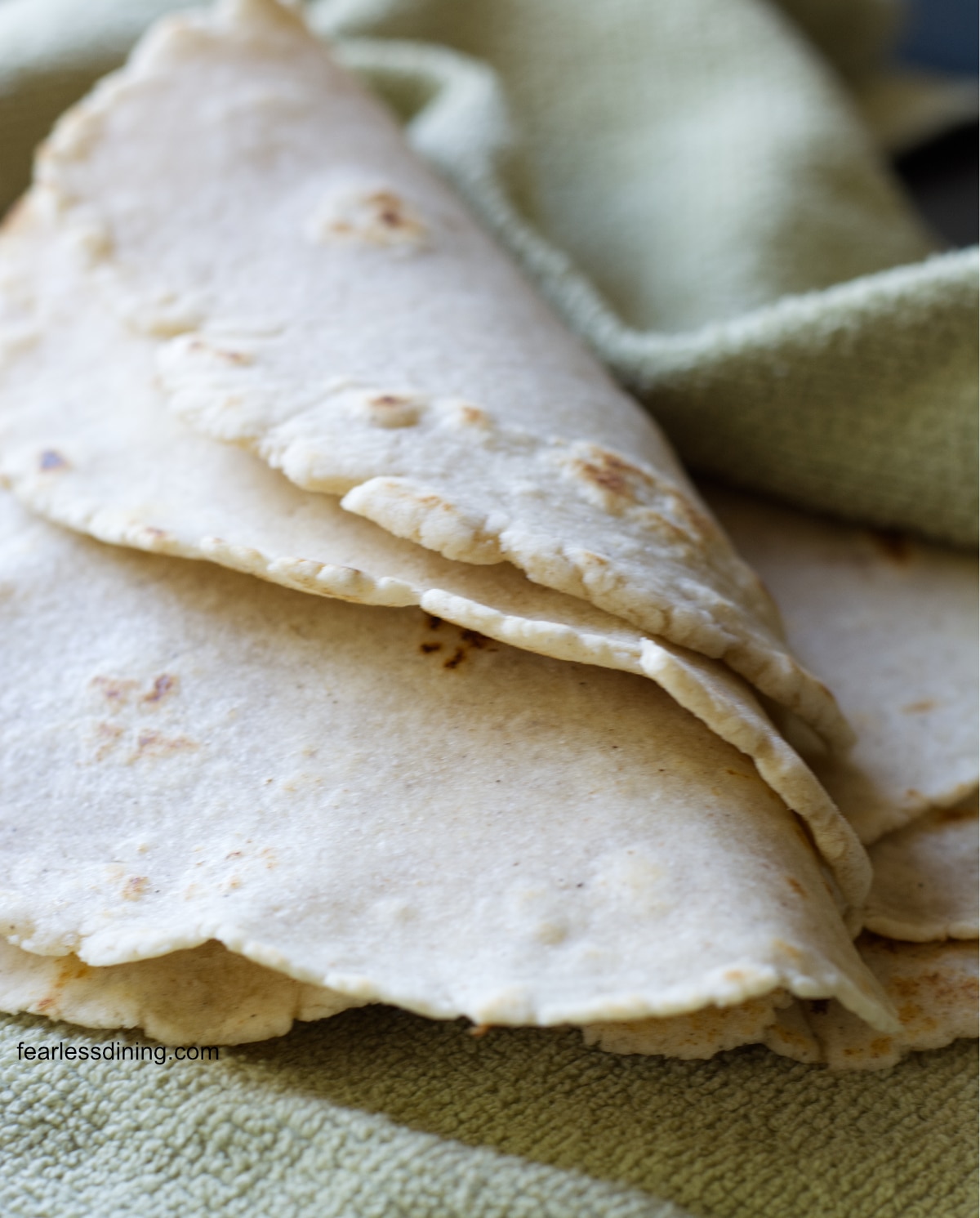
These homemade gluten free flour tortillas are soft, bendable, rollable, and absolutely delicious. If you are sick of store-bought gluten free tortillas that fall apart, this is the recipe to make. All you need are 6 simple ingredients and a cast iron skillet. I ran multiple tests on this recipe so you know exactly what works. There is no fancy equipment needed.
This post may contain affiliate links. Please read our Disclosure Policy.
❤️ Sandi’s Recipe Summary
The Quick Bite: This recipe shows you how to make incredible gluten-free flour tortillas that are both rollable and foldable, without breaking. Use these tortillas to make gluten free quesadillas, burritos, or fajitas. This simple recipe uses only 6 ingredients and a cast iron pan. Make a big batch in under 30 minutes.
This recipe is dedicated to all of my readers who have had store-bought gluten free flour tortillas crack, fall apart, and just taste bad. I make a batch of these tortillas for burritos and freeze the rest for lunchbox wraps.
If you are looking for a great gluten free flour tortilla recipe without lard, the kind that holds up to rolling into pinwheel sandwiches, holds up to fillings, and makes incredible quesadillas, rolls, and holds burrito filling tightly, then this is the recipe you want. I have tested this recipe until it was better than any gluten free flour tortilla you can buy in a store.
I tested multiple combinations of flour and binders to create this recipe, from using a store-bought 1:1 flour blend by itself to my own homemade flour blend with different levels of psyllium husk powder. I wanted to make sure this recipe is perfect before putting it on the blog. Read my Testing Notes section below; it is full of all of my testing, fails, and ideas to make the tortillas even better.
Why adding psyllium powder matters in this recipe: Xanthan gum thickened the dough, but it lacked the stretch common in flour tortillas. Psyllium husk powder absorbs water while the dough rests, which is what lets it roll out thinly without tearing. When I used both with a 1:1 blend, it was a little chewier. Not bad, definitely better than store-bought, but using ONLY psyllium powder with my homemade blend without xanthan gum was the best.
You can freeze these tortillas for later and thaw them in the microwave. They still hold up with any filling you want.
Need more tortillas? Try my Gluten Free Corn Tortilla recipe. Fill these tortillas with my Slow Cooker Pulled Pork, with my Padron Pepper Chili, or use them in this Blackened Fajitas recipe.
Testing Notes From My Kitchen
All testing was done using the same amount of gluten-free flour: 2 1/4 cups. My first round of testing used Bob’s Red Mill 1:1, which contains xanthan gum, by itself. This test flopped because the tortillas cracked when I folded them. The tortillas made with this blend, with no psyllium husk powder (which has xanthan gum), didn’t allow me to roll and fold them.
In the next test, I added 2 teaspoons of psyllium husk to the Bob’s Red Mill 1:1. I wanted to add psyllium husk powder, but I had to be careful because psyllium husk powder and the xanthan gum in the blend could make the tortillas gummy. This test was okay; the tortillas were bendable and did taste good…but they were a little chewier than tests with my blend without xanthan gum.
My next test used my homemade flour blend with 2 teaspoons of psyllium husk powder. This batch went straight in the trash. 2 teaspoons were not enough to make these flour tortillas pliable.
My next test used my blend with 1 1/2 tablespoons of psyllium husk powder. This batch turned out really good, and my whole family devoured it. It could be rolled, twisted, folded, and it didn’t break, crack, or fall apart. I decided to do one more test, adding a teaspoon of baking powder to see if I could get these a little lighter. This was my best batch, and the one I am sharing below.
Two last takeaways from testing are: the thinner you roll the dough, the better for bubbles and pliability. Also, using a hot cast iron pan is the best. I tested a Green Pan skillet, and it didn’t get the charred bits that my hot cast iron pan got.
Ingredient Notes and Easy Swaps:
One of the main questions you will want to know is: can you use a store-bought gluten free flour blend? The answer is yes, but you need to add psyllium husk powder for pliability.
For the full list of ingredients and amounts, please go to the recipe card below.
- Gluten-Free Flour Blend – I tested this recipe with Bob’s Red Mill 1:1 and my DIY Gluten Free Flour Blend. Other blends will also work; you may need to add more water or flour depending on the blend’s starch-to-grain ratio. I found my homemade blend superior because you have more control over the binder. Bob’s has xanthan gum, and xanthan gum by itself doesn’t keep these flour tortillas pliable. Read Why Gluten-Free Flour Blends Vary to learn more about this.
- Binder – For this recipe, you need psyllium husk powder. Some brands will turn your tortillas purple. I trust Anthony’s Psyllium Husk Powder and Now brands. Read how psyllium and xanthan work differently.
- Butter – I see gluten free tortilla recipes that use lard and oil. Butter is my go-to in this recipe because it adds a slight buttery flavor to the tortillas that I really love. I used salted butter, but unsalted also works.
- Baking Powder – I recommend using aluminum-free.
How to Make Gluten Free Flour Tortillas (Step-By-Step)
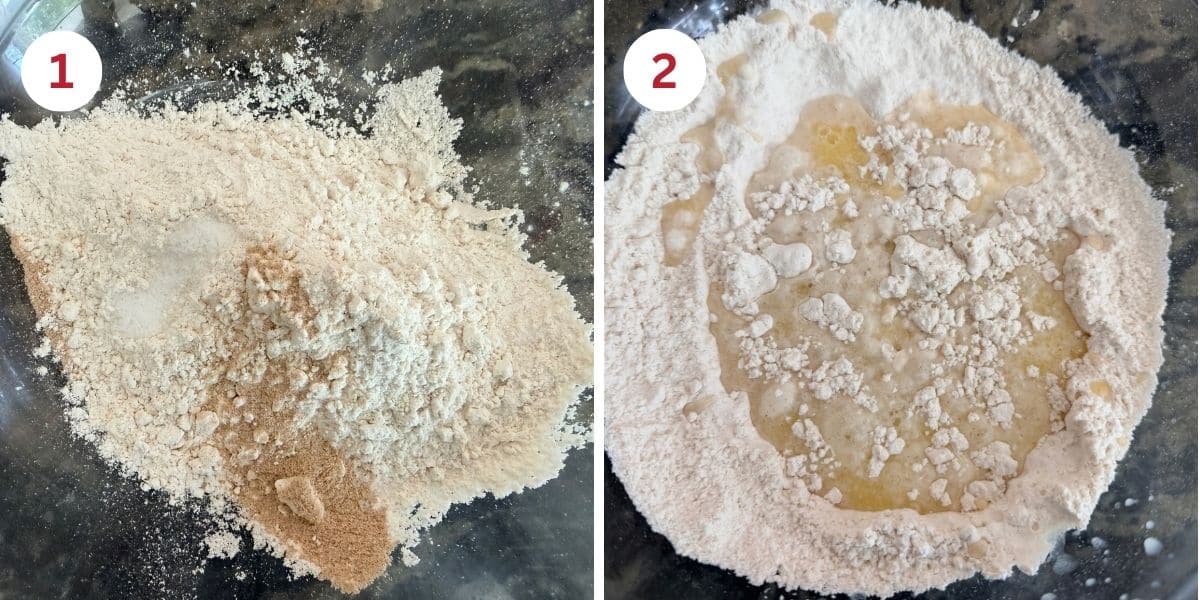
Step 1: Add the dry ingredients to a large mixing bowl. Use a whisk to blend them together.
Step 2: Whisk together the melted butter and water and pour into the dry ingredients.
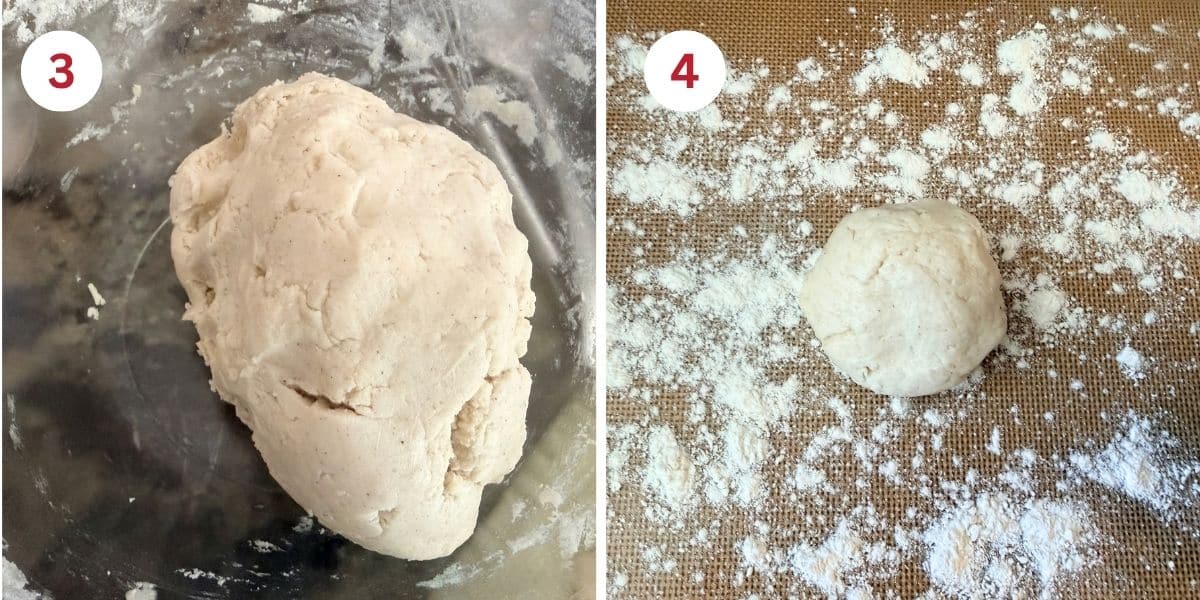
Step 3: Mix the wet and dry ingredients into the dough. The dough goes from shaggy and sticky to smooth and workable when using psyllium husk powder. Let it sit for 5 minutes for the psyllium husk powder to expand. This helps the texture of the dough hold together. Place the dough onto a silicone mat. Use a bench scraper to cut the dough into even pieces.
Step 4: I did need to dust the silicone mat with flour when using Bob’s blend. I didn’t have to do this with my homemade flour blend.
Place a 10.5-inch cast iron skillet on the stove over medium-high heat. Do not oil the skillet.
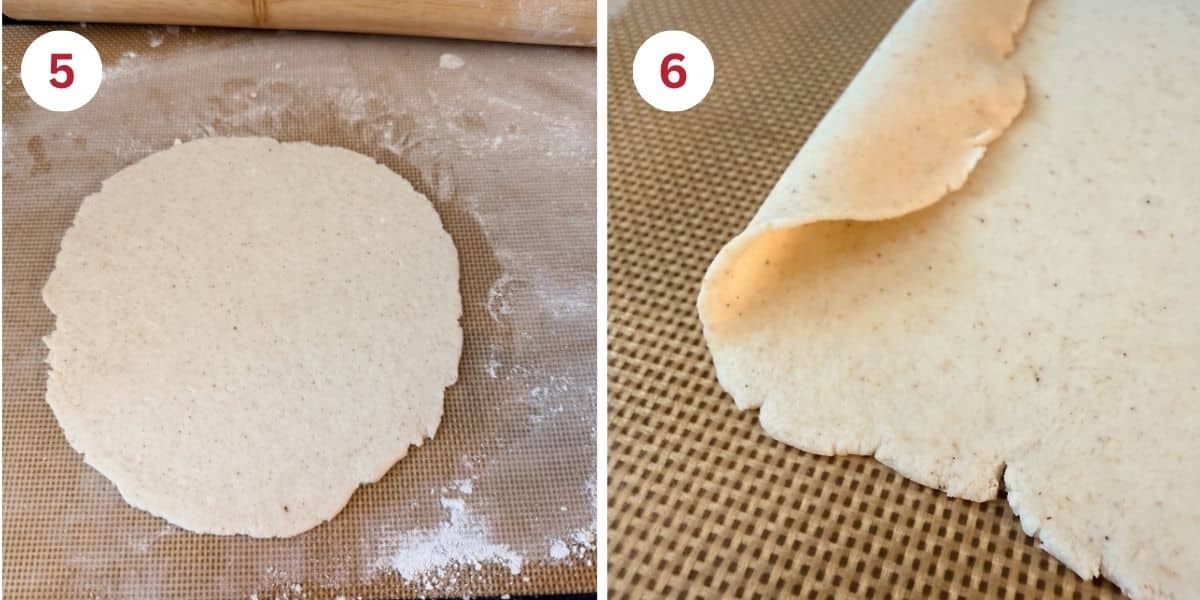
Step 5: Use a rolling pin to roll the tortilla into a circle. The thinner you roll the tortilla, the more pliable it will turn out. Thicker tortillas tend to break more easily when rolling them. Mine measure about 1 mm thick.
Step 6: This photo shows how thin I rolled the tortillas. I use a tortilla press for corn tortillas, but mine is too small for flour tortillas. Tortilla presses typically come in several sizes. If yours is larger, you can use it instead of a rolling pin.
Email This Recipe To Me!
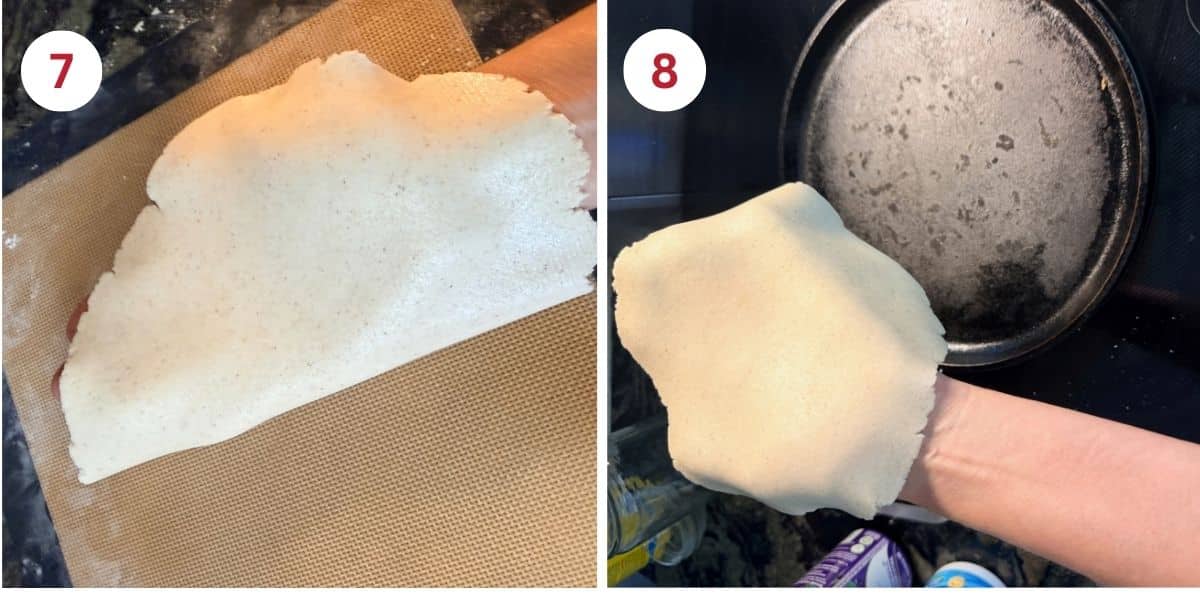
Step 7: To peel the tortilla off the mat, peel up one edge. Fold the silicone mat over your hand. Slowly unfold the silicone mat, peeling the tortilla onto your hand.
👀 Sandi Says: If you are struggling to get the flour tortilla to peel off the mat, it is most likely the flour blend you used and didn’t include psyllium husk. One way is to cut along the sealed edge of a gallon-shaped zipper storage bag. Lightly grease the inside top and bottom, then place the tortilla dough ball in the middle. Pull the top of the bag over it and roll it in the bag. You can also use a large frying pan to press down and flatten the dough ball, similar to how a tortilla press would.
Step 8: The skillet is ready to use when it is smoking a little. You can also drip a drop of water on the skillet to see if it sizzles. Drop the tortilla on the pan carefully so it doesn’t crumple or fold onto itself.
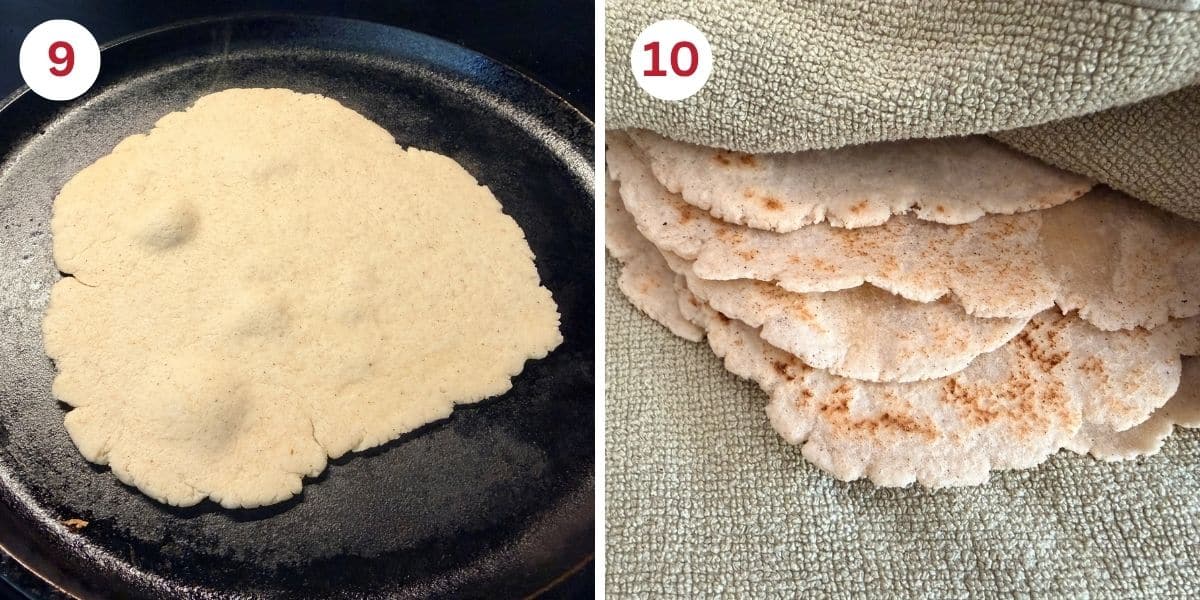
Step 9: Cook the tortilla for one minute, then flip it over with a spatula. Cook for 30 seconds on the other side. Look for the tortilla to puff slightly and bubble.
Look at the side that just cooked. If it looks burnt, it means your heat is too high. You want to see char marks, not giant patches of black or dark brown. Remove from the heat to a clean kitchen towel. Fold the towel over the tortillas as you continue to cook more.
Step 10: The steam from the hot tortillas helps to set them and keep them soft and pliable.
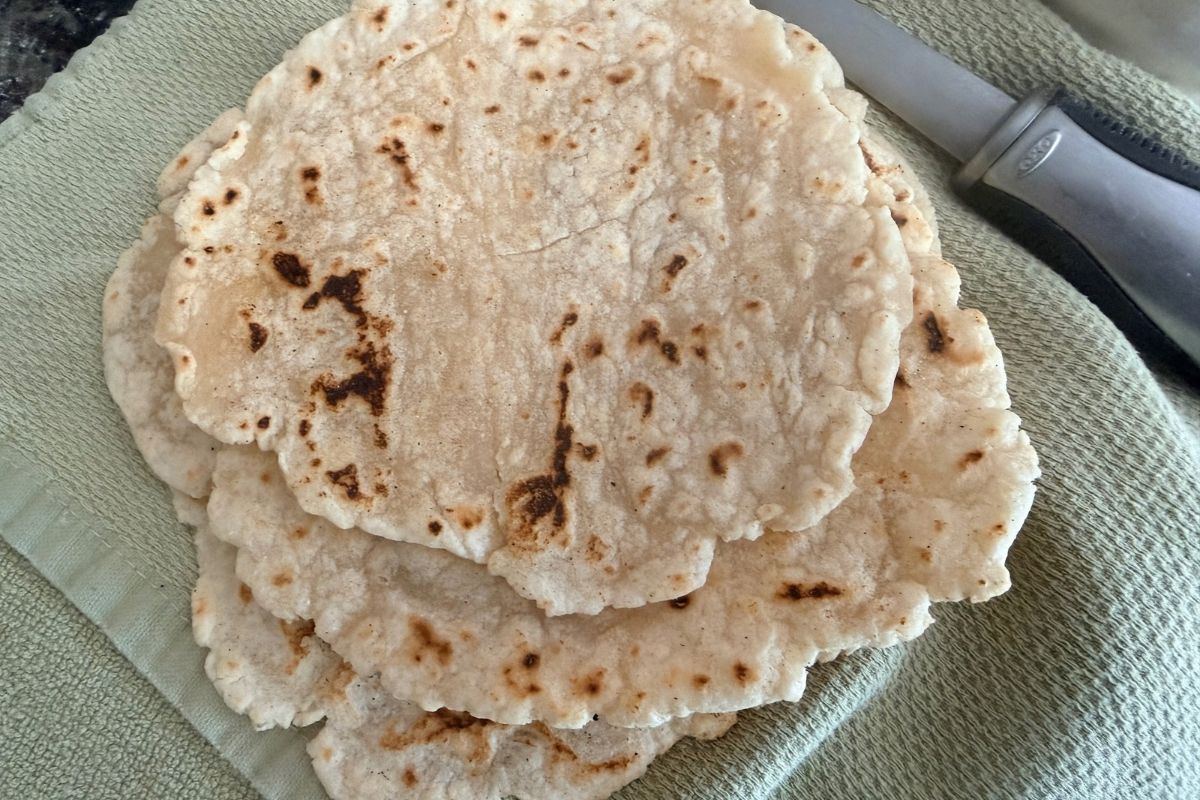
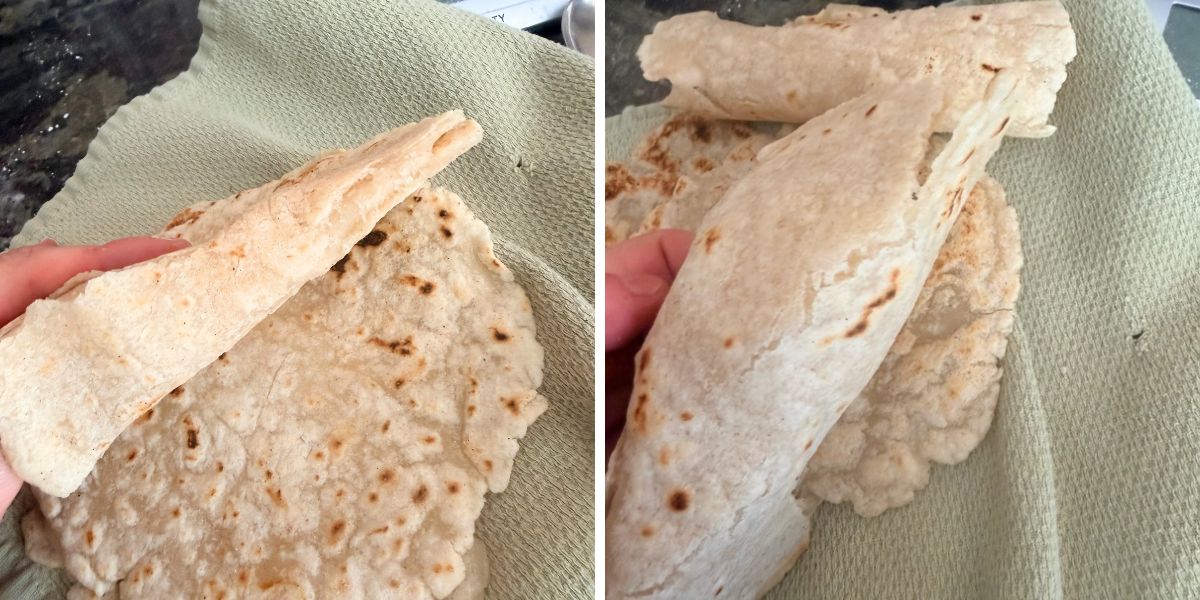
The finished tortillas are thin and bubbled, with brown char spots from the cast iron. They roll around a burrito filling, twist without breaking, and stay soft after freezing.
Move the tortillas into a tortilla warmer before serving. We love including these gluten free flour tortillas without lard in my Gluten Free Cinco de Mayo recipes.
Troubleshooting:
One of the main questions you will want to know is: can you use a store-bought gluten free flour blend? The answer is yes, but you need to add psyllium husk powder for pliability.
Why did my gluten free flour tortillas crack?
The most common cause is too little psyllium husk powder for the blend. My xanthan gum free blend failed when I used 2 teaspoons, but worked when I used 1 1/2 tablespoons. The second cause is not rolling the tortillas thin enough. Roll the dough to 1 millimeter. The third reason is skipping the towel. Tortillas left uncovered can dry out and crack.
Why are my gluten free tortillas hard?
If your tortillas are hard, they will not be pliable. This is related to the cracking question above. Most likely the tortillas dried out because they were not placed on top of each other while hot.
How do I make gluten free flour tortillas that don’t fall apart?
The secrets to gluten free flour tortillas that don’t fall apart are using the right binder, which is psyllium husk powder, rolling the dough thinly, and wrapping them in a clean kitchen towel after cooking.
Why are my gluten free flour tortillas gummy?
If your gluten free flour tortillas are gummy, you had too much binder. It is a fine balance if you use a store-bought gluten free flour blend that already contains a binder, and it is important to not add too much psyllium husk powder.
Why did my tortillas turn purple?
If you used a psyllium gum brand I didn’t test, this is the culprit. Some psyllium husk powder brands will turn your baked goods purple. This is why I recommend using either Anthony’s or NOW Foods Psyllium Husk Powders.
More Gluten Free Bread Recipes:
Serve these delicious gluten free flour tortillas with these Cheesy Stuffed Mexican Poblano Peppers or this Ground Pork Chili.
Did you make this recipe?
💬 I would love to hear how it turned out. Leave a comment! Your feedback helps others (and helps me keep improving these recipes for you). ⭐⭐⭐⭐⭐
Gluten Free Flour Tortillas (They Hold Up to Filling)
Ingredients
- 2 ¼ cups gluten free flour blend * SEE NOTES
- 1 ½ tablespoons psyllium husk powder * SEE NOTES (important)
- 1 teaspoon salt
- ½ teaspoon aluminum-free baking powder
- 5 tablespoons unsalted butter
- ¾ cup water Add more if needed
Equipment
Method
- Add the dry ingredients to a large mixing bowl. Use a whisk to combine them.
- Whisk together the melted butter and water and pour into the dry ingredients.
- Mix the wet and dry ingredients into the dough. The dough goes from shaggy and sticky to smooth and workable when using psyllium husk powder. Let it sit for 5 minutes for the psyllium husk powder to expand. This helps the texture of the dough to even and stretch better.
- Place the dough onto a silicone mat. Use a bench scraper to cut the dough into even pieces.
- Place a 10.5-inch cast iron skillet on the stove over medium-high heat. Do not oil the skillet.
- Use a rolling pin to roll the tortilla into a circle. The thinner you roll the tortilla, the more pliable it will turn out. Thicker tortillas tend to break more easily when rolling them. Mine measure about 1 mm thick.
- The skillet is ready to use when it is smoking a little. You can also drip a drop of water on the skillet to see if it sizzles. Drop the tortilla on the pan carefully so it doesn't crumple or fold onto itself.
- Cook the tortilla for one minute, then flip it over with a spatula. Cook for 30 seconds on the other side. Look for the tortilla to puff slightly and bubble.
- Remove from the heat and place on a clean kitchen towel. Fold the towel over the tortillas as you continue to cook more. The steam from the hot tortillas helps to set them and keep them soft and pliable.
- The finished tortillas are thin and bubbled, with brown char spots from the cast iron. They roll around a burrito filling, twist without breaking, and stay soft after freezing.
- Move the tortillas into a tortilla warmer before serving
Nutrition
Notes
- I tested this recipe with Bob’s Red Mill 1:1 and my DIY Gluten Free Flour Blend. Other blends will also work; you may need to add more water or flour depending on the blend’s starch-to-grain ratio. The main thing is to add 2 tsp of psyllium husk powder to a store-bought flour blend. (Bob’s 1:1 was 322.0 grams and DIY GF Flour Blend was 341.4 grams.)
- Read the post for all my recipe-testing notes. My gluten free flour blend was superior to using store-bought, but it is okay to use the store-bought as long as you adjust the psyllium husk powder quantity.
- Store the tortillas in the refrigerator for up to 3 days in an airtight container.
- These tortillas freeze well in a freezer-safe zipper bag. Thaw and warm in the microwave oven for 25 seconds.
Private Notes
Tried this recipe?
Let us know how it was!
I truly hope you enjoy this recipe. I have been testing and creating gluten-free recipes for over 15 years. Creating gluten-free recipes that do not taste gluten-free is my goal for every recipe. Sometimes I only have to test a new recipe a couple of times, and others it takes multiple times. I do this so you get reliable, delicious results every time!