


If you have been baking gluten free for a little while, you know how common it can be to have gluten-free baking fails. Problems can stem from varying gluten free flour blends, baking temperatures, and the cookie dough consistency. Let’s talk about the most common gluten-free cookie problems and how to fix them.
This post may contain affiliate links. Please read our Disclosure Policy.
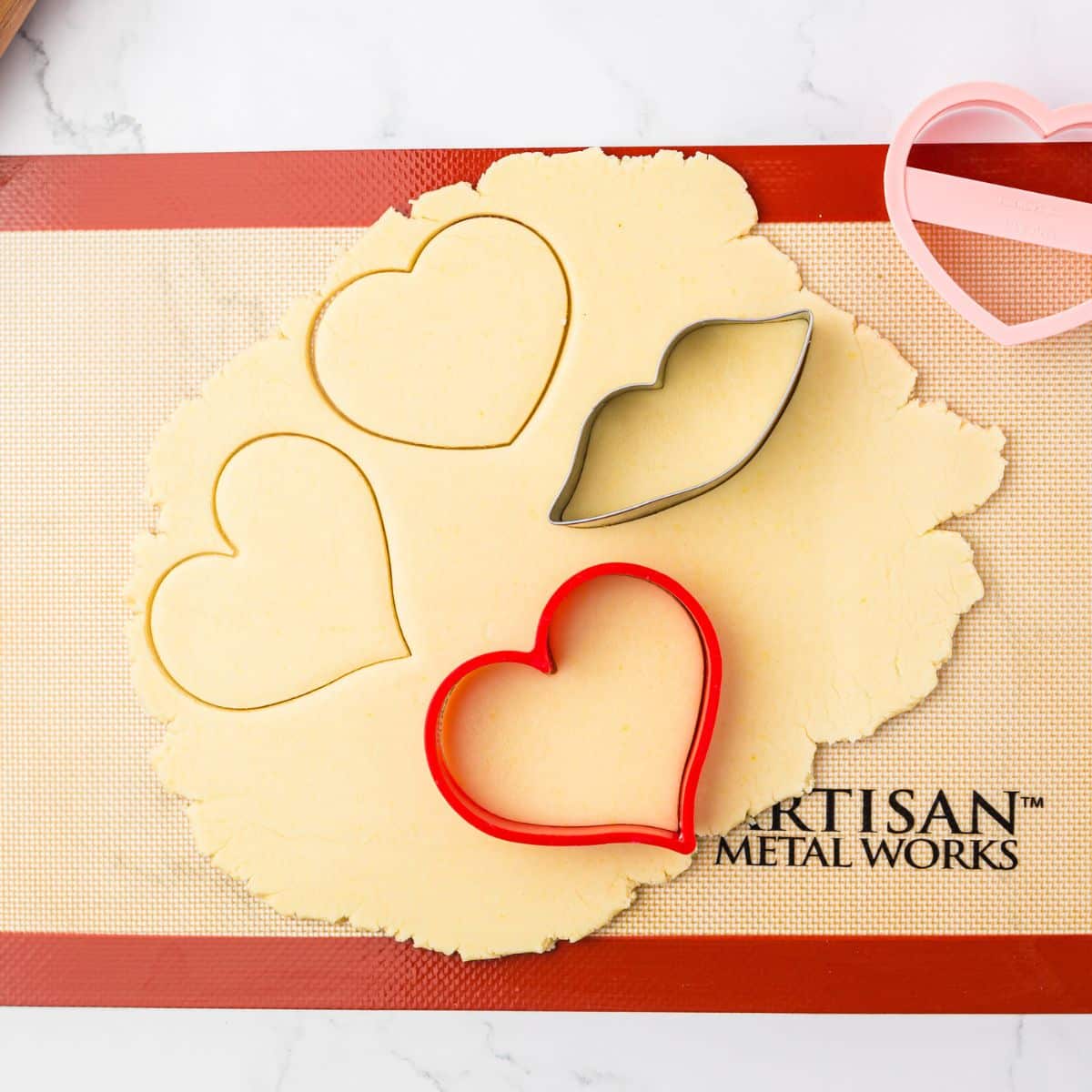
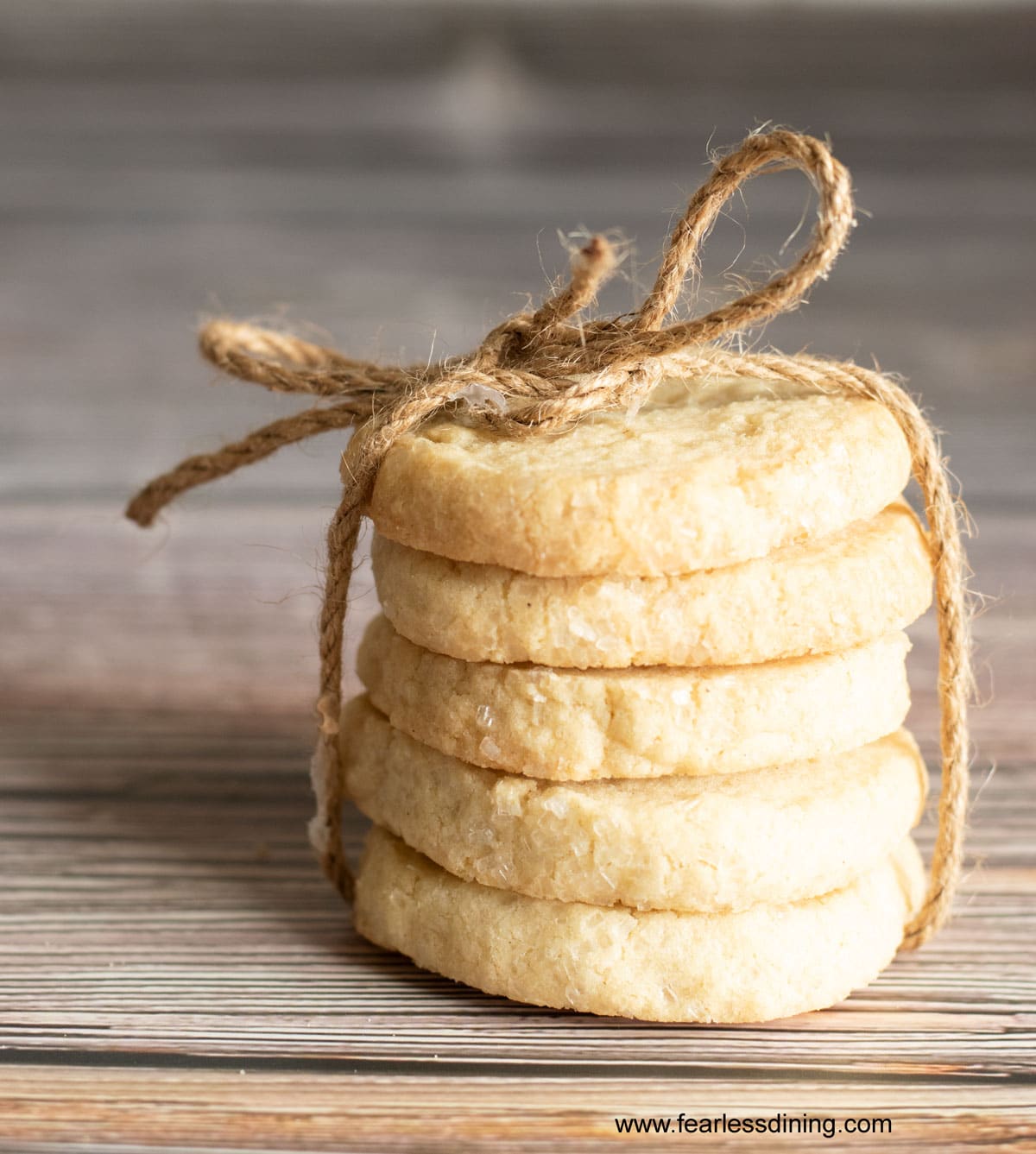
Gluten-free cookies are one of the most common things people enjoy baking. They are considered a beginner-level recipe, and you do not need fancy ingredients or equipment.
You can make hundreds of different kinds of gluten-free cookie recipes. The cookie’s texture and flavor vary widely depending on what gluten free flour blend you use, the type of sugar, whether you use baking powder or baking soda, and whether you use butter or plant-based vegan butter.
I always say gluten free baking is truly like doing a chemistry experiment every time! Keep reading to see how to overcome the challenges to gluten free cookie baking.
If you want to learn more about gluten-free baking, I share a lot of Gluten-Free Baking Tips to help. Find 100s of cookie recipes in my Gluten-Free Cookie Guide!
Check out my favorite tools for making gluten free cookies!
Common Cookie Baking Problems:
There are several common cookie-baking problems that I often hear about in my gluten free support group. This seems to be a common thread, so I want to list them out with some causes and fixes:
- The gluten free cookies turn out flat.
- The cookies are too crispy or burnt.
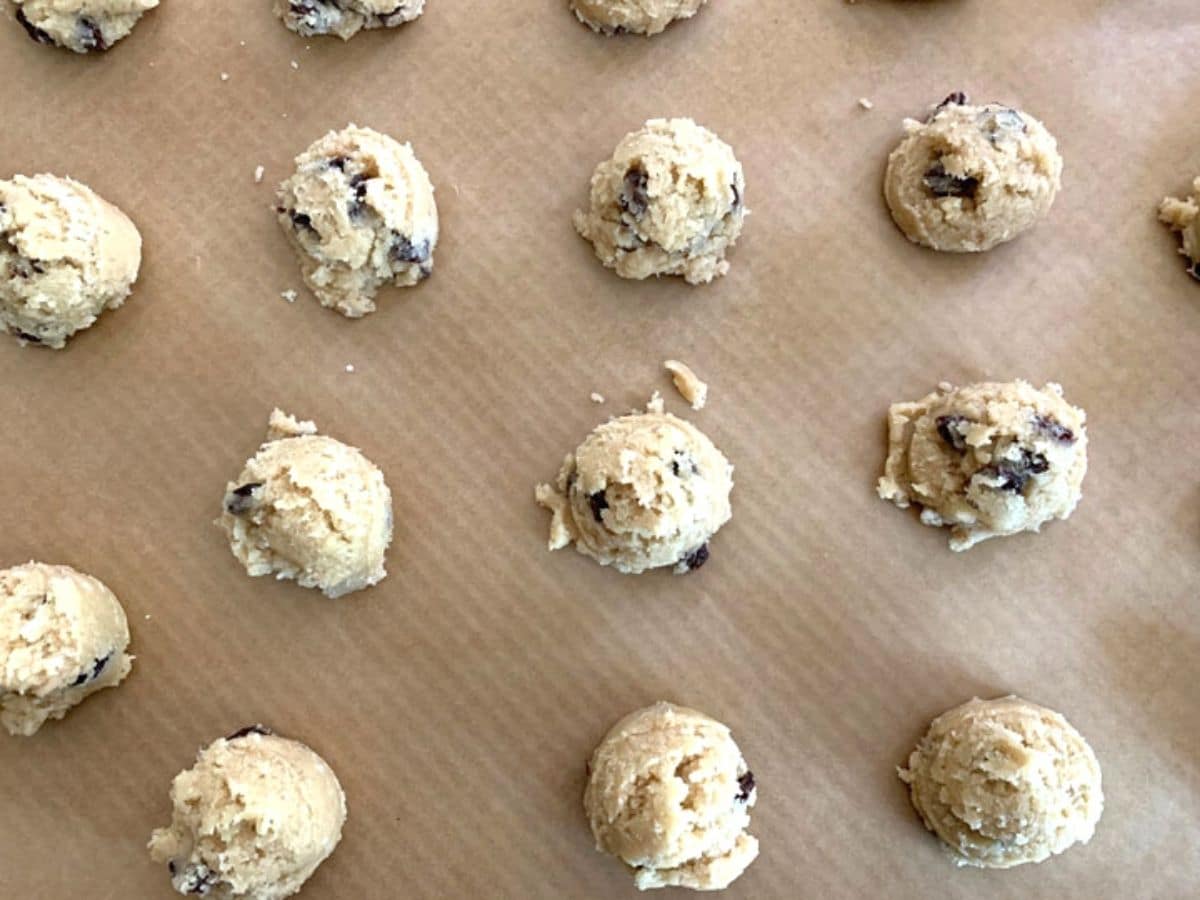
- Unevenly shaped cookies due to the cookie dough spreading too much during baking.
- The cookies are sticky or under-baked.
Let’s talk about each of these problems on the list because each issue can have multiple causes.
Why Did My Cookies Turn Out Flat?
If your gluten free cookies turned out flat, these are some possible causes of flat cookies.
- The cookie dough was too wet. Use enough flour for the cookies to hold their shape during baking. Measuring your flour accurately is important. Each gluten-free flour blend has a different weight, depending on the starch-to-grain ratio of the flour, and this affects the moisture level. Read Why Gluten Free Flour Blends Vary to learn more.
- You used a starchy gluten free flour blend. Some gluten free flour blends have more starch than grain in the mix. The starch softens when you add the liquid ingredients, making the cookie dough too wet. This also happens with the Cup4Cup flour blend due to the dried milk powder.
- The cookies were baked at too low a temperature. Oven temperatures can vary, and they may not be accurate over time.
- You didn’t chill your cookie dough. This is another problem. Using partially melted or softened butter makes the cookie dough too warm and soft. Chilling your cookie dough can help.
Flat Cookie Fixes:
To prevent your gluten free cookies from flattening while they bake, I recommend the following:
- Make sure that you measure the ingredients accurately. I recommend using either the spoon or the leveling method to measure your gluten-free flour. Spoon Method: Use a spoon to fill the measuring cup. Use a knife to level along the top to remove the extra flour. Leveling Method: Put the measuring scoop into the flour and fill. Do not pack the flour. Use a knife to scrape along the top to remove the extra flour.
- Chill your cookie dough for 30-45 minutes in the refrigerator before baking.
- Try using one of the gluten-free flour blends the recipe creator tested and used successfully.
- Periodically, check your oven temperature to make sure it’s right. Otherwise, the cookies will, for sure, spread if it’s not accurate. Get an inexpensive oven thermometer to test the oven’s temperature accuracy every few months.
Email This Recipe To Me!
Why Did My Cookies Spread?
Nothing drives me crazier than when gluten free cookies spread too much during baking. This is even worse if you are trying to make cut-out cookies. The main reasons cookies spread are:
- This could be due to using too little gluten free flour.
- Use a gluten-free flour blend with a high starch content or dried milk powder.
- Using too much butter or European butter with a high-fat content can cause spreading.
- You used too much sugar.
- You didn’t chill your cookie dough or didn’t chill it long enough.
Spreading Cookies Fixes
To fix this spreading cookies problem, first identify which of the problems I listed is causing your cookies to spread.
- Always measure your ingredients properly. Refer to the above Flat Cookie Fixes for simple instructions on measuring your gluten-free flour.
- If you use a starchy gluten free flour blend or if your blend has dried milk powder (Cup4Cup has this), you must adjust the flour you use. Every gluten free flour blend has a different starch-to-grain ratio. You can tell from the label. Ingredients are listed in order of highest quantity to lowest. I am convinced that blends with dried milk powder need much more flour because the milk powder liquefies when you add the wet ingredients. When possible, try to use the same gluten free flour blend(s) that the recipe creator used and tested.
- If you use too much butter or a European flour blend, you add a little more gluten free flour to compensate for the extra fat. (Butter brands like Pluegra and Kerrygold have a higher fat content, which tastes delicious, but it can mess with your dough.)
- Reduce the amount of sugar you use in the recipe. Sugar tends to liquefy when heated, which can make your cookies spread out.
- Chill your cookie dough. Just wrap it in plastic wrap and refrigerate for 30-45 minutes.
Why Are My Cookies Gritty?
Cookies with a gritty texture are a huge problem in gluten free cookie baking and gluten free baking in general. If you have tried Gluten Free Bisquick, you know exactly what I mean!
The grit is from rice flour, which is often in the highest quantity in gluten free flour blends. The only gluten free flour blend company I know that mills its gluten-free flour blends extra fine is Authentic Foods Company. They are the best when it comes to texture.
Gritty Cookie Fix:
The only way I know to eliminate the grittiness is to let your cookie batter sit for 20-30 minutes. This allows the moisture to soften the rice flour. It really works!
Why Are My Cookies Too Crispy or Burnt?
Crispy and burnt gluten free cookies are an easy problem to fix. This problem is due to three main reasons:
- Baking at too high a temperature. See the above Flat Cookie Fixes section for instructions to check your oven temperature.
- Leaving the cookies in the oven for too long.
- Your oven rack is too close to the bottom or top of the oven.
Burnt or Crispy Fixes:
To fix this problem, lower the oven temperature or reduce the baking time, and check the cookies frequently.
You also want to ensure your oven rack is in the middle position. They will burn if the oven rack is too close to the top or bottom burners.
Unevenly Shaped Cookies:
If your cookies are unevenly shaped, it’s usually due to a few simple issues.
First, chill your cookie dough and make sure the dough is chilled evenly. If your dough is not chilled in the middle of the dough ball, parts of your cookies can spread, making them appear uneven.
You also want to ensure you use a flat
Sticky Cookies:
If your cookies turn out sticky, they either have too much liquid or were not baked long enough.
Fixing this problem is easy. I recommend adding more flour to the dough and always ensuring that you bake the cookies for the full recommended time. (Note: oven temperatures can vary wildly. See my note above in the Flat Cookies section about occasionally checking your oven temperature to make sure your oven is accurate.)
My Favorite Gluten Free Flour Blends for Cookies:
Choosing the right gluten-free flour blend is vital to having success with a recipe. I always recommend using the blend suggested by the recipe creator. If you can’t, I will share that these blends are my go-to blends for cookies. If you need more guidance, I wrote a great gluten free flour guide that shares what flour blends work best in what kind of gluten free baked recipes.
- King Arthur Measure for Measure
- Bob’s Red Mill 1:1
- My DIY Gluten Free Flour Blend (my blend is also gum-free for those sensitive to xanthan or guar gum.)
I have also used GF Jules Flour and Better Batter brand blends. Note that Better Batter is very expensive, so I would recommend waiting for it to go on sale.
How Different Sweeteners Affect Cookies:
Different types of sugar can also affect your gluten free cookies in various ways. Here is how some sugars can affect gluten free cookie baking:
- Granulated sugar: It’s one of my favorite types of sugar for baking cookies. Depending on the recipe, I often combine it with brown sugar. Granulated sugar gives the cookie a crisp, crunchy exterior and a soft, chewy interior. It also helps the cookie spread because sugar liquefies when baked.
- Brown sugar: Brown sugar contains molasses, which adds a little caramel flavor to cookies. It can also add moisture, which helps keep the cookie soft and chewy. Cookies made with brown sugar tend to be denser and have a deeper flavor.
- Powdered sugar: Powdered sugar is very fine and dissolves quickly, which makes it ideal for use in delicate cookies such as my Gluten Free Shortbread. I don’t use powdered sugar in many of my cookie recipes, but I do like to roll cookie dough balls like in these Gluten Free Crinkle Cookies in it before baking. It can produce a soft, tender texture in cookies and help create a smooth surface.
- Coconut sugar: When using coconut sugar in a cookie recipe, you can substitute it for granulated sugar one-to-one. However, because coconut sugar has a slightly different flavor profile and moisture content, it may affect the cookies’ texture and flavor. This is why I don’t use it as often. If you want to use coconut sugar because you are baking without refined sugar, it is best to experiment with small batches and adjust the recipe as needed. I use coconut sugar to sweeten these Paleo Chocolate Chip Cookies. Also, note that coconut sugar is darker than granulated sugar, so it will make your cookies brown. This may not be a big problem, but if you are making gluten free cut-out cookies, it may not look pretty.
- Turbinado sugar: I do not use this type of sugar in my cookie recipes because it doesn’t melt as well and adds too much crunch to the cookies. It is a good sugar to roll cookies in, but don’t swap it with regular sugar.
- Some people like using honey, maple syrup, and agave nectar instead of sugar. I do not use these, so I can’t offer much guidance on how to use them. Please note that using a liquid will alter the dry-to-wet ingredient ratio, and you may need to make adjustments accordingly.
My Best Gluten Free Cookie Recipes:
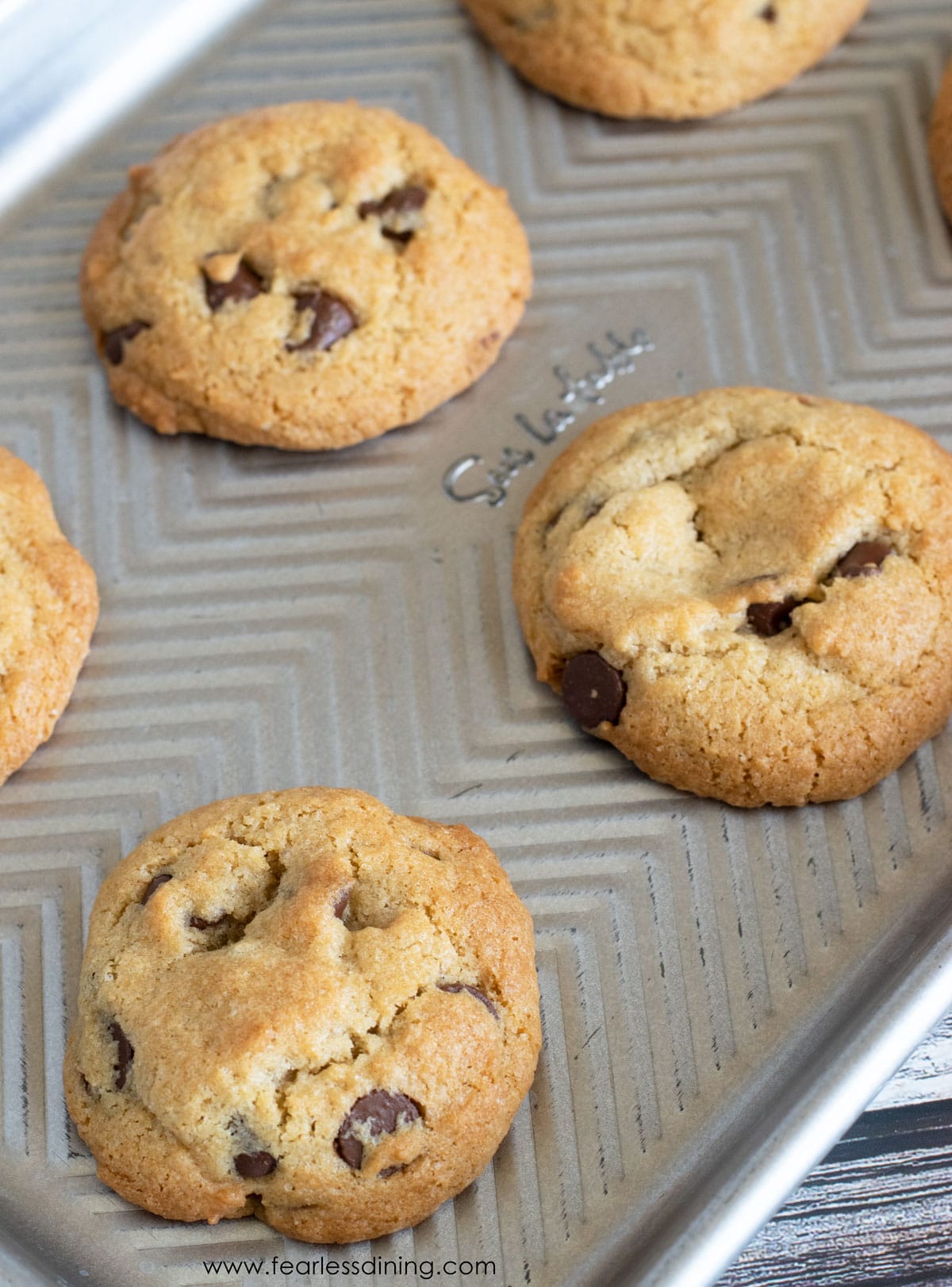
- Gluten Free Toll House Cookies – I tweaked the original Nestle recipe to work better with gluten free flour blends,
- Gluten Free Crumbl Snickerdoodles – This copycat recipe tastes like the real Crumbl Snickerdoodles.
- Gluten Free Brookies – If you can’t decide between making brownies and cookies, this cookie is the best of both.
- Gluten Free Peanut Butter Blossoms – For my peanut butter fans.
- Gluten Free Russian Tea Cookies – This popular cookie recipe is great for the holidays.
- Gluten Free Butter Cookies – These yummy cookies taste like those Danish cookies you buy in the blue tin.
- Gluten Free Oatmeal Raisin Cookies – This is a great classic cookie recipe.
Have a tip?
We would love to hear about any great gluten-free cookie-baking tips you have. Please leave a comment. Thank you!
I truly hope you enjoy this recipe. I have been testing and creating gluten-free recipes for over 15 years. Creating gluten-free recipes that do not taste gluten-free is my goal for every recipe. Sometimes I only have to test a new recipe a couple of times, and others it takes multiple times. I do this so you get reliable, delicious results every time!

Thank you so much for all this info! I’m wondering if you might know the effects of using Locanto (calorie-free) sugar in cookies? I tried using it as a substitute for white sugar, but instead of coming out crunchy, the cookies were soft? I had made these cookies before, so I’m not sure if it’s the sugar or some other issue. I also had used less than the recipe called for.
Hi Cate, I haven’t been able to test alternative sugars because they really bother my stomach. I looked at my spreadsheet where I track what readers write in to tell me they swap. One reader used white stevia in my oatmeal cookies recipe, swerve brown sugar in my gingerdoodles, Locanto in my lemon cookies, etc. No reader has told me about the texture…I do know sugar affects the softness, plus the starches in the gluten free flour blend also tend to make cookies softer.
To substitute honey for sugar in recipes for cookies. I used half the amount of honey to replace the sugar in your gorgeous g/f oatmeal raisin cookies recipe. Should I add a few extra spoons of flour – would that help with the softness from the honey ? I love your recipes – a friend told me about your website and I have told many others. I am celiac and your recipes produce the best cookies, cakes, waffles on the planet.
Thank you so much for recommending my site, and the tips for swaping honey for the sugar!!