

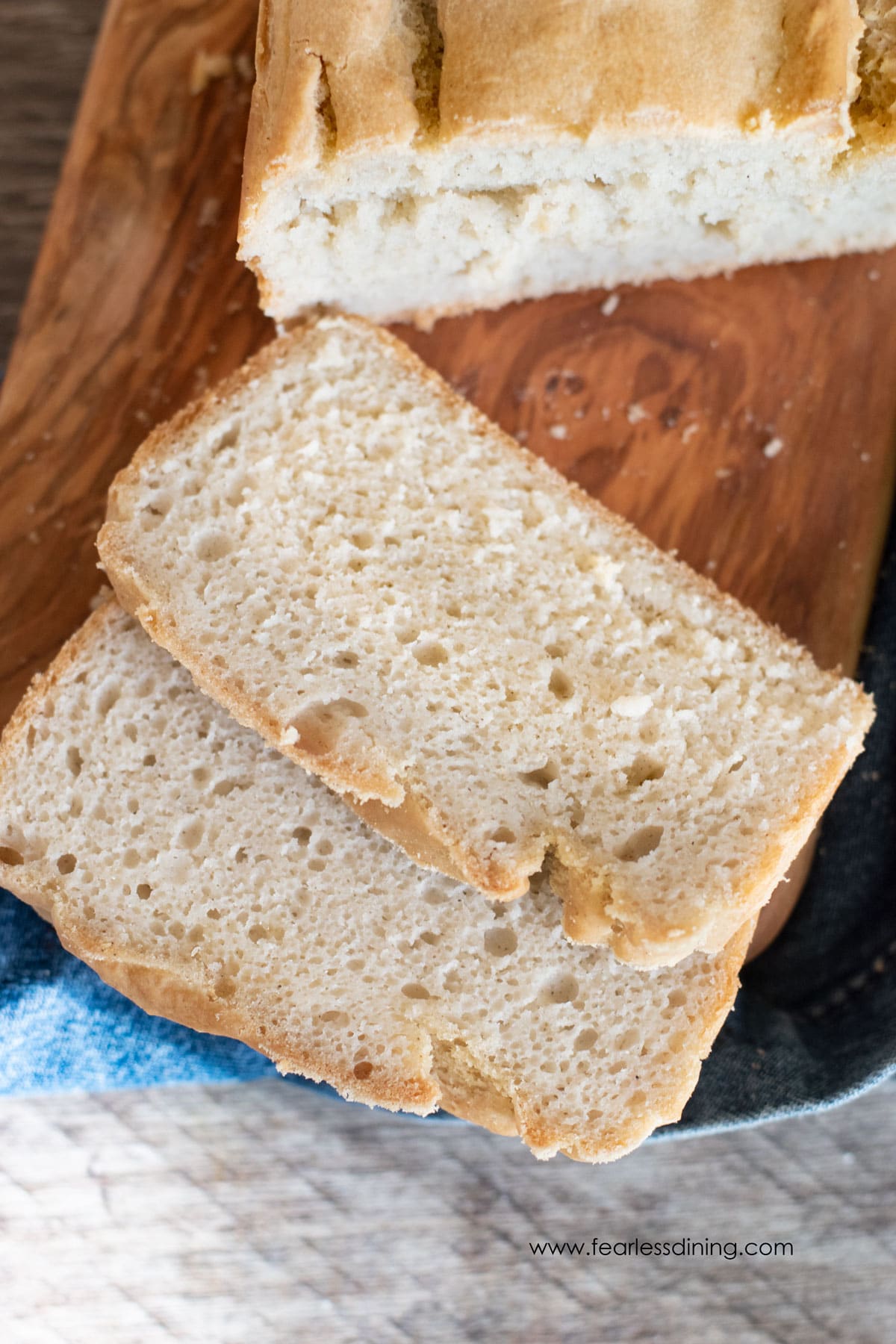
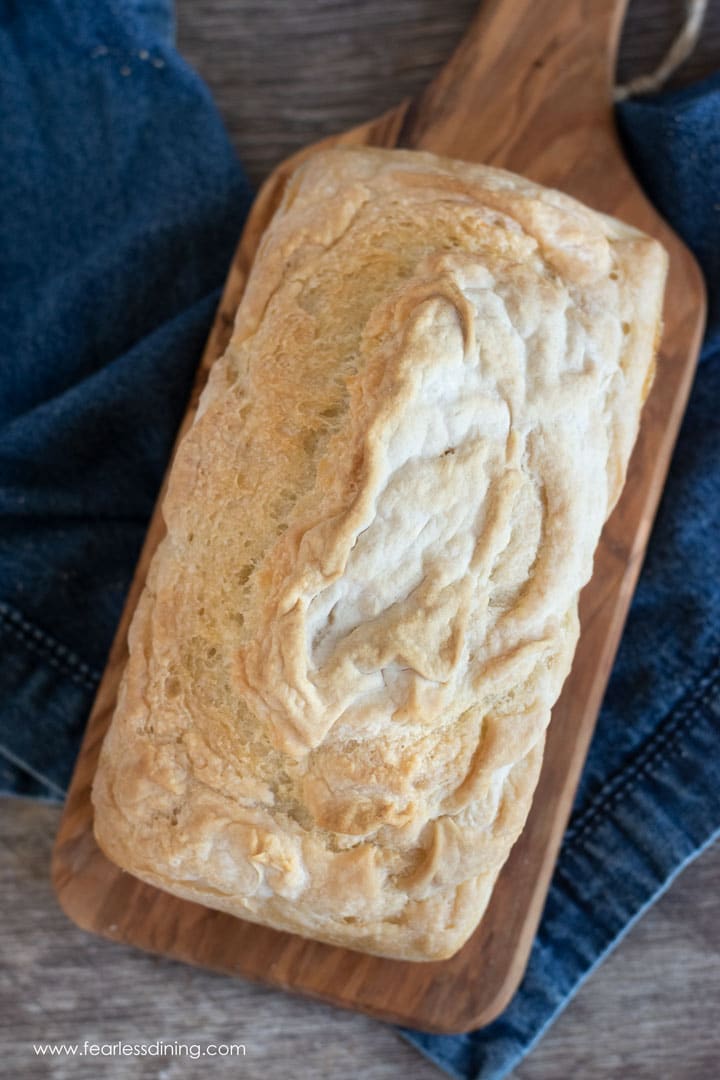
This gluten-free sourdough sandwich bread is made with just four simple ingredients: flour, sourdough starter, water, and salt. It bakes up with a soft, even crumb that’s easy to slice for sandwiches or toast. I walk you through each step so you know exactly what to look for at every stage, from mixing to baking.
This post may contain affiliate links. Please read our Disclosure Policy.
❤️ Sandi’s Recipe Summary
The Quick Bite: This easy homemade gluten free sourdough bread recipe is one of our favorites for making sandwiches. It has a little bit of tanginess from the sourdough.
I made this bread last night with Bob’s Redmill GF all purpose flour with my GF starter & it came out amazing!! So happy I found this recipe & can’t wait to make it again!! This recipe was very easy to follow & the tips were very helpful.
wendy, blog comment
🔑 Sandi says: This post was updated and reorganized from an older 2014 post. I have included a lot more tips from both myself and my readers to help you make this recipe successfully. This is a recipe that I recommend you read the entire post. Do not hit the Jump to Recipe button if you haven’t made this bread yet.
There is nothing better than the taste of fresh sourdough bread! It is seriously (or should I say Srsly) the most incredible comfort food! This original recipe comes from Sadie, founder of the famous Bread Srsly in San Francisco. Please note this is not her current recipe; she has tweaked it over the years, but it turns out incredibly well. (I have also streamlined this recipe since she first shared her recipe with me back in 2014.)
Sadie used a combination of millet, sorghum, brown, and white rice flour in her original recipe. Many of us do not have many individual flours on hand, so it was important for me to simplify the ingredient list. This is an excellent introduction if you want to try making a version of Bread Srsly’s famous sourdough bread.
If you love baking gluten free bread as much as we do, check out my delicious gluten-free bread recipes. I also have a delicious Gluten-Free Whole Grain Sourdough Bread recipe to try.
Do This First:
If you do not have a sourdough starter, go to my How to Make a Gluten-Free Sourdough Starter page and make your gluten free starter! It will take 7-10 days, depending on whether you are keeping it warm. Do this first because there is no sourdough bread without an active starter!! For a list of tools you need, please read my article on Sourdough Tools.
A Note on Gluten-Free Flour Blends:
I have tested several different gluten free blends in this recipe. I talk a lot about King Arthur Measure for Measure, which is a standard blend. I also used a very starch-heavy gluten free flour blend by GF Jules. Both performed very well.
The main difference lies in the bread’s interior texture. Both had a nice crusty outside. GF Jules was much lighter and fluffier on the inside, while the King Arthur flour blend loaf was a little more hearty, like regular sourdough bread.
Many of my readers have shared the flour blends they have tried in the comments, so I encourage you to read through them. Dana loved Bob’s Red Mill 1:1 with this recipe.
How to Make Gluten-Free Sourdough Sandwich Bread (Step-By-Step)
Step 1: You will need 3/4 cup of gluten free starter. Make sure it is bubbling and at room temperature! If you refrigerate your starter, take it out of the refrigerator the night before you plan to make bread. I take a discard, feed it with gluten-free flour and water, and let it sit on the counter overnight.
You will want your starter warmer if it is a cold season, especially winter. I like to place my starter either in the oven with the light on or on my Euro Cuisine Yogurt Maker base (with two folded dish towels on it to keep the starter from overheating).
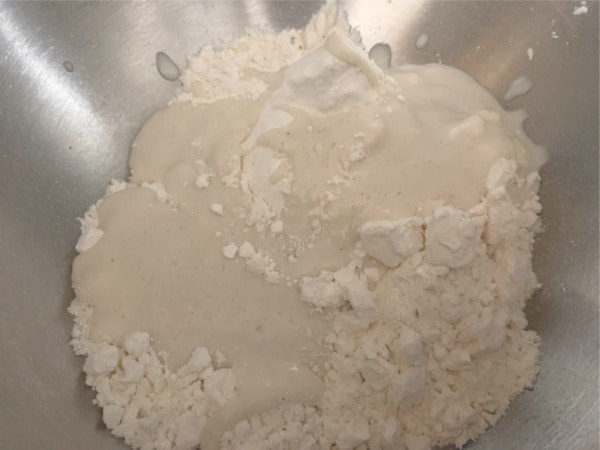
Step 2: Place the gluten-free flour and salt in a large mixing bowl and whisk to combine. Add the sourdough starter and filtered water.
Why Water Quality Is Important:
I always use purified water when making sourdough or baking with yeast. Chlorine and chemicals in our tap water can kill your yeast and inhibit the rise. To achieve the best rise, use purified water that doesn’t contain these chemicals.
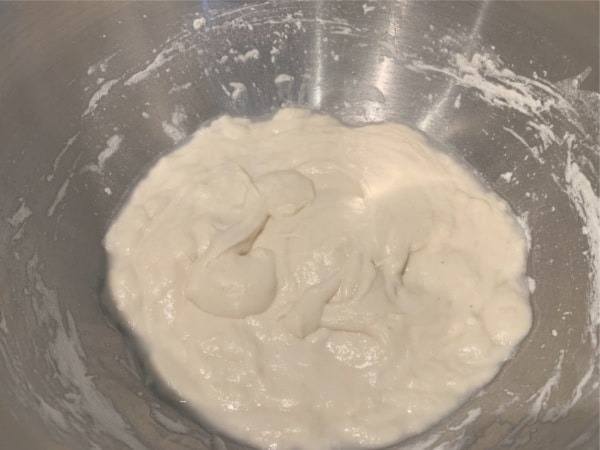
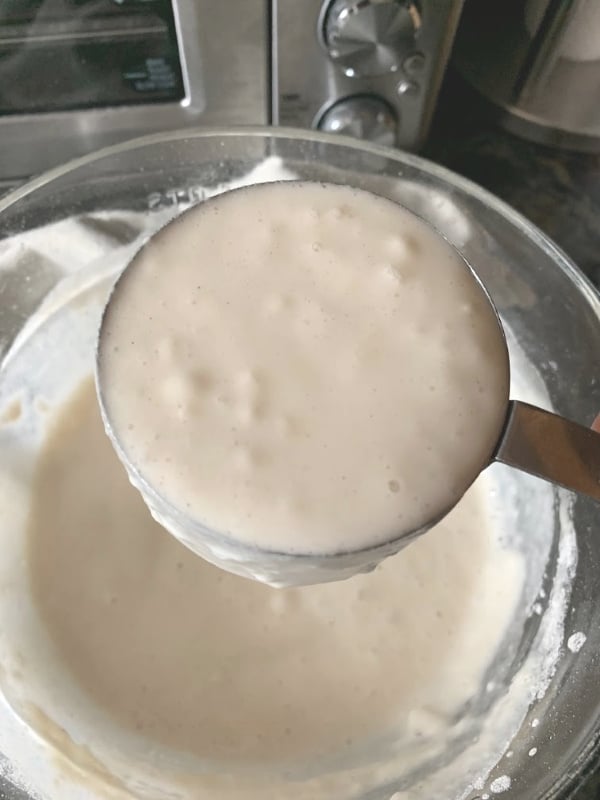
Step 3: Mix the wet and dry ingredients well. You want wet dough, like a thick pancake batter.
Step 4: Cover the bowl loosely with plastic wrap and let the dough rise for 3 hours (go by how big it rises). I then gently move the dough to a greased bread loaf pan and let it sit for another 3-4 hours. Cover with a damp towel to prevent the dough from drying out.
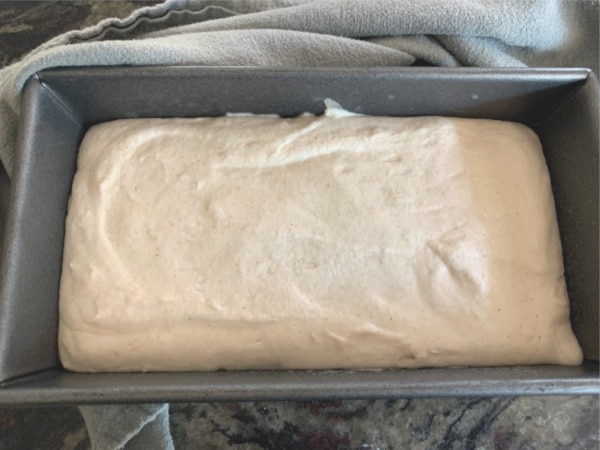
This is my favorite option so far – let it rise in the pan you’ll use for baking and it has the softest crust and best crumb of the four 5 recipes I’ve tried, while still being super easy.”
Sara K.
Email This Recipe To Me!
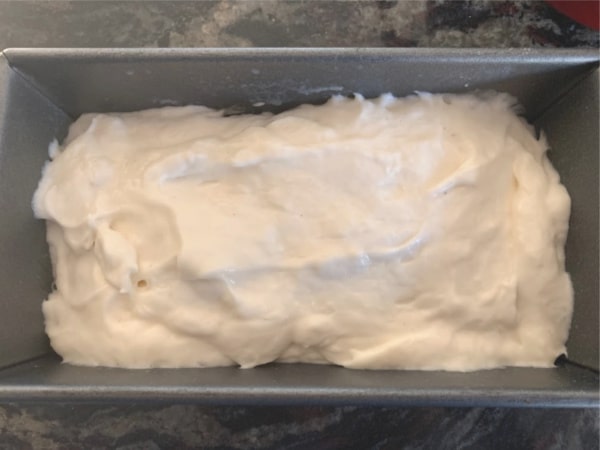
Note that the King Arthur Measure for Measure was a little runnier in consistency. The GF Jules has a much higher starch content and looks much fluffier!
Step 5: When the dough has doubled in size in the pan, bake the gluten free sourdough loaf for 45 minutes at 425º F. I noticed it hadn’t browned on top, so I brushed the top with melted butter at the 45-minute mark and then quickly closed the oven door.
Hurry when gently brushing the melted butter on because the longer the oven is open and the rack is pulled out a bit, the more it will lose a tiny bit of its rise. Once the oven door is closed again, the rise returns quickly.
Step 6: Bake for an additional 20-30 minutes, and test the bread with a probe-style digital thermometer; the center should read 210°F. Note: baking time will vary based on the size and depth of the pan you use.
If you notice residue on the thermometer probe, turn off the oven and leave the loaf in to cool, so it finishes baking and cooling more gently and retains as much of the final baked-in rise and fluff.
Step 7: Carefully move the bread to a cooling rack. Cool the bread completely before removing it from the pan and slicing it with a serrated bread knife. You want the bread to cool for at least 3 to 4 hours before slicing.
Read my Gluten-Free Bread Troubleshooting Guide for more tips and possible troubleshooting. Serve this with my Curried Chicken Salad, Unstuffed Pepper Soup, or Instant Pot Chicken Vegetable Soup.
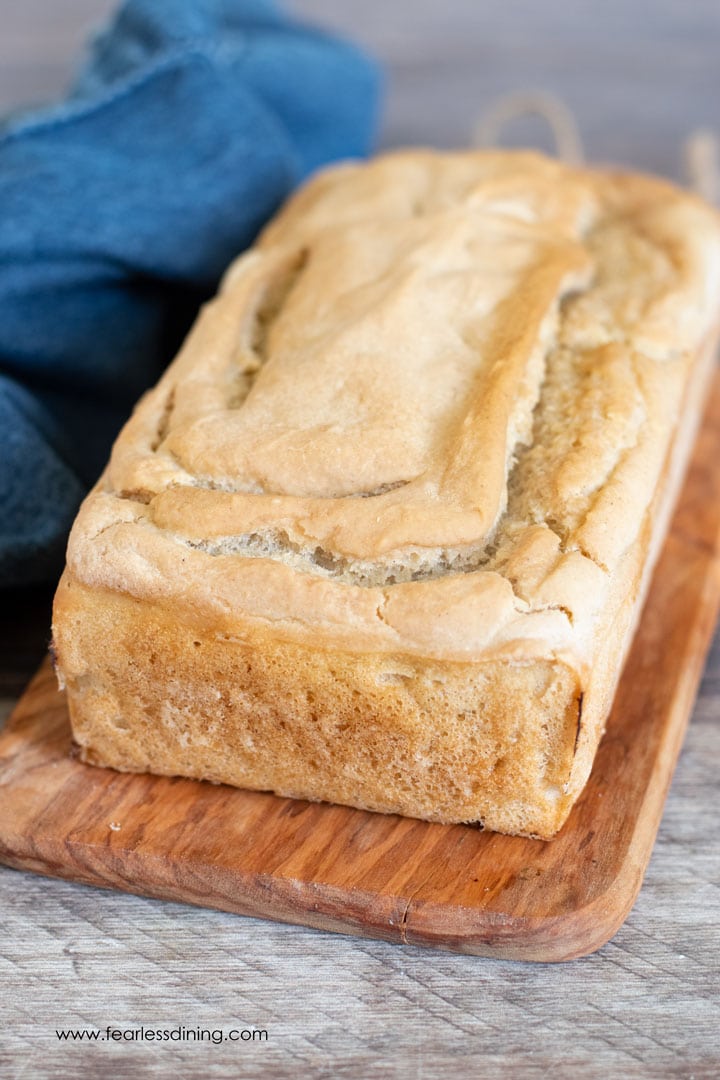
How to get crusty bread:
If you love crusty bread, try this artisan Gluten-Free Sourdough Boule recipe! I also love this Gluten-Free Cranberry Walnut Sourdough Bread.
I highly recommend baking this bread with a pan of hot water to create steam. Sadie at Bread Srsly didn’t do this, but I found baking with hot steam creates a really good crust on the bread.
To generate steam, fill a shallow baking dish with very hot water and place it on the bottom rack when you turn on the oven. Keep it there for the first hour of baking.
You can also bake your sourdough in a Dutch oven. Keep the lid on for the first 30 minutes of baking.
Frequently Asked Questions:
Store it the right way! Learn How to Store Gluten-Free Bread so you can keep it fresh.
No, regular sourdough is not gluten free because it is made with wheat flour. If you are gluten free, you need to use gluten free flour to make your starter and bread.
If you want to speed up your rise slightly, add 1-2 teaspoons of sugar and rise in a warm place. Many of my readers have used 1 teaspoon of soda powder mixed in. I added 1 teaspoon of sugar to the GF Jules mix before adding it to the bread loaf tin, and it seems to have risen higher and kept the rise through baking better.
In the early days of gluten free baking, there were few choices in flour or blends. Many people didn’t know Bob’s 1:1 wasn’t recommended for yeast recipes, so they used it. Bob’s 1:1 does work in this recipe. Why not, given that so many readers use it successfully?
Reader Tips:
I am including many reader tips. There is so much experience in perfecting bread. I encourage you to read the tips and comments section.
It was a pleasure at each step- because it was an adventure. Not everyone is that enthusiastic, I know. But, for someone whom has zero experience in gluten free baking – this brave trial was easy and enjoyable.”
Dana
I am new to gf sourdough bread baking, and each loaf is improving. Only the first was a complete fail due to stickyness. I mix my dough in the a.m., and mid afternoon, I mix a 2 T. boost of flour, 1/4 c. of water and 1 tsp of baking soda, add that into the dough and move the dough into my loaf pan for a fairly quick rise. I bake at 400F for an hour after dinner for use the next day. I check temp with a probe for 200+F. I don’t use steam and crust is cruchy/chewy. I’ve used center of oven and low center without noticing a difference. Some tips that may work – fluff flour with fork before measuring, and mix with a fork, too. You can cover your loaf pan with a second for the ride to allow room and protect. Some bake like this to simulate a Dutch oven, but I’ve not tried it yet. If I use the baking soda, it really helps the rise and opens the grain. Otherwise it is fairly sense and short. I am wondering how to reduce stickyness more. I am thinking a different flour may help. I have been using WalMart GF All Purpose and BRM in the red bag. Both have some starches. I usually toast my bread slice and that dried them a bit, too. This has been a fun adventure, and we’ve enjoyed discard pancakes, too.
Chris, reader comment
I successfully babied a sorghum starter for several weeks feeding it regularly and discarding only occasionally until it matured. I have found the process to be not as finicky as it is usually presented and is quite forgiving. I have since made 4 successful loaves of various kinds of gluten free bread, baking once a week and keeping my sourdough in the refrigerator during the week, bringing it out the night before I plan on using it and feeding it. I always make mine with a stand mixer and beat it for 3-4 mins before putting it into a loaf pan forming it with a wet silicone spatula. I always use bottled or spring water in my recipes as chlorine inhibits the yeast growth, therefore living sourdough. If I am in a hurry to bake, I add 1 tsp of baking sofa to my loaf. It reacts with the acidic sourdough and causes a faster rise. If I am not, I practise patience…not my finest asset! Sometimes rise may take anywhere from 12-48 hrs for the dough to double in size. Because I live in the great white north, I also always put my bread in the oven with the light on to rise. I oil the top of my loaf lightly with olive oil and place a kitchen towel over it. Once it is fully risen I remove it from the oven and heat my oven to 450. I put the loaf in and then decrease the temperature to 420 for 20 mins. This gives a beautiful chewy crust. Then I decrease my oven again to 375-400F and bake for 30 minutes until the interior loaf measures above 205F. Let it cool completely before slicing up the loaf. Store in the freezer taking out what you will use, defrosting in the microwave until warm. This recipe makes fantastic sandwiches! I use this method with all the loaves I have made and it works great! Hope this helps!
Lois M., reader comment
We’ve accidentally left out the salt a few times at the bakery, and we found that the bread did not rise as much as a salted dough! It was really interesting, and not at all in line with the baking rules I know. The key to getting your recipe down is the balance between water, binder, and bake time. Too little water means the dough can’t stretch enough to take full advantage of the binder. Too little binder, and the water will just make it harder to bake, with less rise because there isn’t enough elasticity. Too low a bake temp means that the amount of oven spring will be small.
Sadie, responding to a reader question about salt
I make mine in a crock pot! I line to crock with oiled parchement and let raise 12-24 hours. Cook on high for 2.5 hours. The top doesn’t brown and isn’t pretty, but it still tastes the same as baking it. Plus it doesn’t heat up my kitchen in the summer!”
Jill H., Pinterest comment
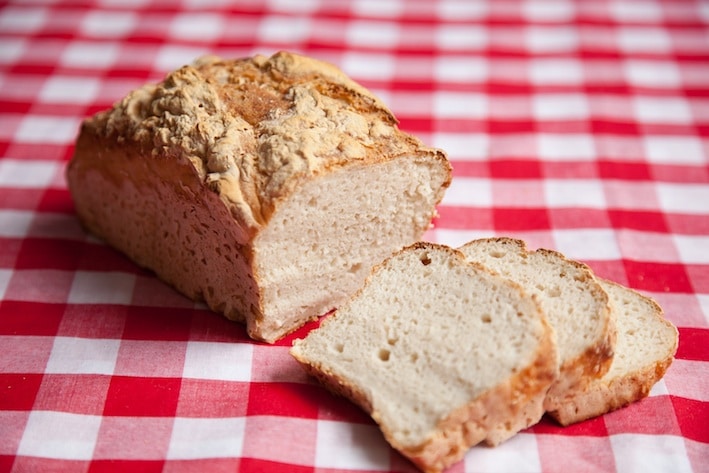
Serve Gluten-Free Sourdough Bread With:
If you haven’t eaten a lot of sourdough bread or are looking for some ideas on what to serve it with, here are a few tasty ideas:
- Roasted Chicken – Place pieces of roasted chicken and cheese (if you can tolerate dairy) and toss them under the broiler until hot and the cheese is bubbly. Add toppings and enjoy. So good!
- Bread Crumbs – You can dry the loaf of sourdough bread and turn it into bread crumbs. It will go lovely in any recipe that requires breadcrumbs. Try this delicious Gluten-Free Meatloaf recipe!
- Dip – Serve pieces of gluten free sourdough with this Hot Cream Cheese Dip or this Gluten-Free Cheese Fondue, which will go perfectly! It pairs well with any cheese-based dish.
If you love gluten free bread, you will want to try these Gluten-Free Cheddar Herb Muffins recipes, too. They are so light and fluffy. Also, these Paleo Biscuits are delicious and perfect for anyone who needs to be grain-free!
Sadie’s Original Recipe:
Here is the recipe that Sadie gave me back in 2014, untweaked. Several readers still use this recipe, so I wanted to include it in my article. This is the quote from Sadie, who used a millet, rice, and sorghum flour blend. The salt and xanthan gum are not used in the starter but in the bread:
- Mix equal parts of the flour of your choice and water. Avoid using pure starches like tapioca, corn, or potato starch.
- Leave it in a bowl at room temperature, covered by a towel. Add a little more flour and a little more water every 8-12 hours (2-3 times per day).
- After 3-5 days, the mixture should begin to smell sour and develop bubbles. Congratulations, you’re almost there.
- Once your mixture is bubbling, add a little bit to your bread mix. Do not use any yeast. Let this rise for at least 12 hours.
- Once the dough has risen, it will be your sourdough starter! Use a little bit of this dough in a fresh batch of dough.
- You’ll be impressed at how vigorous your sourdough can be.
- Always save a cup or so of your last dough to use as a starter in your next batch.
- Keep it in the fridge, and be sure to “feed” it with fresh water and your blend of flour from the bread recipe at least once a week, but twice if you can.
If you want to try another great sourdough recipe, give this Gluten-Free Sourdough Bagels recipe a try! If you want to make incredible gluten free bread quicker, try my delicious Gluten-Free Bread Machine Bread recipe! If you have discard to use up, try my Gluten-Free Sourdough Discard Biscuit recipe!
If you’re looking for more gluten-free bread recipes that rise well and slice beautifully, you’ll find plenty of options in my Ultimate Guide to Gluten-Free Bread Recipes.
Love This Recipe?
If you made and enjoyed this recipe, I would be incredibly grateful if you could leave a comment below. Please include which flour blend you used. This will help others know this recipe is delicious. Thank you!
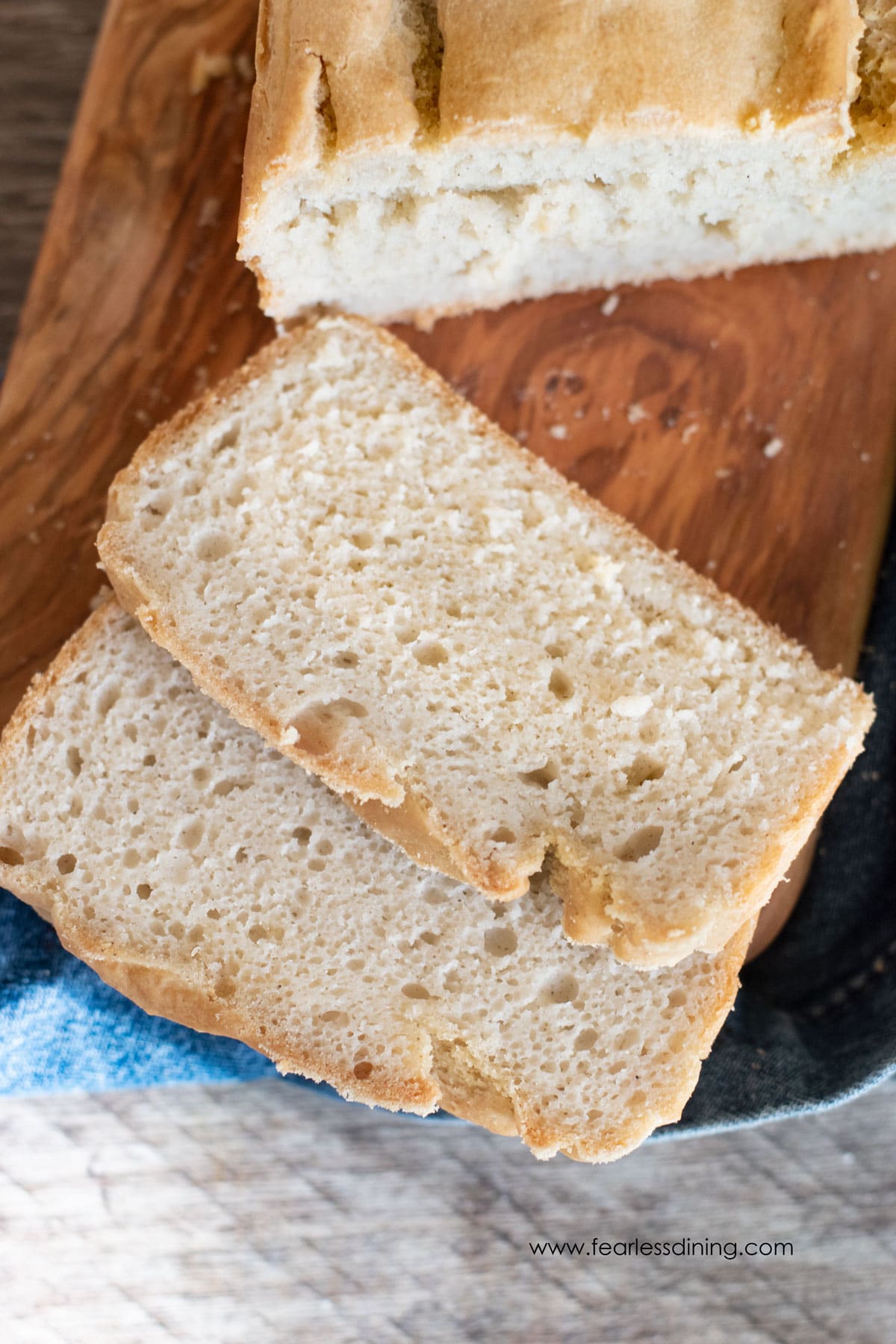
Gluten Free Sourdough Sandwich Bread
Ingredients
- 2 cups gluten free flour blend * see note
- 1 teaspoon kosher salt
- ¾ cup sourdough starter
- 1 cup water by feel You will need more or less depending on the flour blend you use.
Method
- PLEASE read the whole recipe post I wrote about making this gluten free sourdough sandwich bread because it is loaded with tips from me and other readers. It is impossible to put them all in this recipe card.
- Go to my How to Make a Gluten Free Sourdough Starter page and make your gluten free starter! Do this first because there is no sourdough bread without an active starter!!
- You will need ¾ cup sourdough starter. Make sure it is bubbling and at room temperature! If you refrigerate your starter, take it out of the refrigerator the night before you plan to make bread. I take a discard, feed it with gluten-free flour and water, and let it sit on the counter overnight.
- You will want your starter warmer if it is a cold season, especially winter. I like to put my starter either in the oven with the light on or on my Euro Cuisine Yogurt Maker base (with two folded dish towels on it so the starter doesn't get too hot.)
- Put the 2 cups gluten free flour blend and 1 teaspoon kosher salt into a large non-metal mixing bowl and whisk together. Add the sourdough starter and 1 cup water by feel.
- Note: It is important to use filtered water. Tap water has a lot of chemicals, including chlorine, which can kill your yeast and decrease the rise.
- Mix the wet and dry ingredients well. You want a wet dough, like a thick pancake batter.
- If your bowl isn't metal, cover it loosely with plastic wrap and let the dough rise for 3 hours (go by how big it rises). It may look lumpy, but that is okay. Let it- don’t overwork- you are eliminating the rise with every stroke. I move the dough to a greased bread loaf pan and let it rise for another 3-4 hours. Cover with a damp towel so the dough doesn't dry out.
- Note that the King Arthur Measure for Measure was a little runnier in consistency. The GF Jules has a much higher starch content and looks much fluffier!
- Bake the gluten free sourdough loaf for 45 minutes at 425º F. I noticed it hadn’t browned on top – so I brushed the top with melted butter at the 45-minute mark and then quickly closed the oven door.
- Bake for another 20-30 minutes and test the bread with a probe-style thermometer. The bread should be between 200-210º F in the center. Note: the bake time will vary depending on the size and depth of the pan you bake your bread in.
- Carefully move the bread to a cooling rack. Cool the bread completely before removing it from the pan and slicing it with a serrated bread knife. You want the bread to cool for a minimum of 3-4 hours before slicing it.
Nutrition
Notes
- Read the entire post. You will miss a lot of tips and tricks in making this recipe a huge success.
- I have tested this recipe with King Arthur Measure for Measure and GF Jules blends. Readers have tested this recipe with Nameste, Krusteaz, and Bob’s Red Mill 1:1.
- Note this is a recipe that came from Sadie at Bread Srsly. She has many tips in the article and 100s of reader comments filled with tips.
- Store the bread in an airtight container. I always recommend slicing and freezing the bread slices if you are not going to eat the loaf quickly. Freeze when the bread is fully cooled in a freezer-safe zipper bag.
How to get crusty bread:
I highly recommend baking this bread with a pan of hot water on the lower rack in the oven to create steam. (Sadie at Bread Srsly didn’t do this, but I found baking with hot steam creates a really good crust to the bread.) To get steam, you can fill a shallow baking dish with very hot water and put it on the bottom rack in your oven when you turn the oven on. Keep it there the first 30 minutes that your bread bakes.Private Notes
Tried this recipe?
Let us know how it was!
I truly hope you enjoy this recipe. I have been testing and creating gluten-free recipes for over 15 years. Creating gluten-free recipes that do not taste gluten-free is my goal for every recipe. Sometimes I only have to test a new recipe a couple of times, and others it takes multiple times. I do this so you get reliable, delicious results every time!

Have you ever tried this with caputo gluten free flour? It’s an amazing new flour I found from Italy and I wonder if you could get the loaf to form better with this flour. I’m just following your recipe for the first time and don’t have enough experience to try yet! But I’d be curious since it acts so much like normal flour when it bakes!
Hi. Unfortunately, my stomach doesn’t do well with wheat starch so I am not able to test this flour blend.
Antimo Caputo gluten-free flour (and it says “Fioreglut”) is what I think Jazz was asking about. I see they sell it on Amazon for gluten free pizza crust, pasta and breads.
And I LOVE your recipes!
Thank you for all of them.
GM
Just a note that the Caputo is not safe for those with a wheat allergy. There are some with Celiac, including myself, who can’t eat wheat starch.
This is really good and dense! My only problem is that I forget it needs a long rise. 😂
I am glad you enjoyed this recipe. Let me know how it goes next time with a longer rise.
Question. Is there a way to make this a cinnamon sourdough bread loaf? I have my grandfather’s recipe but it calls for yeast and since i have found out that I have celiac and can no longer make his German sourdough it breaks my heart. His you do have to roll out so just wasn’t sure if I needed to add more flour and the baking instructions. Thanks.
Hi Robyn, My gluten free sourdough recipe makes more of a loaf-style bread and it isn’t that workable by hand. My best thought to add cinnamon and sugar is to put 1/3 of the dough into the pan, add cinnamon, top with some dough and repeat to get cinnamon layers. There is a gf sourdough FB group you may be able to get better help with a loaf that you can shape.
I have made this bread several times now and really like it but for some reason the inside of my loaf is always sticky. Do you have any idea why?
Hi Lisa, can you give me more details? What flour did you use for your starter, what gluten free flour blend are you using to make the bread? How long are you baking it, etc?
I have a sourdough starter For baking regular Bread from my Daddy ( this batch since 2003) but have never had success making GF Bread or Buns/Rolls from it ‘Hope You can help’ ?
How cool that starter has been around since 2003!! I wish I could advise you. If it isn’t a gluten free starter, I am not sure how to advise. I have never used a non-gf starter and I am not sure how it behaves versus a gluten free one. There is a gluten free sourdough Facebook Group, I advise asking there.
Has anyone tried using this recipe in a bread machine?
Hi Deanna, I am unaware of anyone using a bread machine with my recipe. If you do try it, please come back and let us know how it turns out.
I am going to try this in my bread machine and will let you know here how it turns out. This is a fabulous recipe and I have made it successfully before in a boule shape. But my last two bread attempts have not fared so well.
Please do let me know. Thank you Jeri!!
Do you have the original recipe that was posted here? I made it for years and knew it by heart.
Was it Millet, sorghum, white rice flour, xanthum, salt?
Thanks!!
Hi Charlotte, This is the quote from Sadie, who used a blend of millet, rice, and sorghum flours. The salt and xanthan gum are not used in the starter but they are in the bread: Mix together equal parts a flour of your choice and water. Avoid using pure starches like tapioca, corn or potato starch. Leave it in a bowl at room temperature, covered by a towel. Every 8-12 hours (2-3 times per day) add a little more flour and a little more water. After 3-5 days the mixture should start to smell sour and have some bubbles. Congratulations, you’re almost there. Once your mixture is bubbling, add a little bit in to your bread mix. Do not use any yeast. Let this rise for at least 12 hours. Once the dough has risen, it will be your sourdough starter! Use a little bit of this dough in a fresh batch of dough. You’ll be impressed at how vigorous your sourdough can be. Always save a cup or so of your last dough to use as a starter in your next batch. Keep it in the fridge, and be sure to “feed” it with fresh water and your blend of flour from the bread recipe at least once a week, but twice if you can.”
After you let the dough rise for 12-24hrs, you suggest adding some more water and flour to feed the dough. How much do I add? Thanks 🙂
Hi Lise, I add enough to make the dough less liquidy then put it into the loaf pan. You can see the texture of the dough in the photos. The exact quantity will depend on the flour blend you used and how starchy it is. I hope this helps.
Has anyone used an egg in this, or maybe apple cider vinegar, to make this rise more or not be so dense?
I sometimes add egg when I am using the starter for pizza crust, hopefully someone will respond for you.
The flavour of this bread blew me away! So excited to have something that actually tastes like bread since going GF. Still tweaking my recipe as I didnt get a lot of time in my bread before or during baking but it was still edible, maybe just more like a trumpet in texture compared to bread. And it was so tasty! I wrapped it in foil overnight and cut some the next morning to have for lunch at work. Cut and buttered two slices and put in zip lock bag. BUT the bread was so dry! I was so disappointed as it was so good the day before!! Any tips?? Do I need to keep it in the fridge?? Or could it have to do with the rise/baking issue??
Using a pretty starchy blend as that is all I can get locally in Aus.
Hi Sam, I am glad you are enjoying the flavor of the bread. I want to make sure I understand. Are you saying the bread was dry after the Ziplock or dry after wrapping in foil overnight?
Hi,
Is it possible to make this recipe in a boule form?
Hi Darienne, this is really more of a loaf style. To make it boule form, you need to add more flour so the dough is workable with your hands…it also requires different baking instructions. I highly recommend checking out the Gluten Free Sourdough FB group for boule recipes.
Hi,
I am new to gluten free baking and sometimes it completely flops. So, my bread looked really good. However on the inside it was a weird slimy like texture. Almost doughy. However the temp when I pulled it out was 205. What am I doing wrong?
Hi Rylee, I am happy to troubleshoot. Please tell me what gluten free flour blend you used, how long the starter has been going, what temperature you baked it at, did you include the hot water, and how long you let it cool? Please email me and send any photos you have and I will try to help.
My starter does not have xanthum gum in the bob’s red mill all purpose flour I’m using. Should I use the bob’s 1:1 flour when I make this recipe so it has the xanthum gum or should I just add xanthum gum to the flour I used in my starter? I think I read somewhere to not use a flour blend that has xanthum gum in it for the starter. Want to make sure I do this right since the starter has been fed for 14 days now!
Hi Lara, You will need to add 1 teaspoon of Xanthan Gum to your flour mix when you make your bread. The starter itself doesn’t need Xanthan Gum.