

Choosing the right gluten free flour blend can make or break a recipe. I have tested a lot of blends over the years, and this homemade gluten free flour blend is one I come back to again and again because it is reliable and helps you bake with consistent results.
❤️ Sandi’s Recipe Summary
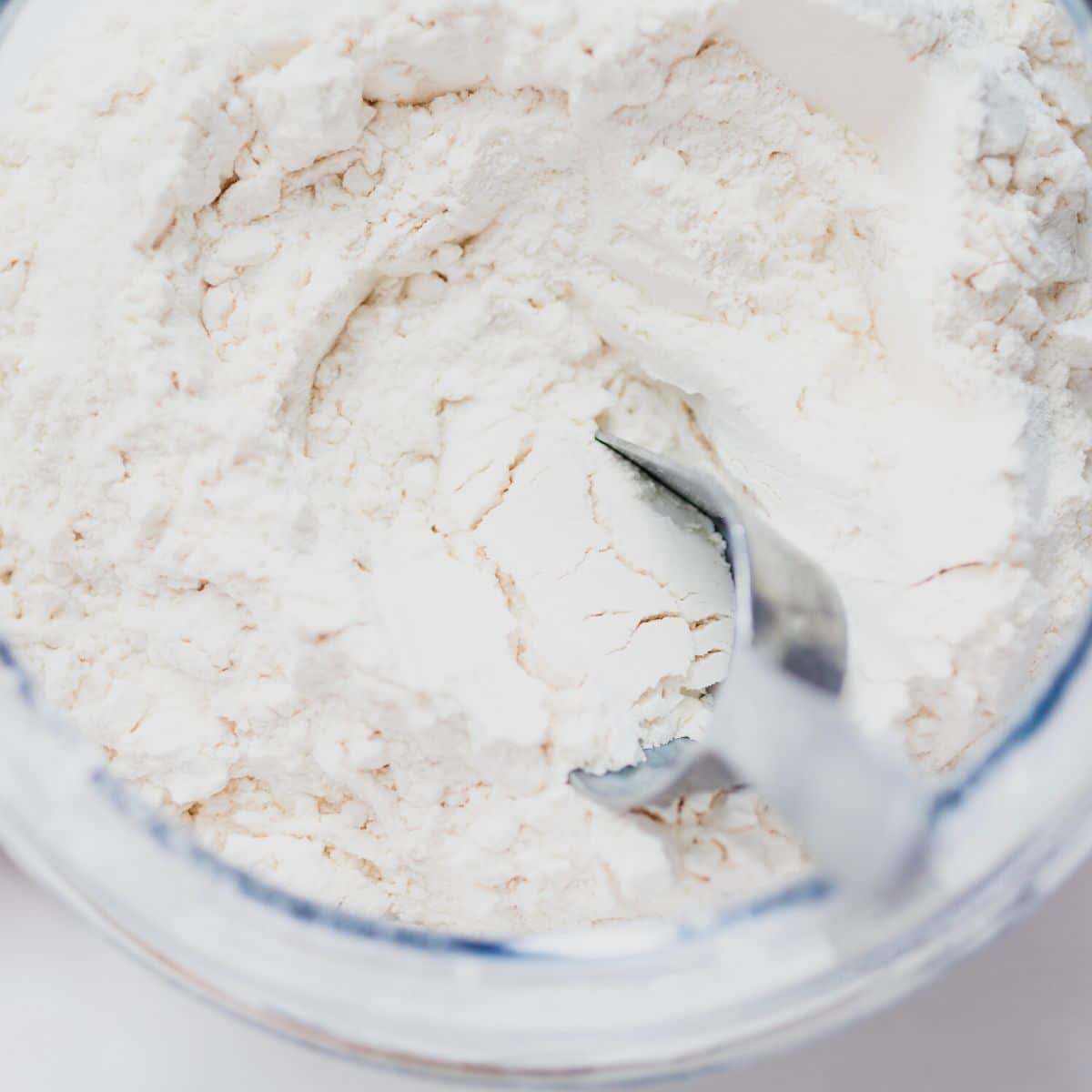
This quick, homemade gluten-free flour mix is well tested and works in both yeasted and non-yeasted gluten-free recipes. I tested and refined this blend until my baked goods turned out perfectly every time.
My DIY gluten freee all purpose flour blend is made with simple ingredients like sorghum flour, rice flours, and starches that are easy to find and work well together in everyday baking. This blend can also be made nightshade-free, which is helpful if you have additional dietary restrictions.
If you enjoy mixing your own flour blends, see all of my custom gluten-free flour mixes.
Why Mix Your Own Gluten-Free Flour Blend?
- Versatility: My blend works well for everyday and yeast baking.
- Customizable: You can use any binder you like to bake with. The gum-free option makes it more flexible for dietary needs. Add psyllium husk, xanthan gum, OR guar gum. Read Why Binders Are Important in Gluten-Free Baking to learn more about binders.
- Allergen-Friendly: Corn-free and has a nightshade-free option.
- The Perfect Pantry Staple: This blend is more economical than pre-blended options. It is easy to store, and it stays fresh.
Gluten-Free Flour Ingredients Notes:
For the full list of ingredients and amounts, please go to the recipe card below.
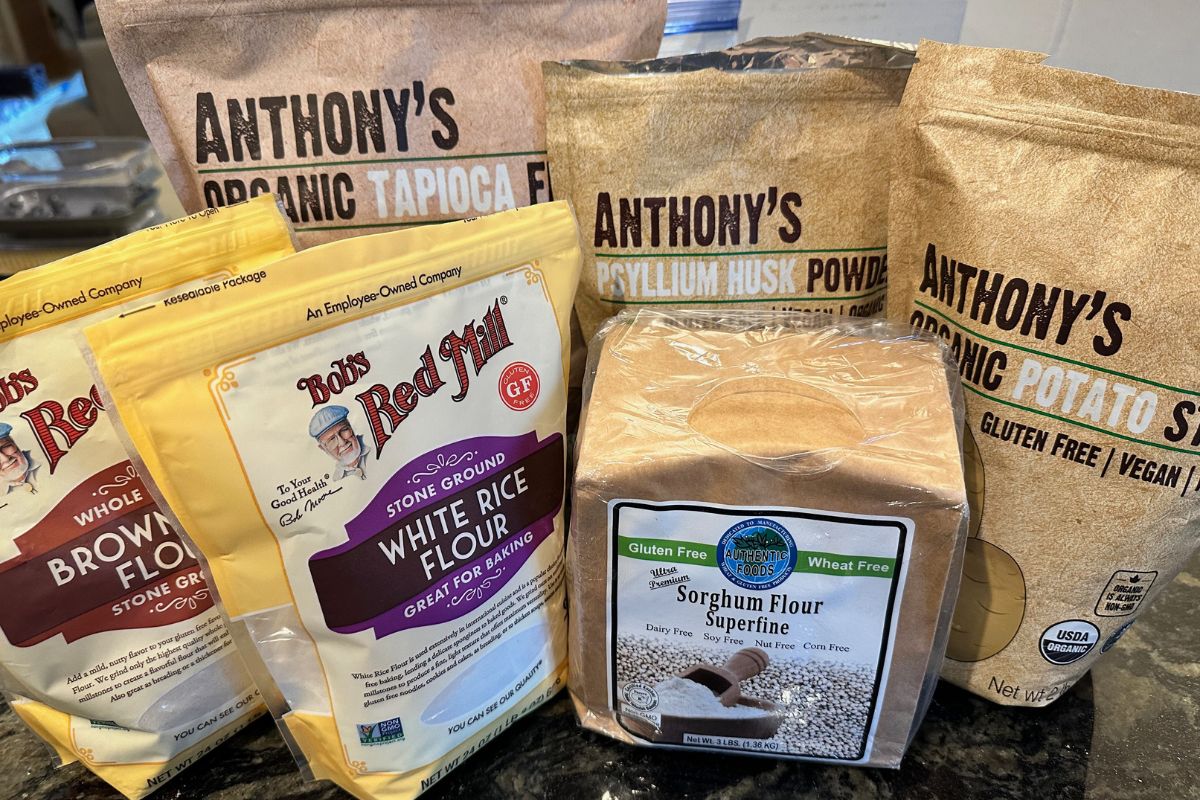
- White Rice Flour: Gives a neutral base and helps create a smooth texture that gluten-free baked goods need. It is super fine, which helps keep baked goods light instead of gritty.
- Brown Rice Flour: Adds structure and a subtle nuttiness without making the blend too heavy.
- Sorghum Flour: This flour type mimics the protein structure of wheat when combined with other flours and starches.
- Potato Starch: This helps keep baked goods moist and tender. It adds lightness and that soft, slightly springy bite.
- Tapioca Starch: Adds a little stretch and chew, which helps mimic the texture gluten usually provides.
- Psyllium Husk: I like Anthony’s brand because their psyllium husk powder doesn’t turn baked goods purple. There are three main binders in gluten free baking, and you can use psyllium, xanthan gum, or guar gum.
If you love to bake, I have a huge resources section to help. Check out my Gluten-Free Baking Tips.
This post may contain affiliate links. Please read our Disclosure Policy.
🔑 Sandi says: See below for the master list of the recipes I have tested this flour blend in!
Email This Recipe To Me!
How To Make a Gluten-Free Flour Blend:
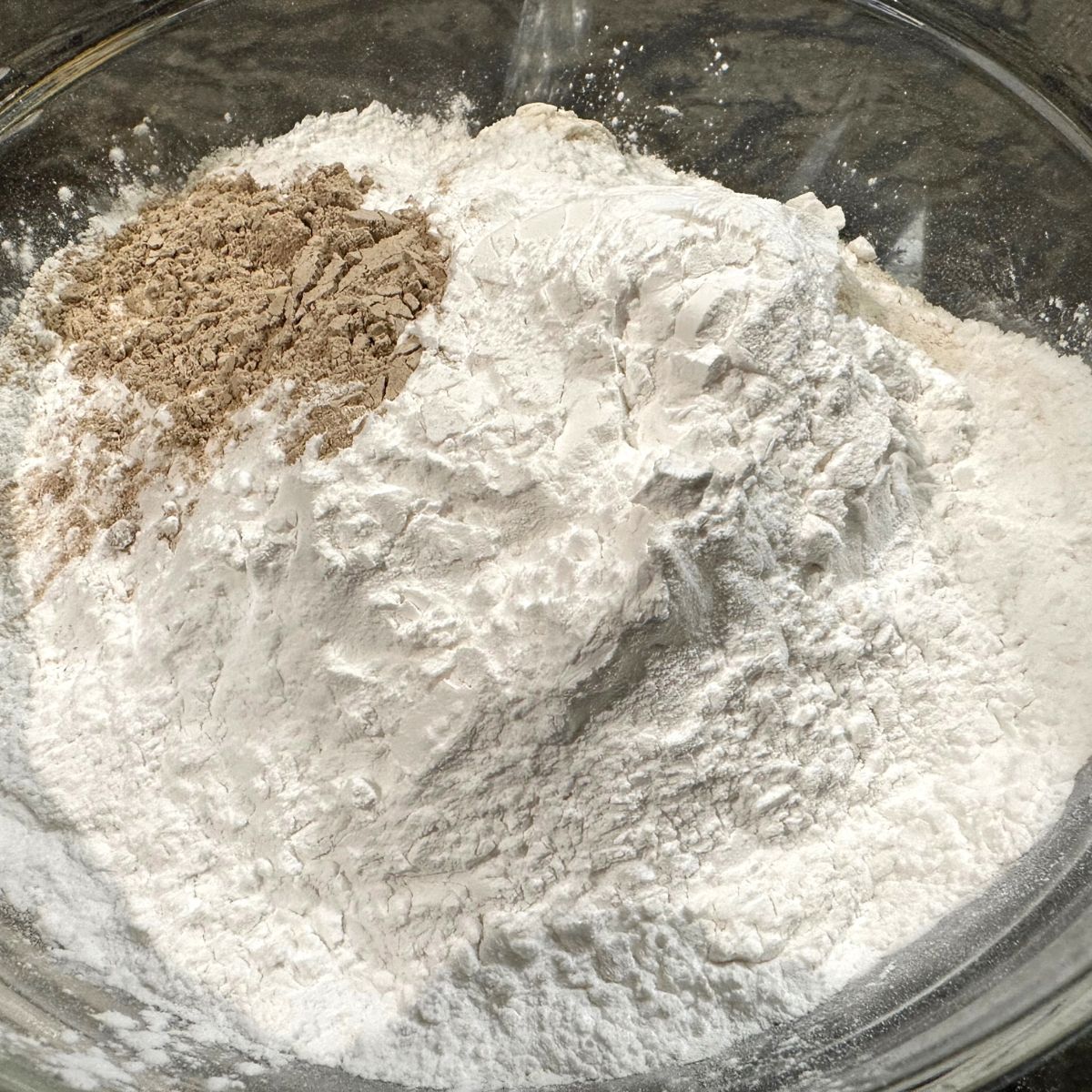
Step 1: Add the flours, starches, and the binder to a large mixing bowl. Use a wire whisk to blend the ingredients for one minute. I recommend mixing multiple ways, including both whisking and stirring with a large spoon, then whisking again to ensure they are fully blended.
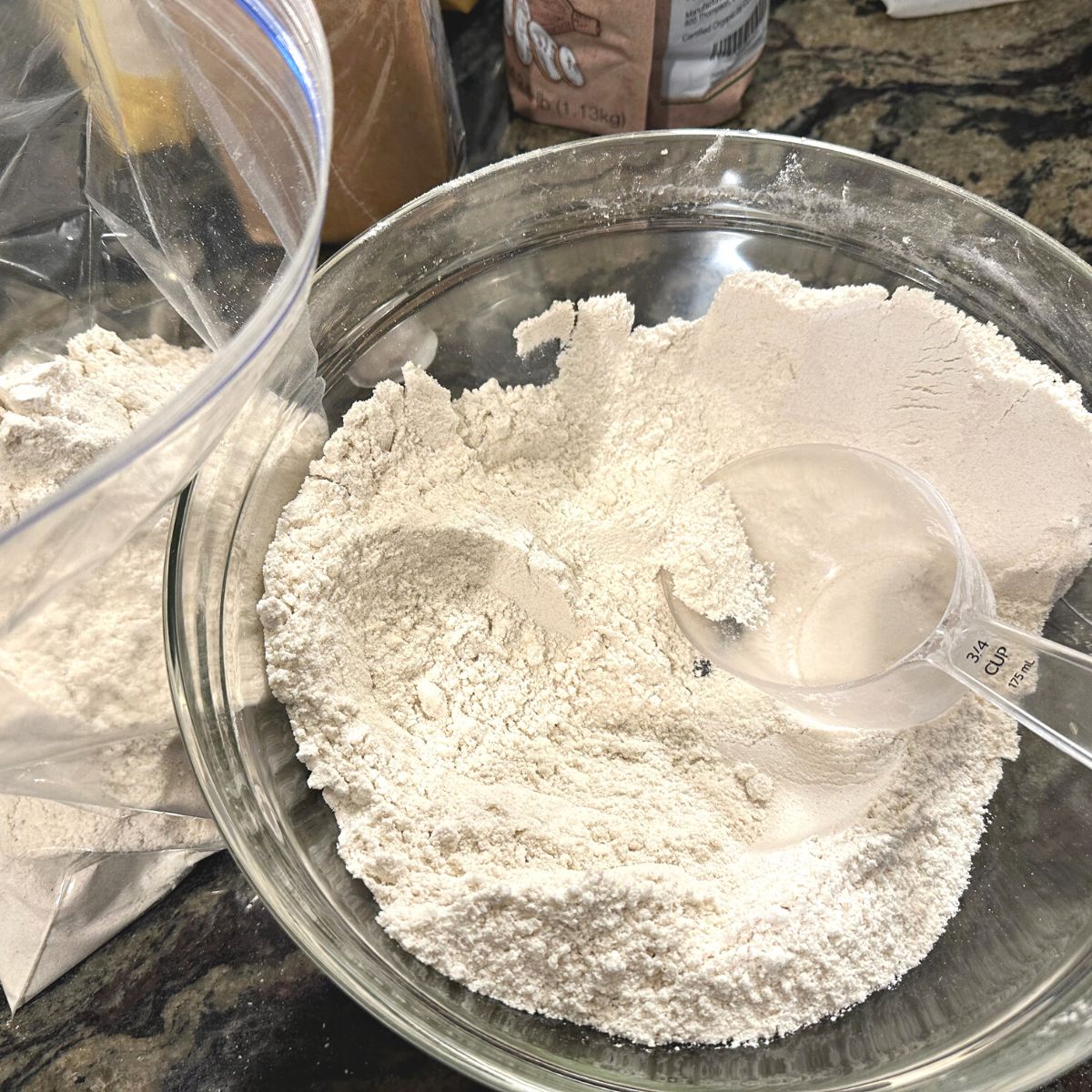
Step 2: Move the flour into a large plastic zipper bag or mason jar. You want to seal it to keep it airtight. Use it in all of your favorite recipes!
👀 Sandi Says: If you store your flour in the refrigerator, you must allow it to cool to room temperature before using it in a recipe. Otherwise, the moisture levels will be affected.
Interested in trying a different gluten-free flour mix?
I have several gluten-free flour blends on the blog, depending on what you are baking. This all-purpose mix works well in all of my recipes, but I customized a few blends to avoid specific allergens or make fluffy cakes and flaky pastries.
- Gluten Free Flour Blend Recipe Without Rice
- Gluten Free Flour Blend Without Sorghum
- Gluten-Free Pastry and Cake Flour
Frequently Asked Questions:
Single flours can’t replicate the structure of wheat. A balanced blend gives baked goods the structure, softness, and flavor you expect.
If you prefer using pre-blended gluten free flour mixes, you can buy them in most grocery stores. I wrote a helpful article that goes over the best gluten free flour blends and the types of recipes in which each blend performs the best.
You can omit the psyllium husk from this blend and then add one teaspoon of xanthan gum to your recipe.
Yes, you can freeze this gluten free flour blend. Store it in a freezer bag and squeeze out the extra air. To use flour stored in the freezer, let it warm to room temperature before using it in a recipe.
Recipes Using this Gluten-Free Blend:
Here are the recipes I have tested so far using my blend. Any notes are also here and in the recipe posts so you know if you need extra liquids.
- Gluten Free Chocolate Chip Cookies – I successfully used my flour blend in this cookie recipe.
- Gluten Free Pizza Crust – I had to add about 1/3 cup of extra water to make my gluten free pizza crust recipe. I added 2 additional teaspoons of psyllium husk powder. I will say this gluten free flour blend performed better than my favorite, the Cup4Cup brand. My blend had more of the classic chewiness I missed in crust since going gluten free. I will soon test my crust recipe with this flour blend on the grill.
- Gluten-Free Orange Bunny Rolls – No changes necessary.
- Gluten Free Pizza Rolls – Add 3-4 TBSP of water and 2 additional teaspoons of psyllium husk powder.
- Gluten Free Lemon Layer Cake – No adjustments from the original recipe are needed. My gluten free flour blend without xanthan gum worked perfectly.
- Gluten Free Peach Kuchen – No adjustments to the flour were needed.
- Gluten Free Apple Cake – No flour measurement changes are needed.
- Gluten Free Biscuits – This flour blend works well in my gluten free biscuits recipe. You will need to add 1 TBSP of additional milk to the dough.
- My Gluten Free Oat Bread – No adjustments are needed.
- Gluten Free Pancakes – This blend works perfectly with no further changes to the flour blend.
- Gluten Free Pumpkin Pancakes with sweet potato puree – Tasty, used 1/4 cup less oat milk.
- Gluten Free Muffins – I tested this gluten free flour blend in my gluten free apple muffins recipe. (Note: I used frozen cranberries in the test.) It worked perfectly without any modifications to the flour blend.
- Gluten Free Mug Cakes – This recipe works well in all of my mug cake recipes with no changes.
- Gluten Free Bread Machine Bread – This recipe worked great with no modifications.
- Gluten Free Soft Pretzels – This recipe worked great with my flour blend. No modifications are needed.
- Gluten Free Strawberry Banana Bread – This flour worked so well in my banana bread recipe; I feel confident that my flour blend will work in all my banana bread recipes.
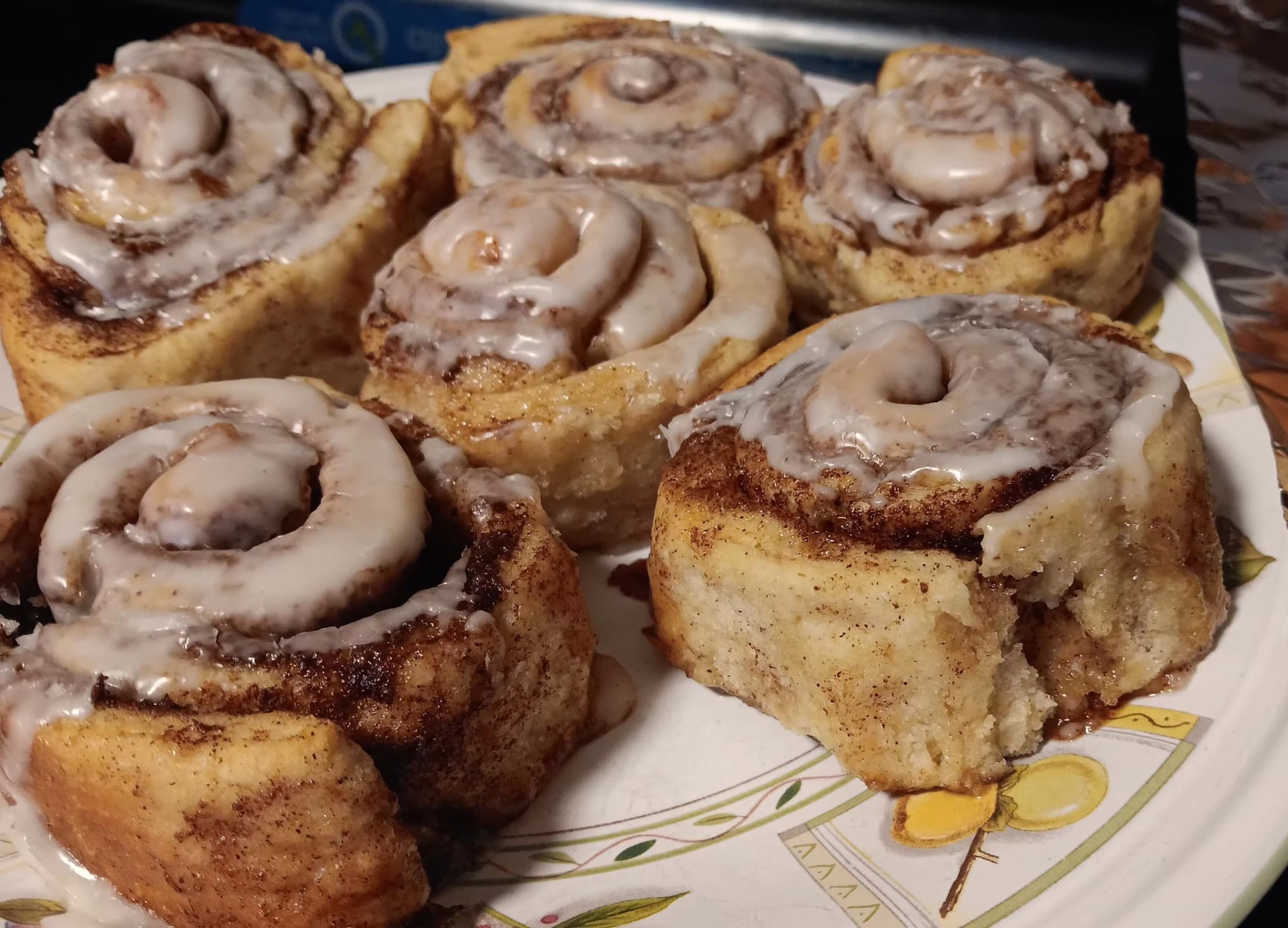
- Gluten Free Cinnamon Rolls – My flour works in all my roll recipes, including my Gluten Free Gingerbread Rolls, Gluten Free Orange Rolls, and Gluten Free Lemon Rolls.
- Gluten Free Coffee Cake – One of my readers used this blend to make this coffee cake. No modifications were needed, and it got rave reviews.
- Gluten-Free, Dairy-Free Crepes – My blend performed well in my crepe recipe. No changes to the original recipe.
- This flour works in ALL of my Gluten-Free Sourdough Recipes!
- Gluten-Free Artisan Style Cinnamon Raisin Bread – Crusty bread made with yeast, my flour blend works perfectly.
Love This Recipe?
💬 Have You Tried This Blend? If you have baked one of my recipes with this flour, I would love to hear what you made and how it turned out. Share your experience in the comments to help other readers, too! ⭐⭐⭐⭐⭐
DIY Gluten Free Flour Blend




Ingredients
- 3 cups white rice flour 533.7 grams
- 1 ½ cups sorghum flour 227.4 grams
- 1 ½ cups brown rice flour 232.3 grams
- 1 ½ cups potato starch 277.4 grams * see notes if you are nightshade free
- ¾ cup tapioca starch 102.3 grams
- 3 tablespoons psyllium husk powder 31.7 grams
Instructions
- Add all of the flours, starches, and psyllium husk to a large mixing bowl.
- Use a whisk and mix the ingredients together. Take a large spoon and mix the flour, then whisk again. It is critical the flours are completely and evenly blended.
Notes
- If you are nightshade-free, you can use all tapioca starch.
- If you are going to use xanthan or guar gum, reduce the amount of psyllium husk to 1 tablespoon.
- If you plan to use an alternate binder such as xanthan or guar gum, omit the husk powder and add the amount of binder the recipe calls for.
- Store in an airtight container or freezer zip-style bag in the refrigerator.
Email This Recipe To Me!
SPECIAL NOTE
Please know that every gluten free flour blend has a different starch to grain ratio. If you use a blend I didn’t test, my rule of thumb is to add more flour if your dough or batter is wet and add more liquid if the dough or batter is too dry!
Nutrition
Nutrition Disclaimer
Nutritional information is an estimate provided to you as a courtesy. You should calculate the actual nutritional information with the products and brands you are using with your preferred nutritional calculator.
I truly hope you enjoy this recipe. I have been testing and creating gluten-free recipes for over 15 years. Creating gluten-free recipes that do not taste gluten-free is my goal for every recipe. Sometimes I only have to test a new recipe a couple of times, and others it takes multiple times. I do this so you get reliable, delicious results every time!

I plan to make your DIY Flour blend tomorrow just because I loved your French Apple Cake! 🙂 Do I understand correctly that all or many of your recipes will work with your DIY? I noted that you also specify what other flours have worked per each recipe. I’m new to your site, so have been scanning recipes.
With this DIY flour recipe, you say to add less psyllium if we intend to add XG. So since I can’t know for sure if a recipe will require XG, then I shouldn’t add the psyllium to the batch of flour blend yet? How would that work?
I am glad you are going to try it. I list recipes in that recipe that I have tested at the bottom. I am trying to test one recipe in each category. I tested pizza, muffins, a cake, etc recipes. I don’t use xanthan gum in the recipe, nor do you need it. Some readers wanted to use both for some reason.
So sorry Sandi, but to clarify, should I add psyllium husk when I make a whole batch of your DIY flour blend?
Or should I wait until I know if a recipe requires me to add XG, since I would need less psyllium, as per your recipe? And if that is the case, when I DO use XG, how much psyllium per cup should I add?
I probably only make GF dessert recipes (cakes, fruit pies or crumbles, cookies) and not breads, so do you think those type recipes on your site would usually require XG as their binder?
Or do you think that I’m better off using a store-bought GF flour since they’re only dessert recipes?
Hi Mary, I add it to my blend, but if you prefer to add it after you know about xg, that is fine too. It is up to you which blend you use. Many are really great.
Hi Sandi. I did make a batch of your DIY Flour blend. I made the Creamy Apple Cake and it worked out perfectly for this recipe. And I only added 1 T Psyllium to the batch, as per your recipe, since I will probably be adding XG if the recipe asks for it.
I am so glad you loved this cake with the flour blend. Thank you so much for testing it :-).
We like corn flour, but when making corn pasta, cornmeal with 1/3 corn starch. Works well with yucca noodles and potato noodles. Have you tried bean flour? Some beans, like pintos and sulfur beans were bred to use as flour. They will grind very fine even in a blender. Mind, to get out the gassy part, knock off the skins, then finish grinding.
These are great tips. Thank you so much, Tsi.
Can you substitute Sorghum with buckwheat please?
I have never baked with buckwheat so I do not have an answer for you. It will depend on liquid absorption of the two different flours.
Hello! Thank you for all your awesome receipes. I have made a few. I got all the stuff to make your DIY flour blend. I am really looking for a bread machine receipe that will taste good and bake well. I see that you listed your Bread machine receipe worked well with this DIY flour blend, but when I click on the link that receipe lists our the various flours not the flour blend. I am unsure of how much of the flour blend to use. Would you clarify that please? Thank you!
Of course. You would add up the total flour in the recipe for the bread, or 3 cups. Use that amount of my gluten free flour blend. With my blend you can omit the flaxseed meal if you like.
Hi Again,
I just posted, but don’t find my post.:( So forgive me if this is repeat! I was just wondering in which recipes you use your DIY flour? I really like this flour recipe as I’m allergic to nightshades, and most commercial GF flours have potato starch as an ingredient. However, I’m not finding this flour mix in your recipes. Can you help me out on this one? I LOVE your blog and have made several of your recipes with very good outcomes. Thank you for all your hard work on behalf of us with allergies!
Hi Sheryl, I list the recipes I have tested my flour blend in at the bottom. You can get there easily via the Table Of Contents. I am working to test it in a recipe for each category first…but it is time-consuming.
Hello,
Can you tell me in what recipes you use this DIY flour blend? I LOVE your blog and your recipes, but I don’t see that you call for this flour blend in a lot of your recipes. So I was wondering why. Thank you.
Hi! Me again. I clicked on the link for the white rice flour and it took me to authentic foods sweet rice flour. Does your blend work better with sweet rice flour or can I use the regular white rice flour from authentic foods?
Hi Esther, I didn’t realize those were links in the recipe card. I changed that link to the proper white rice flour. Don’t use sweet rice flour. Thank you for bringing this to my attention.
I would love to try your flour blend as it uses the same ingredients mine does, but most of the amounts are different. Mine doesn’t have the psyllium husk in it, though, and that’s not something I have on hand. Would it work to leave all of the psyllium husk out and put the correct amount of xanthan gum in my recipes?
Hi, you can easily omit the psyllium, and add one teaspoon xanthan gum to the recipe you are making (don’t add xanthan into the bulk flour.)
Is this psyllium a special kind that does not turn your bread purple?
I am a regular follower and appreciate your recipes. Lately I’ve begun to question the amounts of rice flour in so many GF breads, mixes, crackers, and recipes due to the concerns about high levels of arsenic in both white and brown rice. I think this becomes more of a concern with children and that’s who I’m making GF foods for. Is this something that you’ve thought about or a concern for you? I’m questioning some things about what and how I feed my child.
Hi April. I completely understand your concern about rice with arsenic in gluten free. I wish there was an easy answer. I have been working on a gluten free flour blend for quite some time and it just doesn’t work well without rice flour. I have really tried. You may want to try some of the blogs that use coconut/almond flour blends without grains to avoid rice blends.
Hi! Do you think this flour blend will work for cakes too? Thank you!!
Hi Esther, I just used this flour in my gluten free lemon layer cake recipe. It turned out really good.
Hi April. Check out the Authentic Foods website. They talk about this issue. It depends on where the rice is grown. I try to only buy their rice flour and blends. They don’t ship to Canada but Nickel and Ore in Cornwall, Ontario sell their products.
Thank you so much for helping April, Nancy. It is very much appreciated!